Metal Cutting Band Saws Explained: Sawing Technologies, Machine Types, Manufacturing Processes, Global Manufacturers, Suppliers and Industrial Applications
Metal cutting band saws are machine tools designed to cut metal bars, tubes, pipes, structural sections, plates, and other workpieces into specified dimensions. Unlike conventional circular saws, these machines use a continuous toothed band that travels around two or more wheels.
Modern metal cutting band saws are available in horizontal, vertical, automatic, semi-automatic, CNC-controlled, and portable configurations. Their applications range from general fabrication and maintenance workshops to steel processing, automotive manufacturing, aerospace production, construction equipment, and heavy industrial manufacturing.
Context
What Are Metal Cutting Band Saws?
A metal cutting band saw uses a continuous loop of toothed blade supported by rotating wheels. The blade moves through the workpiece while controlled feed pressure guides the cutting operation.
Machine design varies according to the size, material, geometry, and production requirements of the workpiece. Horizontal band saws are commonly used for cutting stock materials, while vertical systems can support contour cutting and specialized fabrication operations.
How Metal Band Sawing Works
The basic process involves securing the workpiece, selecting an appropriate blade, setting the cutting parameters, and moving the blade through the material.
Important operating parameters include:
- Blade speed
- Feed rate
- Blade pitch
- Cutting pressure
- Workpiece dimensions
- Material hardness
- Coolant flow
- Blade tension
Correct parameter selection helps control blade wear, cutting accuracy, surface condition, and production consistency.
Major Sawing Technologies
Metal cutting band saws use several technological approaches.
Bi-Metal Band Saw Blades
Bi-metal blades typically combine a flexible backing material with a harder cutting edge. They are used across a broad range of industrial metal-cutting applications.
Carbide-Tipped Band Saw Blades
Carbide-tipped blades use carbide cutting elements for applications involving difficult-to-machine alloys, hardened materials, or demanding production conditions.
Variable-Pitch Blades
Variable-pitch blades use teeth with changing spacing along the blade. This configuration can help reduce vibration and support cutting across different cross-sectional geometries.
CNC Band Sawing
CNC-controlled band saws use programmed parameters to automate cutting sequences. Depending on the machine, automated systems can control feeding, positioning, blade movement, and cutting cycles.
Common Machine Types
| Machine Type | Main Characteristic | Typical Application |
|---|---|---|
| Horizontal Band Saw | Workpiece positioned horizontally | Bars, tubes, billets |
| Vertical Band Saw | Vertical blade orientation | Contour and fabrication work |
| Automatic Band Saw | Automated feeding and cycles | Repetitive production |
| Semi-Automatic Band Saw | Partial process automation | General industrial production |
| CNC Band Saw | Programmable operation | Complex or repeatable cutting |
| Portable Band Saw | Compact mobile configuration | Installation and field work |
| Double-Column Band Saw | Rigid structural frame | Large workpieces |
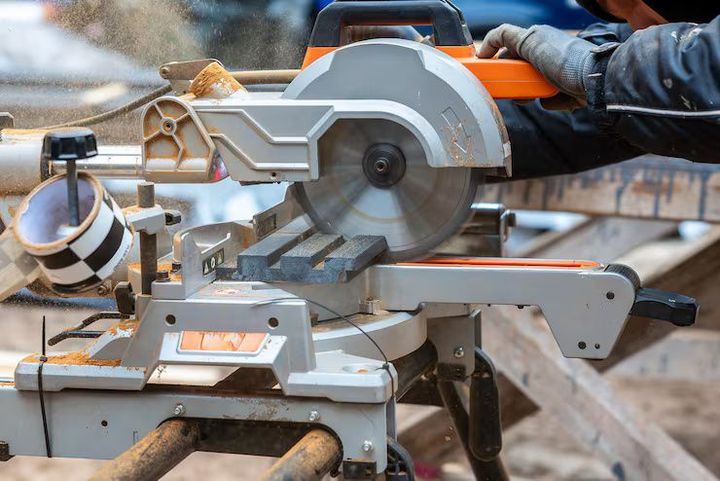
| Miter Band Saw | Adjustable cutting angle | Angled sections and fabrication |
The machine configuration should correspond with workpiece dimensions, material characteristics, required tolerances, production volume, and available workspace.
Importance
Why Metal Cutting Band Saws Matter
Band sawing provides a controlled method for separating metal stock before subsequent manufacturing operations. Accurate cutting can help establish the starting dimensions needed for machining, fabrication, welding, forming, or assembly.
Compared with some alternative cutting methods, band saws can be configured for continuous cutting operations and a wide range of metal geometries.
Industrial Manufacturing Applications
Metal cutting band saws are used in numerous sectors.
Steel Processing
Steel bars, beams, pipes, tubes, and other sections can be cut into specified lengths before further processing.
Automotive Manufacturing
Automotive production uses sawing operations for metal stock, shafts, structural components, and various machined parts.
Aerospace Manufacturing
Aerospace production may involve aluminum alloys, titanium alloys, nickel-based materials, and other engineered metals. Blade selection and cutting parameters need to correspond with the specific material.
Construction Equipment
Manufacturers of excavators, loaders, cranes, agricultural machinery, and related equipment use band saws to prepare structural and machined components.
General Fabrication
Fabrication workshops use band saws for cutting tubes, channels, angles, bars, and other metal sections before welding or assembly.
Maintenance and Repair
Portable and workshop band saws can be used for maintenance activities involving pipes, shafts, frames, and replacement components.
Material Compatibility
Different metals require different blade designs and cutting parameters.
| Material | Common Sawing Considerations |
|---|---|
| Carbon Steel | Blade pitch and feed control |
| Stainless Steel | Heat management and suitable tooth geometry |
| Aluminum | Tooth spacing and chip clearance |
| Tool Steel | Blade hardness and controlled cutting parameters |
| Titanium | Heat generation and controlled feed |
| Brass | Tooth geometry and chip removal |
| Copper | Tooth selection and material handling |
| Nickel Alloys | Specialized blades and controlled cutting |
The exact cutting conditions depend on alloy composition, workpiece geometry, machine characteristics, and blade manufacturer specifications.
Manufacturing Processes
Workpiece Preparation
Before sawing, the workpiece is inspected and positioned on the machine bed. Surface contaminants, excessive scale, or unstable material positioning may affect the cutting process.
For production operations, material may be loaded manually or through an automated stock-feeding system.
Blade Selection
Blade selection is one of the important preparation stages. Factors include:
- Material type
- Material thickness
- Cross-sectional shape
- Required cut quality
- Machine capacity
- Production volume
- Blade pitch
- Tooth geometry
Using an unsuitable blade can increase vibration, tooth damage, heat generation, and premature blade wear.
Workholding
The workpiece must be held securely during cutting. Hydraulic or mechanical vises are commonly used on industrial machines.
Proper clamping helps prevent movement and can improve dimensional consistency.
Cutting Operation
During cutting, the blade continuously travels through the workpiece while the machine controls feed pressure and blade speed.
Coolant or cutting fluid may be used to manage heat and assist chip evacuation, depending on the material and process.
Automated Material Feeding
Automatic band saw systems can include powered material feeders that position stock for repeated cutting cycles. These systems are particularly relevant when many pieces need to be cut to similar dimensions.
Inspection
After cutting, dimensions and cut quality may be checked using measuring equipment appropriate to the application.
Typical inspection considerations include:
- Cut length
- Squareness
- Surface condition
- Burr formation
- Dimensional variation
- Angular accuracy
Global Manufacturers and Suppliers
The global metal cutting band saw market includes machine-tool manufacturers, industrial equipment companies, blade manufacturers, and specialized tooling suppliers.
Manufacturers generally develop machines for different material sizes, production volumes, automation levels, and cutting requirements. Supplier ecosystems can include complete machine systems, replacement blades, coolant equipment, workholding components, automation systems, and maintenance components.
When evaluating equipment from global manufacturers and suppliers, organizations can examine:
- Machine capacity
- Blade dimensions
- Cutting range
- Motor configuration
- Automation capabilities
- CNC functionality
- Workholding design
- Blade availability
- Technical documentation
- Maintenance requirements
- Local technical support arrangements
The appropriate equipment depends on the manufacturing process rather than manufacturer name alone.
Recent Updates
Automated Band Sawing
Automation is becoming increasingly important in repetitive metal-cutting operations. Automatic loading, material feeding, blade tracking, and cycle control can reduce manual intervention.
CNC Integration
CNC control allows machines to store and execute programmed cutting sequences. Some systems can manage multiple cutting lengths and material positions within a production workflow.
Digital Monitoring
Modern machines may incorporate sensors that monitor blade condition, spindle or motor load, hydraulic pressure, vibration, and other operating parameters.
Collected information can help operators identify abnormal operating conditions and schedule maintenance activities.
Blade Technology
Advances in tooth geometry, carbide materials, coatings, and blade manufacturing are expanding the range of materials that can be processed.
Variable-pitch designs and specialized tooth configurations can also address vibration and chip-formation challenges.
Industry 4.0 Connectivity
Connected band saws can exchange production information with manufacturing systems. Data may include machine status, cycle information, cutting quantities, alarms, and maintenance indicators.
Integration with manufacturing execution systems can provide additional production visibility in larger facilities.
Laws or Policies
Machine Safety
Metal cutting band saws contain moving blades, rotating wheels, clamping systems, and other mechanical hazards. Machines should be equipped and operated according to applicable machinery-safety requirements.
Guarding and emergency-stop systems are important elements of safe operation.
Operator Protection
Operators may encounter sharp workpieces, metal chips, noise, cutting fluids, and moving equipment. Appropriate workplace procedures and protective equipment should be established according to the applicable occupational safety framework.
Environmental Management
Metal sawing can generate chips, used cutting fluids, lubricants, and other residues. Facilities should manage these materials according to applicable environmental and waste-handling requirements.
Quality Control
Manufacturing organizations may establish inspection procedures for cut dimensions, angular accuracy, surface condition, and blade performance. Measurement equipment should be appropriate for the specified tolerances.
Tools and Resources
Band Saw Blades
Blade selection depends on material, thickness, geometry, machine type, and cutting requirements. Common blade categories include bi-metal and carbide-tipped designs.
Coolant Systems
Coolant systems can help manage heat and assist chip evacuation during cutting. Fluid selection and concentration should follow the machine and cutting-fluid manufacturer's technical guidance.
Material-Handling Equipment
Roller conveyors, stock feeders, loading systems, and automated positioning equipment can be integrated with industrial band saws.
Measuring Instruments
Calipers, micrometers, gauges, squares, and other inspection instruments can be used to verify cut dimensions and geometry.
Maintenance Resources
Machine manuals, blade specifications, lubrication schedules, maintenance records, and troubleshooting guides are important resources for maintaining consistent operation.
FAQs
What is a metal cutting band saw?
A metal cutting band saw is a machine tool that uses a continuous toothed blade to cut metal workpieces such as bars, tubes, pipes, beams, and billets.
What types of metal can band saws cut?
Depending on machine configuration and blade selection, band saws can process carbon steel, stainless steel, aluminum, brass, copper, tool steel, titanium, and various engineered alloys.
What is the difference between horizontal and vertical band saws?
Horizontal band saws are commonly configured for cutting stock material into sections, while vertical band saws can support contour cutting and fabrication operations.
Are CNC band saws used in industrial manufacturing?
Yes. CNC band saws can automate cutting sequences, positioning, feeding, and other machine functions, depending on the system configuration.
How do I select a metal cutting band saw?
Selection involves evaluating material type, maximum workpiece dimensions, cutting capacity, required accuracy, production volume, automation requirements, blade compatibility, and available workspace.
What are bi-metal band saw blades?
Bi-metal blades generally combine a flexible backing with a harder cutting edge. They are widely used for cutting different industrial metals and workpiece geometries.
Conclusion
Metal cutting band saws are important machine tools for preparing metal stock across manufacturing, fabrication, construction equipment, automotive, aerospace, steel processing, and maintenance applications. Their continuous blade design allows machines to process many different workpiece shapes and material categories.
Machine configurations range from portable and manually operated systems to automatic and CNC-controlled production equipment. Blade technology, workholding, coolant management, automated feeding, digital monitoring, and inspection systems all contribute to the overall sawing process.
When selecting a metal cutting band saw, manufacturers and workshops generally need to consider material characteristics, workpiece dimensions, cutting capacity, blade technology, production requirements, automation, safety provisions, and maintenance procedures.