Metal Forming Machinery Guide With Modern Manufacturing and Engineering Insights
Metal forming machinery refers to equipment that changes the shape of metal through controlled force, pressure, bending, drawing, rolling, stamping, or related processes. Unlike cutting processes that remove material, forming generally reshapes a sheet, plate, tube, wire, or blank while trying to preserve most of its original mass.
The idea comes from long-established metalworking methods in which workers used hammers, dies, rollers, and mechanical force to shape materials. Modern metal forming machinery developed from these methods by adding powered drives, hydraulic systems, programmable controls, sensors, precision tooling, and automated material handling.
Today, the category includes press brakes, mechanical presses, hydraulic presses, servo presses, stamping machines, roll forming machines, tube forming equipment, forging presses, and specialized systems for deep drawing. Each machine is designed around a particular material, geometry, production method, and force requirement.
How the forming process works
A basic forming operation places metal between or around tools that apply a controlled force. The material deforms when the applied load exceeds its resistance to permanent shape change.
Common processes include:
- Bending, which changes the angle or curve of a sheet or profile.
- Stamping, which uses dies to create shapes, holes, contours, or formed sections.
- Deep drawing, which pulls a flat blank into a cup, shell, or enclosed shape.
- Roll forming, which passes continuous material through sets of rollers to create a long profile.
- Forging, which shapes heated or cold metal under compressive force.
- Tube forming, which changes the diameter, profile, or curvature of tubular material.
The choice depends on material strength, thickness, shape complexity, production volume, dimensional requirements, and the type of tooling available.
Importance
Why metal forming matters in modern manufacturing
Metal forming machinery is important because many products require strong, repeatable shapes that cannot be produced efficiently through manual shaping alone. Components made through forming appear in transportation equipment, construction systems, appliances, electrical enclosures, industrial machinery, furniture, packaging, and many other manufactured products.
For general readers, the main point is that forming connects raw metal materials with practical components. A flat sheet can become a bracket, enclosure, panel, structural profile, or housing after a controlled sequence of forming operations.
Modern equipment also addresses several manufacturing challenges. Programmable controls can repeat movement sequences, sensors can monitor operating conditions, and automated handling can move material between process stages. These features can help reduce variation and make production data easier to track.
Main machine categories
| Machine type | Typical process | Common material forms | Main purpose |
|---|---|---|---|
| Press brake | Bending | Sheet and plate | Angles, channels, profiles |
| Mechanical press | Stamping | Sheet and strip | High-volume formed parts |
| Hydraulic press | Pressing and forming | Sheet, plate, blanks | Deep forming and controlled force |
| Servo press | Stamping and forming | Sheet and strip | Programmable motion profiles |
| Roll forming machine | Continuous bending | Coils and strips | Long constant profiles |
| Forging press | Forging | Billets and blanks | Dense shaped components |
| Tube forming machine | Bending and profiling | Tubes and pipes | Curved or shaped sections |
Who uses these systems
Metal forming machinery is used across many manufacturing sectors. Engineers determine process parameters, tooling teams develop dies and fixtures, operators monitor production, maintenance teams inspect mechanical and electrical systems, and quality teams check dimensions and surface condition.
Small production facilities and large plants can use different levels of automation. A manually loaded press may suit intermittent production, while a connected forming line may combine feeding, forming, inspection, handling, and data collection.
Recent Updates
Automation and programmable forming
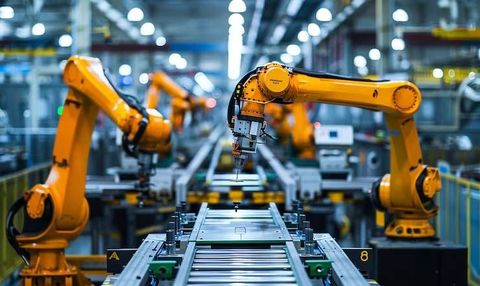
From 2024 through 2026, metal forming technology has continued moving toward automation, digital monitoring, robotics, and more flexible machine control. Industry programs during this period have highlighted automated bending cells, servo-hydraulic systems, robotic handling, digital production, and forming technologies connected with broader smart manufacturing systems.
Servo presses are particularly useful when the forming cycle needs adjustable speed, position, or force profiles. Programmable motion can allow different stages of a cycle to operate at different rates, supporting process control for specific materials and shapes.
Sensors, software, and digital twins
Sensors are increasingly used to collect information about force, position, vibration, temperature, energy use, and machine condition. When this information is connected to manufacturing software, it can support production monitoring and maintenance planning.
Digital twins are another developing area. A digital twin represents a physical machine, process, or production environment in software so engineers can examine process behavior, layouts, or changes before applying them to the physical system. Industry discussions through 2025 and 2026 have increasingly connected digital twins with smart production, process simulation, and resource management.
Energy and material efficiency
Recent development has also focused on resource efficiency. Servo-electric and servo-hydraulic technologies, improved drive systems, process monitoring, and material-yield software are being used to examine energy consumption and scrap generation.
The broader trend is toward forming equipment that is not only mechanically capable but also connected, measurable, adaptable, and easier to integrate into automated production environments.
Laws or Policies
Indian machinery safety framework
In India, metal forming machinery is affected by workplace safety requirements, applicable Indian Standards, and machinery conformity rules. The regulatory position can vary according to machine category, installation, workplace conditions, and whether the equipment falls within a specific notified scope.
The Bureau of Indian Standards maintains machinery safety standards covering subjects such as risk assessment, emergency stopping, safeguarding, interlocking devices, and press safety. Indian Standard IS 17277 Part 3 addresses safety requirements for hydraulic presses and is aligned with ISO 16092-3.
India has also developed the Machinery and Electrical Equipment Safety framework through the Omnibus Technical Regulation and related amendments. The BIS framework has been updated during 2025 and 2026, so applicable certification and registration requirements depend on the machinery category and the current notification in force.
Workplace protection
The Occupational Safety, Health and Working Conditions framework is also relevant to factories using heavy machinery. In practical terms, workplaces need appropriate safeguards, safe operating procedures, training, inspection practices, emergency controls, and risk management.
Because requirements can change and state-level implementation can differ, technical teams normally verify the current rules that apply to the specific machine, factory, and activity. This article provides general information rather than legal or engineering advice.
Tools and Resources
Engineering and process tools
Several digital tools can help people understand or plan metal forming operations. CAD software is used to create part geometry, while forming simulation tools can examine deformation, springback, material flow, and potential forming problems before physical trials.
Machine control software can define forming sequences and monitor operating parameters. Manufacturing execution systems can connect production information with scheduling, quality records, machine status, and traceability.
Standards and reference platforms
The BIS standards database is useful for checking Indian Standards by number or keyword. Its machinery safety resources can help readers identify relevant standards and conformity information.
Other useful resources include manufacturer technical manuals, tooling catalogs, machine-control documentation, engineering textbooks, training platforms, and industry exhibitions. These resources can explain machine specifications, forming principles, tooling geometry, safety concepts, and maintenance procedures.
Basic selection factors
When comparing metal forming machinery, technical factors usually include:
- Material type and thickness
- Maximum forming force
- Working length or bed size
- Stroke and operating speed
- Tooling compatibility
- Part geometry
- Production volume
- Automation requirements
- Energy use
- Safety systems
- Control and data connectivity
- Maintenance requirements
These factors should be considered together because a machine designed for one forming process may not be suitable for another.
FAQs
What is metal forming machinery?
Metal forming machinery is equipment that changes the shape of metal using controlled force, pressure, bending, drawing, rolling, stamping, or forging. The process generally reshapes the material instead of removing large amounts of it.
What are the main types of metal forming machines?
Common types include press brakes, mechanical presses, hydraulic presses, servo presses, roll forming machines, forging presses, and tube forming machines. Each type is suited to different materials, shapes, and production processes.
How does a hydraulic press differ from a mechanical press?
A hydraulic press uses fluid pressure to generate and control force, while a mechanical press normally uses a motor-driven mechanical system such as a crank or eccentric mechanism. Hydraulic systems can provide controlled force and stroke characteristics, while mechanical presses are widely used for repeated stamping cycles.
What role does automation play in metal forming machinery?
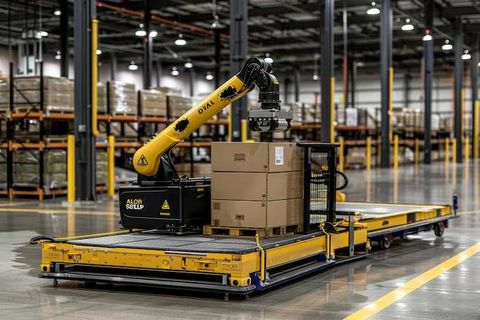
Automation can control material feeding, machine movement, part transfer, inspection, and data collection. Robots, sensors, programmable controls, and production software can work together to create connected forming cells.
What safety standards apply to metal forming machinery in India?
Applicable requirements depend on the machine category and its use. Relevant Indian Standards include machinery risk-reduction principles and specific press safety standards, while BIS conformity requirements may apply to machinery covered by current technical regulations.
Conclusion
Metal forming machinery converts sheet, plate, strip, tube, and other metal forms into useful shapes through controlled deformation. Modern systems increasingly combine presses, forming tools, sensors, programmable controls, robotics, and production software. From 2024 through 2026, automation, digital monitoring, resource efficiency, and connected manufacturing have remained important development themes. In India, machinery safety standards and conformity requirements provide an important framework for equipment design and workplace operation.