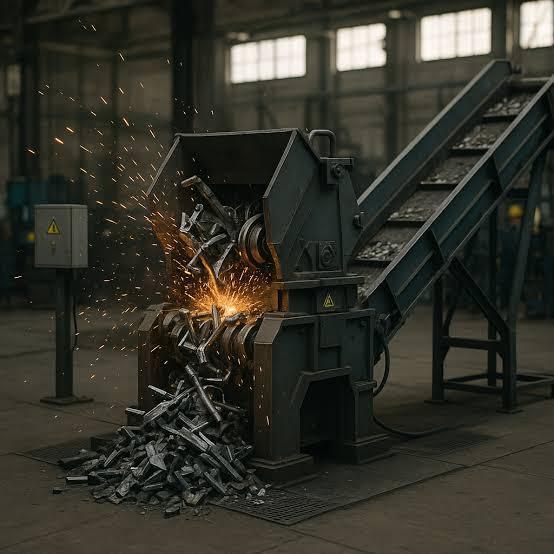
Metal Scrap Shredding Machines Explained: Equipment and Recycling Processes
Metal scrap shredding machines are industrial systems designed to break large or irregular pieces of discarded metal into smaller fragments. They are used as an important stage in metal recycling because smaller, more consistent pieces are easier to sort, separate, transport, and process further.
Metal scrap can come from many sources, including manufacturing plants, construction materials, discarded machinery, vehicles, appliances, pipes, structural components, and industrial fabrication activities. These materials often arrive in different shapes and sizes, making direct processing difficult.
A metal shredder uses mechanical force to reduce this material. Depending on the machine design, the process can involve rotating shafts, cutting tools, hammers, or other heavy-duty components.
The basic recycling sequence usually looks like this:
Collection → Inspection → Shredding → Magnetic Separation → Non-Ferrous Separation → Sorting → Further Processing
The exact process depends on the type of metal, material thickness, contamination level, and desired output size.
Common Types of Metal Scrap Shredders
Different applications require different machine configurations. Common categories include:
- Single-shaft shredders: Suitable for controlled size reduction and variable feed materials.
- Double-shaft shredders: Use two rotating shafts to tear and shear bulky scrap.
- Four-shaft shredders: Provide additional cutting stages for more controlled particle sizes.
- Hammer shredders: Use rapidly moving hammers to break and fragment metal.
- Vertical shredders: Can be used for specific material preparation and separation applications.
- Granulators: Further reduce already-processed metal into smaller pieces.
Machine selection depends on feedstock characteristics rather than simply choosing the largest available system.
Why Metal Scrap Shredding Matters Today
Metal recycling has become increasingly important as manufacturers and governments focus on resource efficiency, circular production, and lower environmental impacts.
Shredding helps transform difficult-to-handle scrap into a more uniform material stream. This can make downstream sorting more practical and help separate ferrous and non-ferrous materials.
The process can be particularly relevant to:
- Steel and metal processors
- Automotive recycling facilities
- Construction and demolition operations
- Machinery manufacturers
- Appliance recycling facilities
- Metal fabrication industries
- Municipal and industrial recycling operations
Supporting Resource Efficiency
Recycling metal allows materials already present in the economy to remain in circulation for longer. This reduces dependence on newly extracted raw materials and supports circular manufacturing models.
Ferrous scrap is especially important for steelmaking. In India, 2025–26 data reported by industry sources indicated that total ferrous scrap consumption increased substantially while domestic scrap generation also grew. This reflects a broader shift toward greater use of locally generated recyclable material.
Improving Material Preparation
Large metal objects are difficult to sort efficiently. Shredding reduces their size and exposes different material components.
After shredding, equipment such as magnetic separators, eddy-current separators, screens, and sorting systems can help create more consistent material streams.
Key Benefits of Shredding
| Area | Contribution |
|---|---|
| Size reduction | Makes bulky scrap easier to handle |
| Sorting | Helps separate different material fractions |
| Material recovery | Supports recovery of ferrous and non-ferrous metals |
| Processing | Creates more consistent feedstock |
| Space management | Reduces the volume of bulky scrap |
| Circularity | Keeps recoverable metals in productive use |
How the Metal Scrap Recycling Process Works
A modern metal scrap recycling line normally includes several connected stages.
Inspection and Preparation
Incoming scrap is inspected before entering the shredder. Operators may identify unsuitable materials, hazardous components, excessive contamination, or objects that require separate handling.
Large items may be prepared before shredding. This can include removing certain non-metallic parts or reducing exceptionally large pieces.
Primary Shredding
The prepared material enters the primary shredder. Cutting tools or hammers apply mechanical force to break the scrap into smaller fragments.
The machine's configuration influences throughput, output size, energy demand, and wear on internal components.
Magnetic Separation
Ferrous metals such as iron and steel can be separated using magnetic equipment. This is one of the most common stages in metal recycling.
Magnetic separation can occur after the primary shredding stage or at several points within a larger recycling line.
Non-Ferrous Separation
Materials such as aluminium and copper require different separation techniques. Eddy-current separators can be used to separate conductive non-ferrous metals from other shredded material streams.
Additional sorting methods may include sensors, screens, air classification, or manual quality inspection.
Final Processing
Separated metals can undergo additional preparation depending on their intended application. This may include further size reduction, cleaning, grading, or preparation for melting and manufacturing.
Recent Developments and Trends in 2025–2026
Metal recycling has received increasing attention during the past year because of changing scrap flows, domestic resource strategies, and environmental policy.
Growing Importance of Domestic Scrap
In May 2026, industry reporting indicated that India's ferrous scrap consumption reached about 41 million tonnes during FY2025–26, while domestic scrap generation increased significantly. The same reporting showed a decline in imported ferrous scrap compared with the previous financial year.
This trend makes efficient domestic collection, sorting, shredding, and material preparation increasingly relevant.
Greater Focus on Circular Manufacturing
A March 2026 analysis of India's steel sector highlighted the strategic importance of integrating scrap into steel production and the potential role of scrap in decarbonization efforts.
This does not mean every recycling process has the same environmental performance. Actual results depend on electricity sources, transportation, equipment efficiency, material quality, and processing methods.
New Attention on Non-Ferrous Scrap
India introduced Extended Producer Responsibility requirements for certain non-ferrous metal scrap through amendments to the Hazardous and Other Wastes rules. The framework was notified in 2025 and came into force on April 1, 2026. It covers areas involving non-ferrous metals such as aluminium, copper, zinc, and their alloys.
International Scrap Trade Changes
International trade policies are also influencing the recycling sector. In June 2026, reporting highlighted concerns in India about proposed European restrictions affecting exports of scrap metals to non-OECD countries from 2027 unless specific approval requirements are met.
These developments could make domestic recovery and processing infrastructure more important in coming years.
Laws, Policies, and Environmental Considerations in India
Metal scrap shredding operations in India can be affected by environmental, waste-management, occupational-safety, and import regulations. Requirements can vary according to the material being processed and the location of the facility.
Hazardous and Other Wastes Rules
India's Hazardous and Other Wastes (Management and Transboundary Movement) framework regulates specified hazardous and other waste streams, including aspects of transboundary movement.
The 2025 amendment introduced an Extended Producer Responsibility framework for scrap of specified non-ferrous metals, effective from April 1, 2026. It establishes responsibilities involving producers, collection agents, refurbishers, and recyclers.
Solid Waste Management Rules
India also updated its solid-waste regulatory framework in 2026. The Ministry of Environment, Forest and Climate Change lists the Solid Waste Management Rules, 2026, notified through S.O. 388(E) on January 27, 2026.
Not every metal scrap stream automatically falls under the same rule. Facilities should identify the exact category of material and applicable state and national requirements.
Import Controls
Imported scrap may have additional documentation and inspection requirements. In September 2026, India was reviewing a proposal concerning pre-shipment inspection requirements for imported metal scrap, with no final decision reported at that time.
For any recycling facility, compliance should therefore be checked against the latest government notifications and applicable state pollution-control requirements.
Tools and Resources for Metal Scrap Shredding
Several general tools can help with planning, monitoring, and understanding a shredding operation.
Equipment Selection Tools
Useful evaluation resources include:
- Material-size measurement sheets
- Feedstock composition checklists
- Throughput calculation worksheets
- Equipment capacity calculators
- Wear-part inspection schedules
- Preventive-maintenance templates
Material Separation Tools
A recycling line may use:
- Magnetic separators
- Eddy-current separators
- Vibrating screens
- Belt conveyors
- Air classifiers
- Optical or sensor-based sorting systems
- Metal composition testing equipment
Data and Planning Resources
Operators and researchers can also use:
- Material-flow spreadsheets
- Energy-use calculators
- Recycling-rate calculators
- Maintenance logs
- Safety inspection checklists
- Waste classification guides
- Government environmental databases
- Industry standards and technical manuals
The most useful resource depends on whether the objective is equipment planning, material classification, operational monitoring, or regulatory compliance.
Frequently Asked Questions
What does a metal scrap shredder do?
A metal scrap shredder mechanically reduces large or irregular metal objects into smaller pieces. These pieces can then move through sorting and separation stages for further recycling.
What metals can be processed?
The suitable material depends on the shredder design. Systems may process steel, iron, aluminium, copper-containing scrap, and other metals, but feedstock limitations should always be checked before processing.
Why is magnetic separation used after shredding?
Magnetic separation is commonly used to recover ferrous metals such as iron and steel. It helps create a separate ferrous stream from non-magnetic materials.
Is shredded metal ready for final manufacturing?
Not always. Shredded material may still require additional sorting, cleaning, grading, or separation before it becomes suitable feedstock for a particular manufacturing process.
What factors affect shredder performance?
Important factors include material type, thickness, feed size, moisture, contamination, machine configuration, cutting-tool condition, motor capacity, and operating practices.
Conclusion
Metal scrap shredding machines play an important role in modern recycling by converting bulky and irregular scrap into smaller material that can be sorted and processed more efficiently.The overall recycling process involves much more than shredding alone. Inspection, size reduction, magnetic separation, non-ferrous separation, screening, quality control, and final material preparation all contribute to effective recovery.