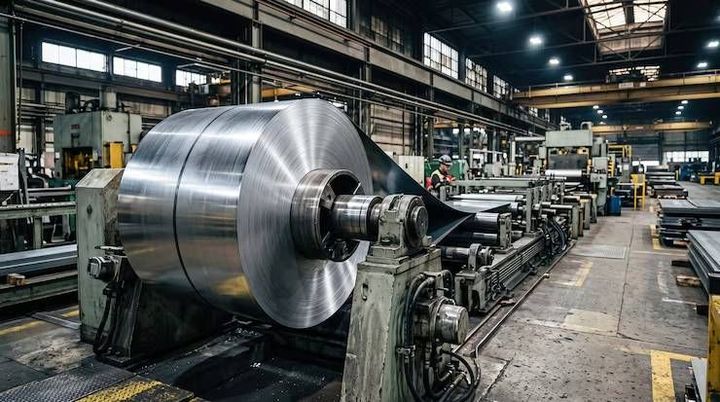
Metal Spinning Machines Explained: Types, Components, Applications, Benefits and Limitations
Metal spinning machines are used to shape flat metal discs or hollow metal blanks into round, symmetrical components. The process, also known as metal spinning or spin forming, involves rotating a metal workpiece against a shaped tool or mandrel while controlled pressure gradually changes its form. Metal spinning machines are used in industries that manufacture lighting components, cookware, industrial containers, automotive parts, and aerospace components.
Context
Metal spinning machines are used to shape flat metal discs or hollow metal blanks into round, symmetrical components. The process, also known as metal spinning or spin forming, involves rotating a metal workpiece against a shaped tool or mandrel while controlled pressure gradually changes its form. Metal spinning machines are used in industries that manufacture lighting components, cookware, industrial containers, automotive parts, and aerospace components.
The technique developed from traditional hand-operated metalworking methods, in which craftspeople shaped rotating metal blanks using hand tools. Modern equipment applies the same basic principle with improved control over rotation, pressure, and tool movement. Depending on the machine design, an operator may guide the forming tool manually, control it through mechanical systems, or use computer numerical control (CNC).
How Metal Spinning Works
Metal spinning usually begins with a circular metal blank secured against a mandrel, which defines the intended internal shape. The machine rotates the blank while a roller or forming tool presses against it in a controlled sequence. Repeated tool movements gradually shape the metal around the mandrel without removing large amounts of material.
The finished component depends on several factors, including the metal type, blank thickness, rotation speed, tool geometry, and forming pressure. Common materials include aluminum, copper, brass, and certain grades of steel. Each material behaves differently during deformation, so the process must be adjusted to reduce cracking, wrinkling, and uneven thickness.
Importance
Metal spinning machines matter because many industrial products require hollow, circular, or rotationally symmetrical shapes. Examples include lamp reflectors, cooking vessels, ventilation components, pressure-vessel parts, and protective covers. The process can form these shapes while retaining most of the original material, unlike manufacturing methods that remove substantial amounts through cutting.
Manufacturers use metal spinning for both specialized components and selected production runs. It can be suitable when a part has a circular shape and a design that can be formed around a mandrel. However, it is not suitable for every geometry, particularly components with complex internal features, sharp corners, or irregular shapes.
Main Components of a Metal Spinning Machine
The major components work together to hold, rotate, and shape the workpiece.
Headstock and spindle: Support and rotate the workpiece and mandrel.
Mandrel: A shaped tool that provides the surface around which the metal is formed.
Tailstock or pressure pad: Helps hold the blank securely against the mandrel, depending on machine design.
Forming roller: Applies pressure to move the metal gradually into the required shape.
Tool carriage: Guides the roller along a controlled path.
Drive system: Supplies the rotational movement needed during forming.
Control system: Allows the operator to adjust machine movements, speeds, and forming sequences.
Safety guards: Help separate operators from rotating equipment and moving parts.
The arrangement varies across manual, mechanical, and CNC machines. Larger industrial systems may include programmable tool paths, automated material handling, and monitoring equipment.
Types of Metal Spinning Machines
Different machine types suit different production requirements, component sizes, and levels of process control.
Manual metal spinning machines: Operators guide the forming tool by hand. These machines are often used for small batches, custom components, and traditional metalworking.
Conventional power spinning machines: Mechanical or powered tool movement reduces the physical effort required during forming and supports repeatable operations.
CNC metal spinning machines: Computer-controlled movements guide the tool along programmed paths. These machines are used when parts require consistent dimensions or repeatable forming sequences.
Hydraulic metal spinning machines: Hydraulic systems provide controlled force for forming operations that require substantial pressure.
Special-purpose spinning machines: Equipment designed for particular component shapes, material sizes, or manufacturing processes.
Machine categories can overlap. For example, a CNC spinning machine may also use hydraulic systems, depending on its design.
Comparison of Machine Types
| Machine type | Main operating method | Common application |
|---|---|---|
| Manual | Hand-guided forming tool | Custom parts and small batches |
| Conventional power | Powered tool movement | General circular components |
| CNC | Programmed tool movement | Repeatable, controlled production |
| Hydraulic | Hydraulic force and actuation | Forming operations requiring higher force |
| Special-purpose | Application-specific arrangement | Dedicated component designs |
The appropriate machine depends on workpiece dimensions, material properties, required accuracy, production volume, and operator capabilities.
Recent Updates
Metal spinning technology continues to develop through improvements in machine control, automation, tooling, and process monitoring. During 2024–2026, broader manufacturing trends have emphasized digital production systems, energy awareness, and integration between machine tools and factory data systems. The availability of specific features varies by manufacturer and machine model.
CNC Controls and Digital Manufacturing
CNC metal spinning machines can store forming programs and coordinate roller movements with spindle rotation. This supports repeatable production when the workpiece, tooling, and operating conditions remain consistent. Digital controls may also help operators adjust forming sequences and document process settings.
Some modern manufacturing systems integrate machine monitoring with production planning software. Sensors and control systems can track selected operating conditions, helping production teams identify deviations or interruptions. Such features do not remove the need for inspection, maintenance, or skilled process setup.
Automation and Material Efficiency
Automation may include programmed tool movement, automatic loading, robotic handling, or integration with other forming and finishing equipment. These arrangements can reduce repetitive manual tasks, although their usefulness depends on production volume, component design, and the complexity of the manufacturing process.
Material efficiency remains an important consideration because metal spinning primarily reshapes the blank instead of cutting away large quantities of material. However, trimming, surface finishing, setup pieces, and rejected components may still generate waste. Process planning and inspection are therefore important for consistent output.
Laws or Policies
Metal spinning machines are subject to workplace safety requirements, machinery safeguards, electrical safety rules, and environmental obligations that depend on the country and the factory's activities. In India, manufacturers and operators must consider applicable central and state laws, relevant occupational safety requirements, and standards appropriate to the equipment.
Workplace Safety in India
India's Occupational Safety, Health and Working Conditions Code, 2020, forms part of the country's consolidated framework for workplace safety and working conditions. Its practical application depends on commencement notifications, applicable rules, establishment coverage, and other relevant legal requirements.
Metal spinning presents hazards associated with rotating workpieces, moving rollers, entanglement, sharp edges, noise, and flying fragments. Appropriate safeguards may include machine guarding, emergency stops, safe work procedures, training, inspection, and suitable personal protective equipment. Loose clothing, jewelry, and unsecured hair can create entanglement risks near rotating machinery.
Machinery Standards and Environmental Requirements
Relevant Indian Standards published by the Bureau of Indian Standards (BIS) may apply to particular machine types, components, or safety matters. Whether a standard is mandatory depends on the applicable regulation, product category, and any relevant certification or conformity requirements.
Factories may also need to comply with applicable electrical, fire safety, waste management, and pollution-control requirements. Metalworking fluids, cleaning chemicals, scrap metal, and noise may require appropriate handling or controls depending on the process. Manufacturers should verify current requirements for their location and equipment rather than assuming that one rule covers every installation.
Tools and Resources
Technical resources help operators, engineers, and students understand metal spinning machine design, production planning, and process limitations.
Design and Manufacturing Tools
Computer-aided design (CAD) software can model a component's geometry before production. Computer-aided manufacturing (CAM) tools may help prepare forming paths for compatible CNC equipment. These systems can support design review, but physical trials and material-specific validation may still be needed.
Engineering calculations can help estimate blank dimensions, material requirements, spindle speed, and forming forces. Actual settings depend on material thickness, alloy, machine capability, tool geometry, and the intended component. Manufacturer documentation should guide operating limits and machine-specific procedures.
Technical Information Sources
Useful references include:
Bureau of Indian Standards: Information about relevant Indian Standards and conformity requirements.
Ministry of Labour and Employment: Official information on occupational safety legislation and implementation.
Machine manufacturer manuals: Instructions for operation, maintenance, tooling, and rated capacity.
Engineering textbooks and technical papers: Explanations of sheet-metal forming, material deformation, and metal spinning methods.
CAD and manufacturing software documentation: Guidance on component modelling, tooling design, and programmable production.
Practical Factors for Machine Selection
When assessing a metal spinning machine, manufacturers commonly examine workpiece diameter, material thickness, spindle capacity, tool travel, available control features, and production requirements. They also consider setup time, maintenance access, operator training, floor space, and compatibility with existing factory systems.
A machine's stated capacity should be checked against the actual material and component geometry. Maximum diameter or spindle speed alone does not establish whether a machine can form a particular part safely or consistently.
FAQs
What is a metal spinning machine used for?
A metal spinning machine forms circular metal blanks into hollow, rotationally symmetrical components. Typical applications include cookware, lighting reflectors, ventilation parts, and selected industrial or automotive components.
What are the main types of metal spinning machines?
Common types include manual, conventional power, CNC, hydraulic, and special-purpose machines. They differ in tool control, forming force, automation, and suitability for different production requirements.
Which materials can metal spinning machines process?
Depending on machine capability and tooling, metal spinning can process aluminum, copper, brass, and certain steels. Material thickness, ductility, and work-hardening behavior influence the forming method.
What are the benefits and limitations of metal spinning?
Benefits can include relatively low material removal, flexible production for circular shapes, and the ability to create certain complex hollow forms. Limitations include geometric restrictions, possible wall-thickness variation, tooling requirements, and the need for careful process control.
What safety precautions are important when operating metal spinning machines?
Important precautions include using suitable guards, checking the workpiece and tooling, following operating procedures, keeping clear of rotating parts, and wearing appropriate protective equipment. Training and regular inspection are essential parts of safe operation.
Conclusion
Metal spinning machines shape rotating metal blanks into hollow components used across several manufacturing industries. Manual, power-driven, CNC, and hydraulic systems provide different levels of control and forming capability. Machine selection depends on material properties, component geometry, production needs, and workplace safety requirements. Advances in automation and digital control continue to influence how metal spinning fits into modern manufacturing.