Modern Manufacturing Guide: Methods, Technologies, Applications, Benefits and Industry Trends
Modern manufacturing is the organized process of turning raw materials, components, designs, and digital information into finished or partially finished products. It developed from traditional craft production and factory systems into a connected industrial environment that can combine machines, software, robotics, sensors, data analysis, and human expertise.
Manufacturing exists because societies need repeatable ways to produce physical goods at useful volumes and consistent levels of quality. Today, modern manufacturing can include metal cutting, molding, casting, welding, machining, electronics assembly, food processing, textile production, chemical processing, and many other activities.
How modern manufacturing developed
Earlier factories relied heavily on manual work and mechanical equipment. Over time, numerical control, computer-aided design, programmable controls, industrial robots, and automated inspection changed how production systems operate.
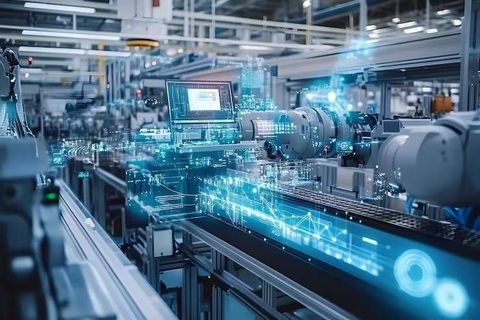
The current model is more connected. A production line may collect information from machines, use software to monitor processes, and apply analytics to identify patterns. This creates a link between product design, production planning, quality checks, maintenance, and supply-chain coordination.
Importance
Modern manufacturing affects households, businesses, infrastructure, transportation, healthcare equipment, electronics, construction materials, energy systems, and many everyday products. It also influences how industries respond to changes in demand, material availability, product designs, and environmental requirements.
Problems it addresses
A modern factory may need to manage several challenges at the same time:
- Maintaining consistent product dimensions and quality
- Reducing material waste and unnecessary machine downtime
- Handling complex products with many components
- Tracking production information across multiple stages
- Protecting workers around machinery and automated equipment
- Responding to changes in energy use and environmental requirements
- Coordinating suppliers, inventories, production schedules, and deliveries
Automation can handle repetitive operations, while people remain important for planning, engineering, maintenance, quality decisions, and process improvement. The balance differs by industry, product type, production volume, and factory design.
Common manufacturing methods
Manufacturing methods are selected according to the material, shape, quantity, precision, and intended use of a product. Common examples include machining, casting, forging, stamping, injection molding, additive manufacturing, welding, cutting, forming, and assembly.
| Manufacturing method | Typical materials | Common applications |
|---|---|---|
| CNC machining | Metals, plastics | Components, housings, precision parts |
| Injection molding | Thermoplastics | Consumer products, automotive parts |
| Casting | Metals and alloys | Housings, engine components |
| Forging | Steel and other metals | Shafts, tools, structural parts |
| Additive manufacturing | Polymers, metals | Prototypes, customized components |
| Welding | Metals | Frames, structures, assemblies |
| Stamping | Sheet metal | Panels, brackets, enclosures |
Technologies
Technology is now present across many stages of manufacturing, from product design to inspection and maintenance.
Digital manufacturing
Computer-aided design helps engineers create and modify product models before physical production begins. Computer-aided manufacturing can connect design information with machine operations, while manufacturing execution systems can help track production activities on the factory floor.
Digital twins create digital representations of physical assets or processes. They can be used to study equipment behavior, production flows, or design changes without immediately changing the physical system.
Robotics and automation
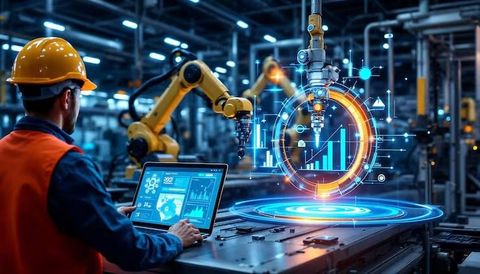
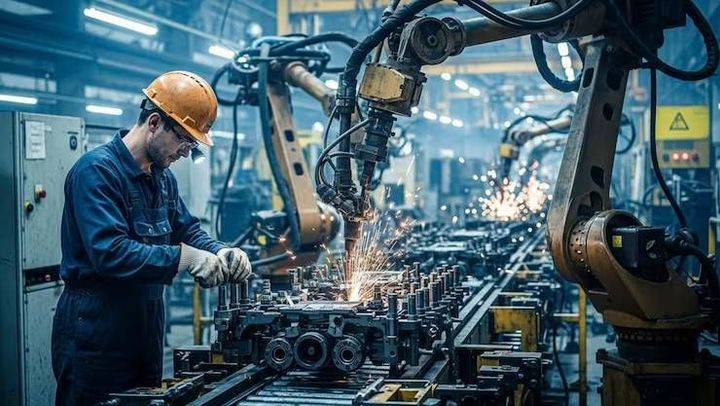
Industrial robots are used for tasks such as welding, material handling, painting, packaging, assembly, and inspection. Automated guided vehicles and autonomous mobile robots can move materials within suitable factory environments.
Automation does not always mean complete removal of human involvement. Many systems combine automated machine actions with human supervision, programming, inspection, maintenance, and decision-making.
Artificial intelligence and data analysis
Artificial intelligence can analyze production data, images, sensor readings, and machine conditions. Potential applications include visual inspection, predictive maintenance, production planning, anomaly detection, and process monitoring.
These systems depend on appropriate data, reliable sensors, suitable software, and human review. Results can vary according to the quality and completeness of available information.
Applications
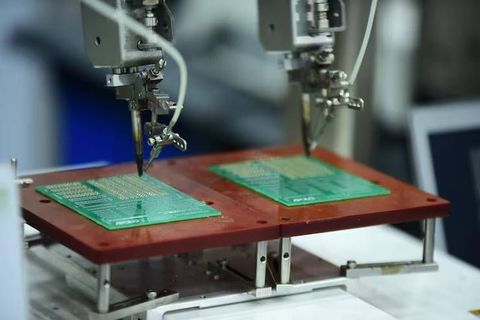
Modern manufacturing technologies are used across many industries. Automotive plants use robotics, machining, stamping, welding, and inspection systems. Electronics production uses surface-mount assembly, automated optical inspection, testing equipment, and controlled production environments.
Industry examples
In aerospace and precision engineering, digital design and advanced machining can support components with demanding dimensional requirements. In food processing, automation can support mixing, filling, packaging, temperature monitoring, and quality checks.
Pharmaceutical manufacturing, medical-device production, renewable-energy equipment, construction materials, consumer electronics, and industrial machinery also use combinations of automated and conventional methods. Each industry follows different technical, quality, safety, and environmental requirements.
Benefits and Challenges
Modern manufacturing can improve process consistency, production visibility, repeatability, and the ability to monitor equipment. Digital systems can also create records that help organizations understand production performance and identify recurring process issues.
However, technology introduces its own challenges. Equipment integration can be complex, older machines may use different communication systems, and digital networks can create cybersecurity concerns. Staff may also need new technical knowledge to operate, maintain, and interpret automated systems.
Sustainability considerations
Manufacturers are increasingly examining energy consumption, material efficiency, waste reduction, water use, and emissions. Approaches can include efficient motors, process monitoring, material recovery, renewable electricity, closed-loop systems, and product designs that use fewer resources.
The environmental effect of a manufacturing change depends on the entire process rather than one machine alone. Energy sources, material inputs, transport, equipment life, and end-of-life handling can all influence the overall result.
Recent Updates
Manufacturing trends from 2024 through 2026 show continued movement toward connected factories, artificial intelligence, robotics, advanced materials, semiconductor production, and cleaner industrial technologies.
Automation and advanced manufacturing
Recent Indian policy and research work has highlighted artificial intelligence, machine learning, digital twins, robotics, and advanced materials as important technologies for advanced manufacturing. NITI Aayog's manufacturing roadmap identifies these technologies across multiple priority sectors.
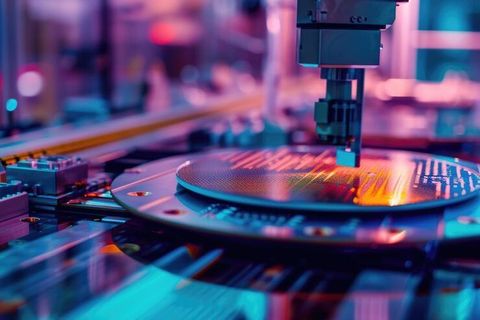
India has also expanded policy attention toward domestic electronics and semiconductor production. Government material from 2026 reports continued development of a semiconductor ecosystem, including approved projects and commercial production at some facilities.
Manufacturing ecosystem changes
The National Manufacturing Mission announced in the Union Budget 2025–26 covers small, medium, and large industries. Its stated focus includes technology access, workforce readiness, MSME development, quality manufacturing, and an implementation framework across central and state governments.
Production Linked Incentive programs also remain an important part of India's manufacturing policy. Government reporting in 2026 stated that 836 applications across 14 sectors had been approved, with cumulative investment exceeding ₹2.16 lakh crore as of the end of 2025.
Laws or Policies
Manufacturing in India operates within a framework covering workplace safety, labor conditions, environmental protection, product standards, taxation, industrial approvals, and sector-specific rules.
Workplace and labor rules
India's four labor codes came into force in November 2025 according to the Ministry of Labour and Employment. The framework includes the Code on Wages, Industrial Relations Code, Code on Social Security, and Occupational Safety, Health and Working Conditions Code. Requirements affecting factories can include workplace safety, wages, social protection, and working conditions.
Manufacturers may also need to consider environmental permissions, pollution-control requirements, waste rules, and state-level factory requirements depending on the activity and location. Product standards can be relevant where Indian standards or sector-specific technical rules apply.
Government manufacturing programs
The National Manufacturing Policy provides a broader policy framework for manufacturing development, while newer programs such as the National Manufacturing Mission and sector-focused PLI schemes address specific industrial objectives.
Requirements can differ by industry and state. Official government portals and applicable regulators should be checked for current rules before making compliance decisions.
Tools and Resources
Several categories of tools can help people understand or manage modern manufacturing systems.
Design and production tools
CAD software is used for digital product design. CAM software can translate design information into machine instructions for suitable equipment. Manufacturing execution systems can track production stages, work orders, quality information, and machine data.
Factory analysis tools
Energy-monitoring systems can track electricity use by equipment or production area. Maintenance dashboards can organize inspection records and machine conditions. Digital-twin platforms can model selected production assets or processes.
Indian reference resources
The National Single Window System can help users identify and access information related to certain central and state approvals. The Bureau of Indian Standards provides information about Indian Standards and conformity-related topics. Udyam Registration is an official government resource for eligible micro, small, and medium enterprises.
These resources should be used alongside the specific technical documents and regulatory requirements that apply to a manufacturing activity.
FAQs
What is modern manufacturing?
Modern manufacturing is the use of production methods, machinery, digital systems, automation, and human expertise to transform materials or components into products. It can range from conventional machining and assembly to connected and highly automated production.
What are common modern manufacturing technologies?
Common technologies include CNC machines, industrial robots, additive manufacturing, sensors, manufacturing execution systems, computer-aided design, digital twins, machine vision, and artificial intelligence.
How does automation affect manufacturing?
Automation can perform repetitive or highly controlled tasks, monitor process conditions, move materials, and support inspection. Human workers remain involved in system design, programming, maintenance, quality review, safety, and process decisions.
What are current manufacturing industry trends?
Current manufacturing industry trends include factory connectivity, robotics, artificial intelligence, digital twins, semiconductor production, advanced materials, energy efficiency, and greater attention to supply-chain resilience.
What policies affect manufacturing in India?
Manufacturing in India is influenced by labor and workplace rules, environmental requirements, product standards, industrial approvals, the National Manufacturing Mission, and sector-specific programs such as PLI schemes. The applicable requirements depend on the activity, location, product, and scale of production.
Conclusion
Modern manufacturing combines established production methods with automation, software, data, robotics, and advanced engineering. Its applications extend across electronics, vehicles, machinery, construction, energy, food processing, and many other industries. From 2024 through 2026, manufacturing in India has continued to move toward digital production, advanced technologies, electronics and semiconductor capacity, and cleaner industrial systems. The regulatory environment also covers workplace safety, labor conditions, environmental responsibilities, product standards, and sector-specific programs.