Plasma Cutting Machines Explained: Types, Components, Cutting Methods, Benefits and Applications
Plasma cutting machines are tools used to cut electrically conductive materials such as mild steel, stainless steel, aluminum, copper, and certain other metals. They use an electrically generated plasma arc to produce intense heat that melts the material along a controlled cutting path.
The basic concept of plasma cutting developed from plasma arc processes used in industrial metalworking. As power supplies, torches, control systems, and computer technology developed, plasma cutting expanded from manually guided equipment to CNC plasma cutting machines capable of following digital cutting patterns.
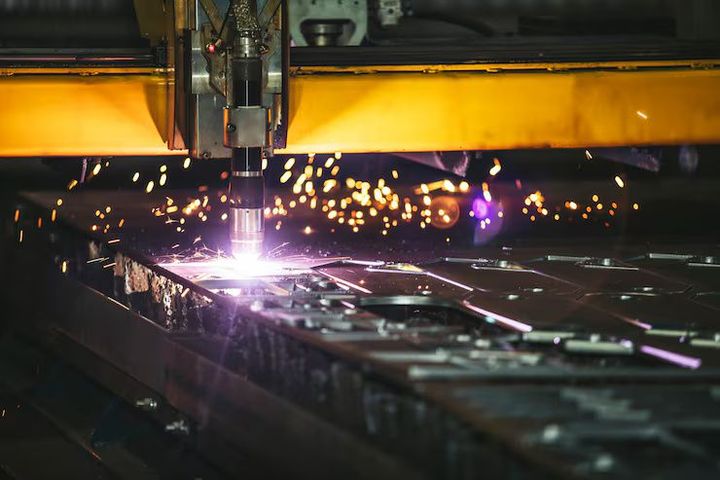
A plasma cutting machine generally combines an electrical power source, plasma torch, compressed gas supply, workpiece connection, control system, and consumable components. When the system is activated, gas passes through the torch while an electric arc creates plasma. The concentrated plasma stream melts the metal, while the gas flow pushes the molten material away from the cut.
How plasma cutting works
Plasma is a highly energized state of gas containing charged particles. In a plasma cutter, an electric arc transfers energy to the gas passing through a small opening in the torch. This creates a concentrated stream with enough heat to melt conductive metal.
The cutting process normally involves several stages:
- Electrical energy creates and maintains the arc.
- Gas enters the plasma torch.
- The gas becomes ionized and forms plasma.
- The concentrated plasma stream melts the workpiece.
- Gas flow removes molten metal from the cutting path.
- The torch or cutting table follows the required cutting pattern.
This process allows plasma cutting machines to produce straight cuts, curved profiles, holes, slots, and other shapes depending on the machine configuration and control system.
Importance
Plasma cutting is important because many industries need to transform large sheets, plates, tubes, and metal components into specific shapes. Manual cutting can be suitable for certain tasks, while mechanized and CNC plasma systems can follow repeatable digital patterns for larger or more complex work.
The technology is used in areas such as metal fabrication, construction equipment production, agricultural machinery, transportation equipment, structural components, repair activities, and general manufacturing.
For general users, understanding plasma cutting machines can also help explain how many metal components are produced. Items such as brackets, frames, panels, supports, machine parts, and structural plates can involve thermal cutting before additional forming, drilling, welding, or finishing processes.
Main benefits
Plasma cutting has several practical characteristics:
- It can cut many electrically conductive metals.
- It can produce both manual and computer-controlled cuts.
- It can handle different material thicknesses depending on the system.
- CNC systems can reproduce digital shapes across multiple pieces.
- The same basic cutting principle can be adapted for portable and large table-based equipment.
- Plasma cutting can be combined with CAD and CAM software for digitally planned production.
The actual result depends on factors such as material type, thickness, amperage, gas selection, torch condition, cutting speed, and machine settings.
Common applications
Plasma cutting machines are found in several areas of metalworking. Common applications include:
- Structural steel preparation
- Sheet-metal fabrication
- Machinery components
- Agricultural equipment parts
- Vehicle and trailer components
- Metal brackets and frames
- Construction-related components
- Decorative metal patterns
- Repair and maintenance cutting
- CNC profile cutting
Types of Plasma Cutting Machines
Different plasma systems are designed around their operating method, mobility, cutting capacity, and level of automation.
Handheld plasma cutters
Handheld plasma cutters are compact systems in which the operator guides the torch manually. They are commonly used for repair work, smaller fabrication tasks, maintenance activities, and cutting operations where computer-controlled movement is not required.
Their portability allows cutting at different locations, although the quality and consistency of a manually guided cut depend partly on operator technique.
CNC plasma cutting machines
CNC plasma cutting machines use computer-controlled movement to guide the torch according to a programmed pattern. A digital drawing can be converted into machine instructions through CAD and CAM software.
These systems are commonly used when repeatability, programmed shapes, and controlled movement are important. They may be installed on cutting tables with different working areas and configurations.
High-definition plasma systems
High-definition plasma systems use advanced torch designs, power control, gas management, and motion control to improve the consistency of the cutting process. They are commonly associated with mechanized cutting applications where edge quality and dimensional control are important.
Air plasma systems
Air plasma cutters use compressed air as the plasma gas. They are widely used because compressed air is readily available in many workshops and can simplify the gas-supply arrangement.
Other plasma systems can use gases such as oxygen, nitrogen, argon, or mixtures selected according to the material and cutting process.
Components of a Plasma Cutting Machine
A plasma cutting machine contains several interconnected components. Understanding them makes the operation easier to visualize.
Power supply
The power supply converts incoming electrical energy into the controlled current required to create and maintain the plasma arc. Modern systems commonly use electronic power-control technology.
Plasma torch
The torch directs the plasma toward the workpiece. Important internal parts can include an electrode, nozzle, swirl ring, shield, and related consumables. Their design influences arc formation and gas flow.
Gas system
The gas system delivers the selected plasma gas at the required pressure and flow. Gas quality, pressure, and flow can affect arc stability and cut characteristics.
Workpiece connection
The workpiece is connected to the electrical circuit through a work lead or grounding arrangement. Proper electrical connections are important for stable plasma operation.
Motion and control system
CNC machines use motors, drives, rails, controllers, and software to move the torch along programmed paths. The control system determines movement, cutting sequences, and other machine functions.
Consumable components
Electrodes, nozzles, shields, and related torch parts gradually wear during operation. Their condition can influence arc stability and cut quality.
Cutting Methods and Process Factors
Plasma cutting can be performed using different machine arrangements and operating approaches. The appropriate method depends on the material, thickness, required shape, and production environment.
Manual cutting
Manual plasma cutting involves guiding the torch directly by hand. It can be useful for irregular shapes, repair tasks, and situations where a programmed cutting table is unnecessary.
Mechanized cutting
Mechanized systems move the torch using a machine structure. This can provide more consistent movement than manual operation and can be integrated with CNC controls.
CNC profile cutting
CNC plasma cutting uses digital geometry to control the torch path. CAD drawings can be prepared, converted through CAM software, nested onto a sheet, and transferred to the cutting system.
Several factors influence the final cut:
| Factor | Effect on Cutting |
|---|---|
| Material type | Influences gas selection and cutting behavior |
| Material thickness | Affects required power and cutting speed |
| Cutting current | Influences plasma energy |
| Gas type | Affects arc characteristics and edge results |
| Gas pressure | Influences plasma stability and material removal |
| Torch height | Influences arc conditions and cut consistency |
| Cutting speed | Affects heat input and edge characteristics |
| Consumable condition | Can influence arc stability and cut quality |
| Motion accuracy | Influences shape and dimensional consistency |
Recent Updates
Plasma cutting technology has continued moving toward automation, digital control, process monitoring, and improved integration with CNC systems. Recent developments have included greater use of connected equipment, automated process settings, improved hole-cutting controls, bevel-cutting capabilities, and software integration.
Recent industry developments also show greater attention to machine connectivity. Some modern plasma platforms incorporate industrial communication technologies such as Ethernet-based connectivity and MTConnect for exchanging information between machines and software systems. These capabilities can support equipment monitoring and process analysis.
Newer mechanized systems have also introduced process-control features intended to reduce variation between cutting operations. Developments in optimized hole cutting and automated settings are examples of how plasma systems are increasingly connected with CNC and CAM workflows.
The broader trend from 2024 through 2026 has therefore been toward more integrated cutting systems rather than plasma equipment operating as an isolated machine. Digital drawings, automated motion, process data, and software-based control are becoming increasingly connected parts of the cutting workflow.
Laws or Policies
In India, plasma cutting equipment can fall within the wider framework of machinery safety, workplace safety, electrical safety, and applicable Indian Standards. The exact requirements depend on the machine type, workplace, installation, and applicable regulatory provisions.
The Bureau of Indian Standards identifies IS 18165:2023, based on ISO 17916:2016, as a safety standard for thermal cutting machines. It covers safety requirements associated with machinery using thermal cutting or marking processes, including plasma arc processes. The standard addresses areas such as design, construction, installation, operation, maintenance, and machinery-related hazards.
India's Occupational Safety, Health and Working Conditions Code, 2020 also establishes a broader framework concerning workplace safety and dangerous operations. Provisions concerning hazardous processes include requirements relating to protective equipment, worker information, health and safety measures, and emergency planning where applicable.
BIS also maintains certification and conformity-assessment frameworks for machinery and electrical equipment. Whether a particular plasma cutting machine requires a specific certification or conformity process depends on the applicable product category and current regulatory notifications.
Because requirements can change and may differ according to the installation and machine category, manufacturers, operators, and facility managers generally need to consult the applicable Indian Standards and current government rules for their specific situation.
Tools and Resources
Several resources can help people understand or operate plasma cutting systems more systematically.
CAD and CAM software
CAD software can be used to create two-dimensional drawings and profiles. CAM software can then convert those designs into machine instructions for CNC equipment.
Cutting charts
Manufacturer cutting charts commonly provide information about material type, thickness, current, gas selection, torch height, and cutting speed. These references help users understand how different settings interact.
Nesting software
Nesting tools arrange multiple parts within a sheet or plate layout. This helps create an organized cutting pattern and can reduce unused areas of material.
Measurement tools
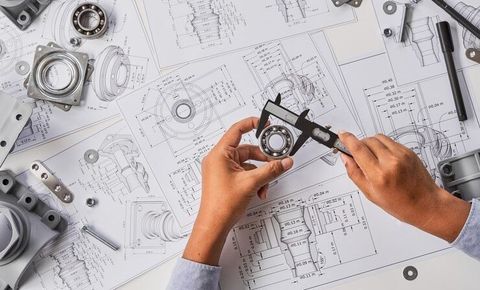
Calipers, measuring tapes, squares, and other dimensional tools can be used to check finished parts. For CNC applications, dimensional inspection can help compare produced components with their intended drawings.
BIS resources
The Bureau of Indian Standards' Know Your Standard portal allows users to search Indian Standards by standard number or keyword and access related standard information. This can help users identify standards relevant to particular machinery and safety topics.
Safety resources
Machine manuals, workplace risk assessments, protective-equipment guidance, electrical safety procedures, ventilation information, and training materials are useful resources when working around plasma cutting equipment.
FAQs
What are plasma cutting machines used for?
Plasma cutting machines are used to cut electrically conductive metals such as steel, stainless steel, and aluminum. Applications include metal fabrication, machinery components, structural parts, repair work, and CNC profile cutting.
How does a plasma cutting machine work?
A plasma cutting machine passes gas through an electrically energized torch. The gas becomes plasma, producing concentrated heat that melts the metal while the gas stream removes molten material from the cutting path.
What are the main types of plasma cutting machines?
Common types include handheld plasma cutters, air plasma systems, mechanized plasma cutters, CNC plasma cutting machines, and high-definition plasma systems. Their capabilities vary according to power, torch design, automation, and intended application.
What components are found in a plasma cutting machine?
Major components include the power supply, plasma torch, gas system, workpiece connection, control system, motion mechanism, and torch consumables such as electrodes and nozzles.
Are plasma cutting machines covered by safety standards in India?
Yes. India has standards relevant to thermal cutting machinery. IS 18165:2023 specifically addresses safety requirements for thermal cutting machines using processes including plasma arc cutting. Workplace safety requirements can also apply depending on the operating environment.
Conclusion
Plasma cutting machines use an electrically generated plasma arc to cut conductive metals through controlled heat and gas flow. They range from handheld equipment to CNC and high-definition systems that integrate digital drawings, automated motion, and process controls. Machine performance depends on material characteristics, equipment configuration, gas selection, operating parameters, and consumable condition. In India, applicable machinery standards and workplace safety requirements provide an important framework for safe and appropriate use.

You May Also Like