PVC Product Manufacturing Details: Raw Materials, Machinery, Processing and Applications
PVC product manufacturing involves converting polyvinyl chloride resin and selected additives into products such as pipes, profiles, flooring, cable insulation, sheets, films, fittings, and other industrial components. PVC, also called polyvinyl chloride, is a thermoplastic polymer that can be formulated as either rigid or flexible material depending on its composition and processing method.
Context
The development of PVC began in the 19th century, while practical manufacturing processes developed during the early 20th century. PVC later expanded into construction, electrical products, healthcare, transportation, packaging, and other industries because its properties can be modified for different applications.
PVC product manufacturing normally begins with PVC resin. The resin is combined with additives that can influence flexibility, thermal stability, colour, processing behaviour, impact characteristics, and other properties. The prepared material is then processed using equipment suited to the required product shape.
Main PVC material categories
PVC formulations are generally divided into rigid and flexible types. Rigid PVC is commonly associated with pipes, profiles, sheets, and certain fittings, while flexible PVC is used in products such as cable insulation, flooring, films, and flexible membranes.
The formulation determines how the material behaves during processing and in its finished application. Consequently, PVC product manufacturing is not one single production method but a group of processes selected according to the required dimensions, flexibility, surface characteristics, and end use.
Common raw materials
The main material groups used in PVC processing include:
- PVC resin, which provides the polymer base.
- Plasticisers, which can increase flexibility in formulations where flexibility is required.
- Stabilisers, which help control degradation during processing.
- Lubricants, which influence material flow and reduce friction during processing.
- Pigments, which provide colour.
- Fillers, which can modify physical characteristics and processing behaviour.
- Impact modifiers, which can improve resistance to impact in selected formulations.
The exact formulation varies according to the product and applicable technical requirements. Additives also receive regulatory attention because some substances historically used in PVC formulations have restrictions in particular applications and markets.
Importance
PVC product manufacturing is important because PVC components are used in many systems encountered in everyday life and industrial environments. Pipes can form part of water and drainage infrastructure, profiles can be used in windows and construction systems, and PVC compounds can provide insulation around electrical cables.
The material is also used in flooring, roofing membranes, sheets, films, medical components, and various consumer and industrial products. Construction represents a particularly significant application area for PVC in Europe, including pipes, profiles, cables, flooring, and related products.
Why manufacturing control matters
PVC products need to maintain dimensions and physical characteristics appropriate to their intended application. Small changes in formulation, temperature, pressure, cooling, or machine settings can affect the final product.
Manufacturers therefore monitor factors such as:
- Resin and additive proportions
- Material moisture and contamination
- Processing temperature
- Screw speed and material throughput
- Melt pressure
- Product dimensions
- Cooling conditions
- Surface appearance
- Mechanical characteristics
Quality control can involve dimensional inspection, visual examination, hardness measurement, tensile testing, impact testing, and other tests selected for the product.
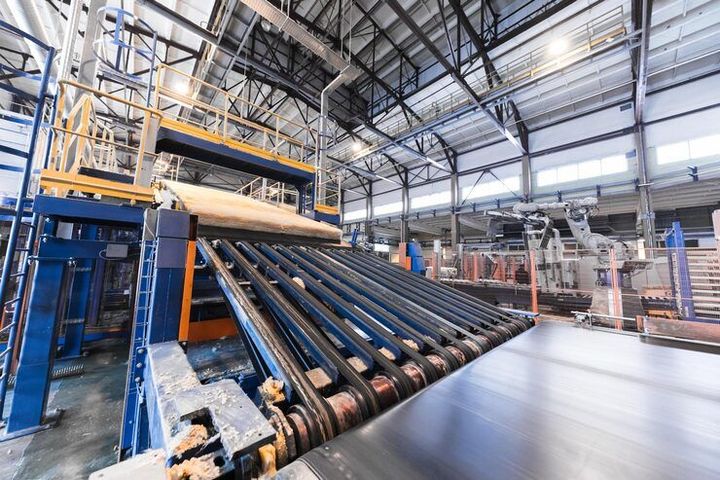
Main machinery used in PVC manufacturing
Different PVC products require different production equipment.
| Machinery | Typical function | Common PVC products |
|---|---|---|
| High-speed mixer | Blends resin and additives | Compounds and dry blends |
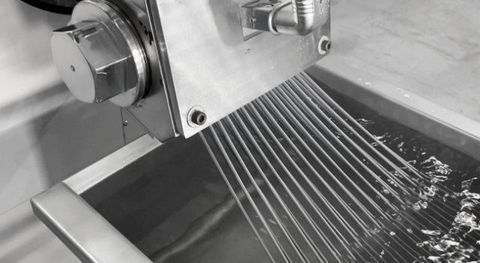
| Extruder | Melts and shapes PVC | Pipes, profiles, sheets, films |
| Die | Gives the melt its profile | Pipes, channels, profiles |
| Injection molding machine | Forms material inside a mold | Fittings, components |
| Calendering line | Forms controlled sheets or films | Flooring, sheets, films |
| Cooling equipment | Removes heat from formed material | Extruded products |
| Haul-off unit | Pulls continuous products through the line | Pipes and profiles |
| Cutting equipment | Produces specified lengths | Pipes and profiles |
| Pelletizer | Converts processed material into pellets | Reprocessed compounds |
Equipment selection depends on product geometry, formulation, production volume, dimensional requirements, and processing characteristics.
Recent Updates
From 2024 through 2026, PVC manufacturing has increasingly focused on material circularity, additive management, improved sorting, and technologies that allow more complex PVC waste streams to be recovered.
Mechanical recycling remains an important approach for suitable PVC waste. Recent developments also include improved identification and separation technologies using methods such as near-infrared, short-wave infrared, hyperspectral imaging, X-ray fluorescence, and laser-induced breakdown spectroscopy. Some systems incorporate artificial intelligence and machine learning to identify PVC and certain legacy additives in mixed waste.
Recycled PVC in manufacturing
PVC recycling can involve collecting production residues, installation waste, and post-use products. Clean and well-separated production scrap can be easier to process than mixed or contaminated waste because the composition is more predictable.
Recent industry reporting indicates continued use of recycled PVC in products such as window profiles, flooring, cables, pipes, and other rigid applications. A 2025 VinylPlus report recorded 724,638 tonnes of PVC recycled within its framework during 2024. This figure represents that specific European industry programme rather than global PVC recycling.
Changes in material formulation
Another trend is the development of formulations designed around current chemical restrictions and circular-economy requirements. Some historical stabilisers and plasticisers are subject to restrictions, increasing the importance of additive selection and material traceability.
Research and development is also examining alternative feedstocks, improved recyclability, advanced separation, and methods for handling PVC products containing older additives.
Laws or Policies
PVC product manufacturing is affected by chemical, product-safety, waste-management, workplace, and environmental requirements. The specific rules depend on the jurisdiction and the intended application of the PVC product.
Chemical regulations can restrict particular additives or establish concentration limits for certain substances. The European Union's REACH framework, for example, contains restrictions affecting substances used in PVC products. ECHA reported that restrictions concerning lead in PVC products began applying from late 2024, with specific transitional provisions for certain recovered PVC applications.
Further provisions concerning recovered rigid PVC include requirements related to lead concentration, permitted applications, marking, and documentation in specified circumstances. Some provisions have later transition periods, including requirements taking effect in 2026.
PVC products intended for food contact, medical applications, construction, electrical equipment, or other regulated uses can be subject to additional requirements. For example, food-contact plastics are governed by specific substance and migration requirements in jurisdictions that regulate this application.
Manufacturers therefore need to consider the intended use, formulation, recycled content, applicable standards, labeling requirements, and destination market when establishing production specifications. Regulations can change, so current requirements from the relevant regulatory authority should be checked for a specific application.
Tools and Resources
Several technical resources can help explain PVC product manufacturing and support production planning.
Material and formulation references
Technical data sheets and safety data sheets provide information about resin grades, additives, handling conditions, and relevant material characteristics. These documents can help production teams understand the intended processing range of a material.
Processing equipment documentation
Extruder manuals, die specifications, temperature-control documentation, and maintenance records provide information about machine operation. Production records can also help identify relationships between processing conditions and product quality.
Standards and validation resources
International and regional standards can provide test methods and product specifications for particular PVC applications. The applicable standard depends on whether the product is a pipe, profile, cable component, flooring material, sheet, medical product, or another category.
Recycling resources
PVC recycling information can be used to understand collection, sorting, separation, mechanical processing, and emerging recycling methods. Current industry research is increasingly focused on recovering PVC from composite products and waste containing legacy additives.
FAQs
What raw materials are used in PVC product manufacturing?
PVC resin is the primary polymer material. Depending on the required properties, manufacturers may also use stabilisers, plasticisers, lubricants, pigments, fillers, and impact modifiers.
What machinery is used for PVC product manufacturing?
Common machinery includes mixers, extruders, dies, injection molding machines, calendering equipment, cooling systems, haul-off units, cutting machines, and pelletizers. The equipment depends on the shape and characteristics of the required PVC product.
How does PVC extrusion work?
PVC extrusion generally involves preparing the formulation, feeding it into an extruder, heating and mixing the material, forcing the melt through a die, cooling the formed product, and cutting or winding it as required. Pipes and profiles are common examples of continuously extruded PVC products.
What is the difference between rigid and flexible PVC?
Rigid PVC contains a formulation designed to maintain a relatively stiff structure, making it suitable for products such as pipes and profiles. Flexible PVC incorporates formulation components that increase flexibility and is used for applications such as cable insulation, flooring, films, and membranes.
Can PVC products be recycled?
Suitable PVC products can be mechanically recycled after collection, sorting, and preparation. Recycling methods depend on contamination, product composition, additives, and whether PVC is combined with other materials. Newer sorting and separation technologies are being developed for more complex waste streams.
Conclusion
PVC product manufacturing combines polymer resin, additives, specialized machinery, controlled processing, and product testing to create rigid and flexible products for many applications. Extrusion, injection molding, and calendering are among the principal processing methods, with equipment selected according to product design and material formulation. Recent developments have placed greater attention on recycled PVC, additive management, improved sorting, and circular material flows. Regulatory requirements also influence formulations, product specifications, labeling, and the handling of recovered PVC.