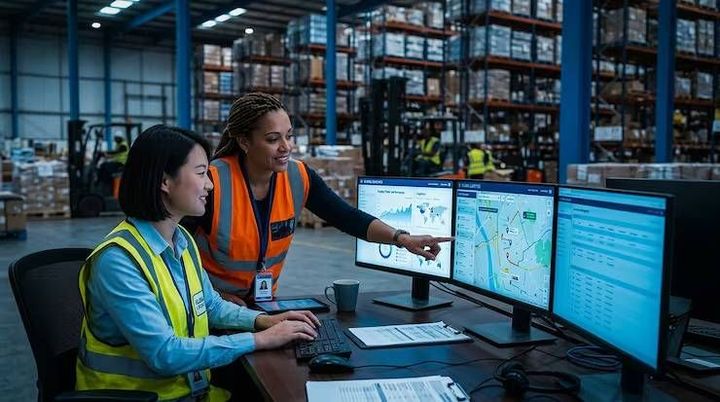
Real-Time Logistics Monitoring Guide With GPS Tracking, Route Planning, and Logistics Data
Real-time logistics monitoring is the process of tracking vehicles, shipments, delivery progress, and transportation activities as they happen.
It uses technologies such as GPS tracking, digital maps, vehicle sensors, communication networks, and logistics management software to provide updated information about the movement of goods. This information helps businesses, transport operators, warehouse teams, and customers understand where shipments are and how transportation activities are progressing.
Traditional logistics monitoring often relied on telephone calls, paper records, manual updates, and scheduled reporting. These methods could make it difficult to identify delays or understand changing road conditions quickly. As transportation networks expanded and supply chains became more interconnected, organizations began adopting digital systems that collect and share logistics data more frequently.
Today, real-time logistics monitoring connects several activities, including vehicle location tracking, route planning, estimated arrival times, shipment status updates, and delivery documentation. Depending on the technology and network coverage, information may be updated continuously or at regular intervals.
The main purpose is to improve visibility throughout the transportation process. By understanding vehicle movements and shipment progress, logistics teams can coordinate deliveries, investigate unexpected delays, and maintain more organized transportation records.
Importance
Why Real-Time Logistics Monitoring Matters
Transportation involves changing road conditions, traffic congestion, weather disruptions, loading schedules, and delivery requirements. Without reliable tracking information, these changes can create uncertainty for dispatchers, drivers, warehouse personnel, and recipients.
Real-time logistics monitoring helps address these challenges by providing a shared view of transportation activities. Teams can compare planned routes with actual vehicle movements and identify situations that may require attention.
For example, when a delivery vehicle encounters heavy traffic, its location and updated estimated arrival time can help warehouse staff adjust unloading arrangements. Similarly, a shipment that remains stationary longer than expected may require investigation to determine whether the cause is a scheduled break, a loading delay, or an unexpected interruption.
Who Uses Logistics Tracking Systems?
Several groups benefit from logistics data and GPS tracking technology.
Transport operators: Monitor vehicle locations, planned journeys, and fleet movements.
Warehouse teams: Coordinate incoming shipments, loading schedules, and dispatch activities.
Manufacturers: Follow the movement of raw materials, components, and finished products.
Retail businesses: Monitor replenishment shipments and distribution activities.
Customers and recipients: Receive shipment progress information and revised arrival estimates.
Fleet managers: Review vehicle utilization, journey duration, and transportation performance.
Problems Addressed by Route Planning and Tracking
Logistics monitoring can help identify issues that are difficult to recognize through manual reporting alone. Its practical applications include:
Delivery delays: Updated location information helps teams understand where interruptions occur.
Route deviations: GPS records can reveal when a vehicle moves away from its planned route.
Poor coordination: Shared shipment updates help different teams work with consistent information.
Limited shipment visibility: Tracking records provide greater clarity about transportation progress.
Incomplete documentation: Digital logs can support reviews of arrival times, stops, and delivery events.
However, tracking technology cannot eliminate traffic congestion, prevent every disruption, or guarantee that estimated arrival times will remain accurate. Its usefulness depends on data quality, communication coverage, equipment reliability, and appropriate operational procedures.
Recent Updates
Developments in Logistics Monitoring Technology
Recent developments across the logistics industry have focused on improving data integration, automation, and transportation visibility. Rather than depending on a single tracking device, modern systems increasingly combine information from several sources to create a more complete picture of shipment movements.
Cloud-based logistics platforms allow authorized users to access tracking information through connected devices. GPS equipment provides location information, while mobile applications can transmit driver updates, delivery confirmations, and operational notes. Vehicle sensors may provide additional information about fuel levels, temperature, door status, or equipment conditions, depending on the installation.
Artificial intelligence is also being applied to route planning and logistics analysis. These systems may evaluate historical journey patterns, traffic conditions, delivery schedules, and other available information to estimate arrival times or identify potential disruptions. Their results depend on the accuracy and completeness of the underlying data.
Emerging Trends From 2024 to 2026
Several developments have become increasingly relevant to real-time logistics monitoring.
Predictive arrival estimates: Systems increasingly use changing traffic conditions and historical journey data to update estimated arrival times.
Integrated logistics platforms: Businesses are connecting transportation management systems, warehouse software, inventory records, and shipment tracking tools.
Internet of Things sensors: Connected devices can monitor shipment conditions, particularly when temperature, vibration, or humidity matters.
Automated exception alerts: Software can flag unusual stops, route deviations, prolonged delays, or missed checkpoints.
Electronic delivery documentation: Digital proof of delivery, including timestamps and recipient acknowledgements, helps maintain transportation records.
Data analytics: Historical logistics information can reveal recurring bottlenecks, route performance differences, and vehicle utilization patterns.
These developments do not mean every logistics platform has the same capabilities. Some systems provide basic GPS locations, while others combine vehicle tracking, predictive analysis, shipment monitoring, and reporting in a single interface.
Common Logistics Data and Their Uses
Data type | Information recorded | Typical application |
|---|---|---|
GPS location | Vehicle coordinates and movement | Tracking current position |
Route information | Planned roads and checkpoints | Comparing planned and actual journeys |
Timestamp records | Departure, arrival, and stop times | Reviewing transportation schedules |
Shipment status | Dispatched, in transit, delayed, or delivered | Monitoring shipment progress |
Vehicle telemetry | Selected vehicle operating information | Reviewing vehicle conditions |
Sensor readings | Temperature, humidity, or vibration | Monitoring sensitive shipments |
Delivery confirmation | Receipt details and completion records | Maintaining delivery documentation |
Laws or Policies
Regulations Affecting Logistics Monitoring
The rules governing real-time logistics monitoring vary by country, shipment category, vehicle type, and operating activity. Requirements may cover vehicle tracking equipment, transportation records, driver working hours, electronic documentation, data protection, and the handling of sensitive shipment information.
In many jurisdictions, commercial transportation operators must maintain certain records relating to vehicles, drivers, cargo, or journeys. Specific requirements depend on the applicable legal framework, and GPS tracking software does not automatically make an organization compliant with every transportation rule.
Privacy is another important consideration. Vehicle location records can reveal driver movements and working patterns. Organizations should understand the legal basis for collecting such information, communicate applicable monitoring practices, limit access to authorized personnel, and retain records only as permitted by relevant requirements.
Digital Records and Data Protection
Electronic logistics records can support operational reviews, but they should be managed carefully. Appropriate practices include:
Restricting access to shipment and vehicle information according to user responsibilities.
Using suitable security controls to protect accounts and transmitted data.
Maintaining clear procedures for storing, reviewing, and deleting records.
Explaining relevant monitoring practices to drivers and other affected individuals.
Checking whether third-party platforms process or transfer data under applicable privacy requirements.
Policies in the Indian Transportation Context
In India, logistics monitoring may intersect with motor vehicle requirements, electronic documentation procedures, and data protection rules. The Motor Vehicles Act and applicable Central Motor Vehicles Rules form part of the wider framework governing road transportation. Electronic transport documentation and goods movement may also involve applicable tax and e-way bill requirements.
India's Digital Personal Data Protection framework is relevant to the handling of digital personal data when its provisions apply. The specific obligations depend on the applicable rules, commencement arrangements, and circumstances of data processing.
Not every vehicle or shipment is subject to an identical tracking requirement. Operators need to distinguish between mandatory legal obligations, contractual requirements, and optional internal monitoring practices. The use of GPS tracking alone does not establish compliance with transportation, privacy, or documentation rules.
Tools and Resources
GPS Tracking and Fleet Monitoring Platforms
GPS tracking platforms display vehicle locations on digital maps and may include journey histories, route deviation alerts, geofencing, and estimated arrival times. Geofencing creates a virtual boundary around a location, such as a warehouse or distribution center, and can trigger notifications when a tracked vehicle enters or leaves that area.
When assessing a platform, relevant considerations include location update frequency, mobile device compatibility, map coverage, data security, reporting capabilities, and integration with existing logistics systems. The appropriate features depend on fleet size, shipment requirements, and the complexity of transportation operations.
Route Planning and Transportation Management Software
Route planning tools help organize vehicle journeys using delivery addresses, road networks, vehicle restrictions, and delivery windows. More advanced systems may consider traffic conditions, vehicle capacity, driver schedules, and multiple delivery stops.
Transportation management systems coordinate activities such as shipment assignment, dispatch planning, carrier coordination, freight documentation, and performance reporting. Integrating these systems with GPS tracking can reduce the need to maintain separate records across different applications.
Logistics Data Templates and Calculators
Simple spreadsheets and digital templates remain useful for organizing transportation information, particularly when operations are small or tracking systems are not fully integrated.
A logistics monitoring spreadsheet may include:
Shipment identification number
Vehicle identification and assigned driver
Dispatch location and destination
Planned departure and arrival times
Latest recorded location
Current shipment status
Delay reason and revised arrival estimate
Delivery confirmation and completion time
A basic transit-time calculator can compare actual journey duration with the planned schedule. For example, if a vehicle departs at 08:00 and arrives at 13:30, its recorded transit time is five hours and thirty minutes. Loading periods, scheduled breaks, and unloading activities should be recorded separately when they need to be analyzed.
Selecting Suitable Logistics Resources
The choice of tools depends on the information an organization needs to monitor. Basic GPS tracking may be sufficient for location visibility, while complex distribution networks may require route optimization, sensor integration, automated alerts, and detailed reporting.
Before selecting a platform, users should consider data accuracy, connectivity limitations, integration requirements, privacy controls, report formats, and the ability to export historical records. Clear operational procedures are also important because technology cannot independently resolve every transportation exception.
FAQs
What Is Real-Time Logistics Monitoring?
Real-time logistics monitoring tracks vehicles, shipments, and transportation activities using technologies such as GPS, digital maps, sensors, and logistics software. It provides updated information about shipment locations, journey progress, and delivery status.
How Does GPS Tracking Improve Logistics Route Planning?
GPS tracking shows actual vehicle movements, allowing logistics teams to compare completed journeys with planned routes. When combined with traffic information and route planning software, it can support revised arrival estimates and help identify route deviations.
What Data Is Used in a Logistics Monitoring System?
Common data includes GPS coordinates, timestamps, planned routes, shipment status, vehicle information, and delivery confirmations. Depending on the equipment, systems may also collect temperature readings, humidity levels, or other sensor information.
Is Real-Time Vehicle Tracking Required by Law?
Requirements vary according to the country, vehicle category, shipment type, and applicable regulations. Some operations may have specific tracking or documentation obligations, while others use GPS monitoring as an operational tool.
What Is the Difference Between GPS Tracking and Logistics Management Software?
GPS tracking primarily identifies vehicle location and movement. Logistics management software covers broader activities, such as shipment planning, dispatch coordination, route scheduling, documentation, and performance reporting, and may incorporate GPS tracking as one of its features.
Conclusion
Real-time logistics monitoring combines GPS tracking, route planning, and logistics data to provide visibility into transportation activities. It helps organizations understand shipment progress, identify delays, coordinate deliveries, and maintain digital records. Recent developments in predictive analytics, connected sensors, and integrated software are expanding the information available to logistics teams. Effective implementation depends on reliable data, appropriate security practices, suitable technology, and compliance with applicable transportation and privacy requirements.