Robotic Handler Guide: Designs, Functions, Payload Capacity, Uses and Safety Considerations
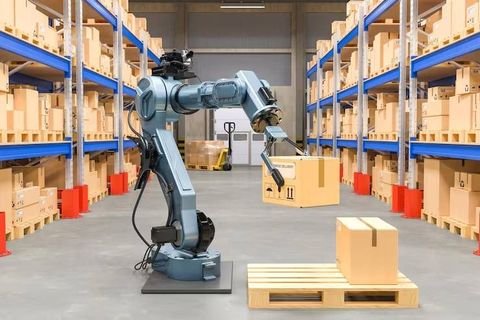
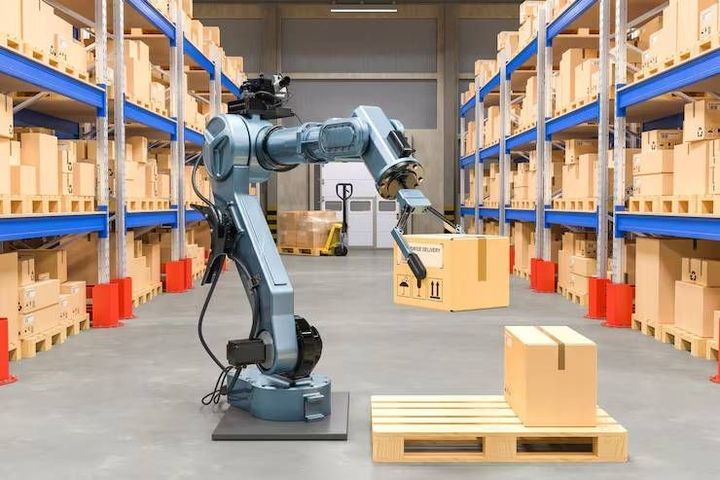
A robotic handler is an automated mechanical system designed to move, position, load, unload, or transfer materials and components within a controlled work environment. Robotic handlers are commonly associated with manufacturing, assembly, packaging, material movement, machine tending, and other industrial processes where repetitive physical movements are required.
Context
A robotic handler is an automated mechanical system designed to move, position, load, unload, or transfer materials and components within a controlled work environment. Robotic handlers are commonly associated with manufacturing, assembly, packaging, material movement, machine tending, and other industrial processes where repetitive physical movements are required.
The design of a robotic handler depends on factors such as movement range, payload capacity, operating speed, precision, workspace, and the type of material being handled. Some systems use articulated robotic arms, while others use linear mechanisms, gantry arrangements, collaborative robots, or specialized end-of-arm tooling.
Robotic handling developed alongside industrial automation as manufacturers sought more consistent ways to perform repetitive operations. Modern systems can combine mechanical components with sensors, controllers, vision systems, and software to coordinate movement and interaction with production equipment.
Importance
Robotic handlers can be useful in environments where materials need to be moved repeatedly between defined locations. They can help organize production processes by performing programmed movements with consistent positioning and timing.
These systems are particularly relevant where materials may be heavy, hot, sharp, contaminated, or difficult for people to handle repeatedly. They can also be used for smaller components that require precise positioning during assembly or machine operation.
Common applications
Robotic handlers are used across several industrial areas, including:
Machine loading and unloading
Assembly operations
Packaging and palletizing
Material transfer
Part sorting
Pick-and-place operations
Injection molding
Metalworking
Electronics manufacturing
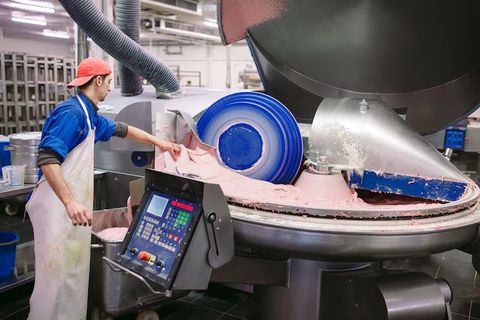
Food processing
Warehouse material movement
The appropriate robotic handler depends on the material, work cycle, environment, required accuracy, and available workspace.
Main design types
Articulated robotic handlers use several rotary joints and can provide movement across multiple axes. Their flexible structure makes them suitable for applications involving complex paths or different orientations.
Cartesian or gantry handlers generally move along linear axes. Their movement is comparatively straightforward, making them suitable for applications where materials need to travel along predictable horizontal and vertical paths.
SCARA systems are designed for fast horizontal movement and are often used for assembly, component placement, and repetitive handling. Delta robots use multiple lightweight arms connected to a common mechanism and are frequently associated with rapid pick-and-place applications.
Collaborative robotic systems are designed with features intended to support operation near people under defined conditions. Their suitability still depends on risk assessment, application design, tooling, speed, force, and the applicable safety requirements.
Recent Updates
Between 2024 and 2026, robotic handling has continued to develop through improvements in sensing, machine vision, artificial intelligence, collaborative robotics, and industrial software. These developments are making robotic systems more adaptable to changing production conditions.
Machine vision can help a robotic handler identify the position, orientation, size, or characteristics of components. Sensors can also provide information about force, proximity, temperature, position, or equipment conditions.
Artificial intelligence is increasingly being explored for applications such as object recognition, adaptive movement, inspection, process monitoring, and production planning. However, AI-based functions still require appropriate system validation and safety controls before being introduced into physical industrial operations.
Payload and precision developments
Payload capacity remains a major consideration when selecting a robotic handler. Industrial systems can range from small mechanisms designed for lightweight components to larger robotic systems capable of moving substantially heavier loads.
Payload specifications should not be considered separately from reach. A robot's maximum rated payload may change according to arm position, extension, movement speed, tooling, and load distribution. The combined weight of the workpiece, gripper, tooling, and other attached equipment must therefore be considered.
Digital integration
Modern robotic handlers can connect with programmable logic controllers, manufacturing execution systems, sensors, cameras, and industrial communication networks. Such integration can allow production equipment to coordinate movement, machine status, material availability, and process information.
Laws or Policies
In India, industrial robotic systems are generally affected by workplace safety requirements, machinery-related regulations, electrical safety considerations, and applicable standards. Employers and facility operators are responsible for maintaining safe working conditions and controlling risks associated with machinery.
The Occupational Safety, Health and Working Conditions Code provides a broad legal framework concerning occupational safety and working conditions in applicable workplaces. Depending on the facility and activity, additional state-level rules and sector-specific requirements may also apply.
Indian industrial facilities may also refer to standards from the Bureau of Indian Standards (BIS) and internationally recognized robotics safety standards when designing, installing, or assessing robotic systems. Standards related to industrial robots and robot systems address subjects such as safety requirements, risk reduction, protective measures, and integration.
A robotic installation should be assessed according to its actual operating environment. Factors such as access points, emergency stopping, unexpected movement, tooling hazards, electrical systems, maintenance procedures, and interaction between people and robots should be considered.
Tools and Resources
Several resources can help readers understand robotic handlers, specifications, integration, and safety requirements.
Bureau of Indian Standards resources can help identify applicable Indian standards and technical publications.
Occupational safety resources can provide information about workplace machinery and safety responsibilities.
Robot manufacturer documentation can explain payload ratings, reach, operating envelopes, controller functions, and installation requirements.
Robot simulation software can help engineers study movement paths, cycle sequences, workspace limitations, and potential interference before physical installation.
Payload and reach calculators can assist with preliminary evaluation of load requirements, although final engineering decisions require manufacturer specifications and application assessment.
CAD software can be used to examine mounting arrangements, tooling dimensions, clearances, and robot workspaces.
Risk-assessment templates can help document hazards, protective measures, operating procedures, and maintenance considerations.
Technical documentation should always be checked against the specific robotic model and application because specifications differ between systems.
Payload Capacity and Performance Factors
Payload capacity is one of the main specifications used when evaluating a robotic handler. It describes the load that the robot is designed to handle under specified operating conditions.
Payload does not refer only to the material being moved. The weight of the gripper, clamps, suction equipment, sensors, adapters, and other equipment attached to the robot may also form part of the effective payload.
Important specifications
When comparing robotic handlers, several specifications can be considered:
Payload capacity
Maximum reach
Number of axes
Repeatability
Movement speed
Working envelope
Mounting configuration
Controller capabilities
End-of-arm tooling compatibility
Environmental protection rating
Repeatability and accuracy are related but different concepts. Repeatability describes how consistently a robot can return to a particular position, while accuracy concerns how closely the achieved position corresponds to the intended position.
Safety Considerations
Safety planning is an essential part of robotic handler installation and operation. Industrial robots can move quickly and may have considerable mechanical force, creating hazards when people enter their operating areas unexpectedly.
Physical safeguards
Protective fencing, guarding, interlocked access doors, presence-sensing devices, light curtains, scanners, and other protective measures may be used depending on the application. The selected safeguards should correspond to the identified risks.
Emergency-stop systems should be accessible and appropriately integrated into the overall control system. However, an emergency stop should not be treated as the only protective measure.
Risk assessment
A risk assessment should consider normal operation as well as setup, programming, cleaning, inspection, troubleshooting, and maintenance. Hazards can change when tooling is replaced or when production conditions are modified.
Important considerations include unexpected robot movement, falling loads, pinch points, sharp tooling, electrical hazards, stored energy, hot surfaces, and interaction with nearby machinery.
Training and procedures
People who operate, program, maintain, or supervise robotic systems need appropriate training for their responsibilities. Procedures should explain safe startup, shutdown, access control, maintenance isolation, emergency response, and other relevant activities.
Lockout and isolation procedures can be important during maintenance because simply stopping the robot program may not eliminate all sources of hazardous energy.
FAQs
What is a robotic handler?
A robotic handler is an automated mechanical system designed to move, position, transfer, load, or unload materials and components. It can use robotic arms, linear mechanisms, gantries, or other automated movement systems.
How is robotic handler payload capacity determined?
Payload capacity depends on the robot design, arm position, reach, movement conditions, tooling, and load distribution. The weight of attached tooling is generally considered when determining the usable payload.
What are common robotic handler uses?
Common uses include machine loading and unloading, assembly, packaging, sorting, material transfer, injection molding, metalworking, and pick-and-place operations.
Are robotic handlers safe to use around people?
Safety depends on the system design, application, safeguards, operating conditions, and risk assessment. Collaborative operation may be possible for certain applications, but it requires appropriate evaluation and protective measures.
What should be checked before selecting a robotic handler?
Important factors include payload capacity, reach, movement axes, repeatability, speed, tooling requirements, workspace, environmental conditions, controller compatibility, integration requirements, and applicable safety considerations.
Conclusion
Robotic handlers are used to automate repetitive material movement, machine tending, assembly, packaging, and other industrial processes. Their designs vary according to payload capacity, reach, movement pattern, precision, tooling, and operating environment. Recent developments in machine vision, sensors, artificial intelligence, and digital integration are expanding the range of possible applications. Safe implementation requires appropriate system design, risk assessment, protective measures, training, and attention to applicable standards and workplace requirements.