Robotic Welding Systems Guide: Working Principles, Welding Methods, Features and Applications
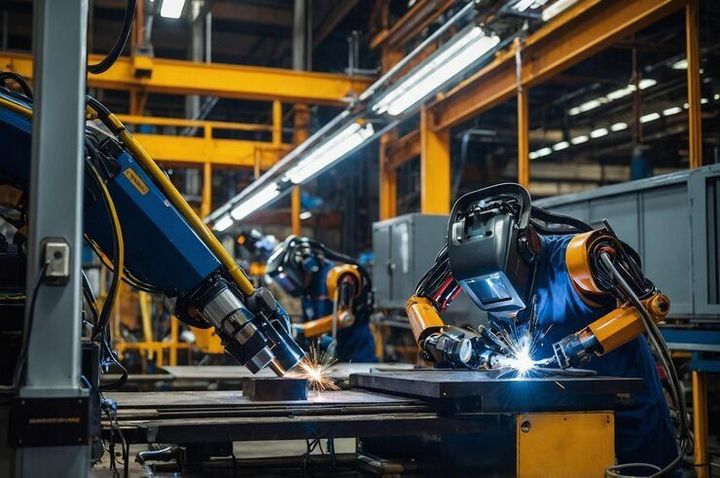
Robotic welding systems combine industrial robots with welding equipment to perform welding operations according to programmed instructions. A typical system can include a robotic arm, welding power source, torch, wire feeder, sensors, fixtures, safety equipment, and a control unit. The robot moves the welding tool along a defined path while the welding equipment creates the required weld.
The development of robotic welding is closely connected with industrial automation. Traditional welding often depends on manual movement of a torch, while robotic systems can repeat programmed movements for suitable production tasks. The technology is commonly used where manufacturers need repeatable welding processes, controlled movement, and integration with other manufacturing equipment.
Robotic welding systems can be configured for different materials, component sizes, joint designs, and production environments. Their configuration depends on factors such as the welding method, workpiece geometry, required weld position, material thickness, and level of automation.
How robotic welding works
A robotic welding cell generally begins with a component being positioned in a fixture. The fixture holds the component in a defined location so the robot can follow its programmed welding path.
The robot controller coordinates movement with the welding equipment. Depending on the application, sensors can detect the position of the component or help monitor the welding process. After the programmed sequence is completed, the component can move to inspection or another manufacturing stage.
A simplified process includes:
- Component positioning
- Fixture alignment
- Program selection
- Torch movement
- Welding operation
- Process monitoring
- Weld inspection
- Component transfer
Importance
Robotic welding systems are important in manufacturing because welding is used to join metal components in many products and structures. Automotive components, machinery frames, construction equipment, storage systems, agricultural equipment, and metal assemblies can all involve welded joints.
One practical challenge is maintaining consistent torch movement. A human operator may naturally change speed, angle, or distance during a long welding sequence. A programmed robot can repeat defined movements when the component, fixture, and welding conditions remain within the intended operating range.
Automation can also change how workers interact with welding processes. Instead of manually controlling every movement, personnel may focus on programming, setup, inspection, material handling, process monitoring, and equipment maintenance.
Where robotic welding is used
Common application areas include:
- Automotive and vehicle component manufacturing
- Construction equipment
- Agricultural machinery
- Metal furniture and frames
- Industrial machinery
- Pressure-related fabricated equipment
- Steel structures and assemblies
- Material-handling equipment
- General fabrication
The suitability of robotic welding depends on the workpiece and production process. Highly variable components can require more programming and setup than repetitive assemblies with consistent dimensions.
Working Principles
A robotic welding system operates through coordination between mechanical movement, welding equipment, programming, and safety controls. The robot itself does not determine the complete welding process; the welding power source, torch, wire or electrode system, fixtures, sensors, and controller work together.
Robot movement and programming
The robot is programmed to move the welding torch through specific positions. Programs can define movement speed, direction, welding sequence, and other process parameters.
Programming methods vary by robot platform. Some systems use a teach pendant, where an operator records positions and movements. More advanced systems can use offline programming or digital models to prepare robot movements before production.
Welding methods
Several welding methods can be integrated with robotic systems. Common examples include:
- MIG/MAG welding, which uses a continuously fed wire electrode and shielding gas.
- TIG welding, which uses a tungsten electrode and is used for applications requiring controlled arc characteristics.
- Resistance spot welding, where pressure and electrical current create welds between metal sheets.
- Flux-cored arc welding, which uses a tubular wire containing flux and can be used for particular fabrication applications.
The welding method is selected according to the material, joint design, thickness, production requirements, and applicable welding procedure.
Sensors and process control
Sensors can support robotic welding by detecting component position, seam location, or process conditions. Vision systems and laser-based sensing can be used in some applications to identify variations in workpiece position or joint location.
Sensors do not eliminate the need for correct fixture design and process setup. Their purpose is to provide additional information that the control system can use during a defined operation.
Features of Robotic Welding Systems
Robotic welding systems can contain several components that work together as a single welding cell. The exact configuration varies according to the application.
| Component | Main function |
|---|---|
| Robotic arm | Moves the welding tool |
| Controller | Coordinates robot movements and programmed sequences |
| Welding power source | Generates the electrical welding output |
| Welding torch | Directs the welding arc toward the joint |
| Wire feeder | Supplies welding wire when required |
| Fixture | Holds and positions the workpiece |
| Sensors | Detect position or process conditions |
| Safety enclosure | Separates the operating area from surrounding personnel |
| Fume extraction | Helps manage welding fumes |
| Human-machine interface | Allows operators to monitor and control the system |
Another important feature is integration with manufacturing equipment. A robotic cell can be connected with positioners, conveyors, automated material handling equipment, inspection systems, or production-control software.
Recent Updates
From 2024 through 2026, developments in industrial robotics have continued to emphasize safety, sensing, digital integration, and easier programming. In India, the Bureau of Indian Standards has been updating and developing standards related to industrial robot safety. A 2024 BIS draft for IS/ISO 10218 Part 1 was prepared around the newer ISO framework for industrial robot safety and included additional requirements related to design and operating modes.
BIS material also identifies Indian standards corresponding to ISO 10218 for industrial robots and robot systems. These standards address safety requirements for robots and their integration into industrial applications.
Another development is the wider use of sensing and digital controls. Modern robotic welding cells can combine robots with cameras, laser sensors, digital programming, and production monitoring. These technologies can help a system respond to defined variations in component positioning and provide additional process information.
Collaborative robotics is another area of development. However, a collaborative robot is not automatically suitable for every welding application. Welding hazards, hot surfaces, fumes, electrical energy, sparks, and workpiece movement still require an appropriate risk assessment and protective measures.
Laws or Policies
In India, robotic welding systems can be affected by workplace safety requirements, machinery standards, electrical requirements, and applicable industrial regulations. The Occupational Safety, Health and Working Conditions Code, 2020 establishes a framework covering occupational safety, health, and working conditions, with the appropriate government depending on the type and location of the establishment.
The Bureau of Indian Standards maintains standards covering industrial robots, welding equipment, machinery safety, and related subjects. For example, Indian standards corresponding to ISO 10218 address industrial robot safety, while IS 16819 corresponds to ISO 12100 principles for machinery risk assessment and risk reduction.
Welding equipment is also covered by Indian Standards. BIS listings include standards for arc welding equipment, wire feeders, torches, installation and use, and other welding-related equipment.
The specific requirements applicable to a manufacturing facility can depend on the equipment, industry, workplace, electrical installation, state regulations, and applicable standards. Businesses should therefore verify the standards and regulatory requirements relevant to their particular installation rather than assuming that one requirement applies to every robotic welding cell.
Tools and Resources
Several resources can help readers understand robotic welding systems and their technical requirements.
Standards databases
The BIS standards portal provides access to Indian Standards and information about standards, revisions, and related documents. It can be used to research applicable standards for industrial robots, machinery safety, and welding equipment.
Robot programming tools
Robot manufacturers commonly provide programming environments, teach pendants, simulation software, and offline programming platforms. These tools can help create and review movement sequences before a production cycle is performed.
Welding procedure documentation
Welding procedure specifications can document variables such as material, joint design, welding method, filler material, shielding conditions, and process parameters. Such documentation can help maintain consistency between welding procedures and production requirements.
Safety assessment resources
Machinery risk-assessment frameworks can help identify hazards associated with robot movement, welding arcs, electrical equipment, hot components, fumes, fixtures, and unexpected machine movement. Standards related to machinery risk reduction can provide a structured reference for this process.
FAQs
What are robotic welding systems?
Robotic welding systems are automated setups that combine an industrial robot with welding equipment, controls, fixtures, and related components. The robot follows programmed movements to perform defined welding operations.
How does a robotic welding system work?
A robotic welding system positions a component in a fixture and moves the welding torch along a programmed path. The controller coordinates robot movement with the welding equipment, while sensors may provide information about component position or process conditions.
What welding methods can robotic systems use?
Robotic systems can use methods such as MIG/MAG, TIG, resistance spot welding, and flux-cored arc welding. The appropriate method depends on the material, joint design, component thickness, and production requirements.
Are robotic welding systems safe?
Safety depends on system design, installation, risk assessment, guarding, controls, operating procedures, and worker training. Indian and international machinery and robot safety standards provide frameworks for addressing hazards associated with industrial robots and welding equipment.
Where are robotic welding systems used?
They are used in areas such as automotive manufacturing, construction equipment, agricultural machinery, industrial machinery, metal fabrication, and other production environments where programmed welding operations are suitable.
Conclusion
Robotic welding systems combine industrial robots, welding equipment, fixtures, controls, and sometimes sensors to perform programmed welding operations. Their applications range from vehicle components and machinery to fabricated metal assemblies. Recent developments have placed greater attention on robot safety, sensing, digital programming, and integration with manufacturing systems. In India, applicable machinery, welding, workplace safety, and industrial standards should be considered according to the specific installation and operating environment.