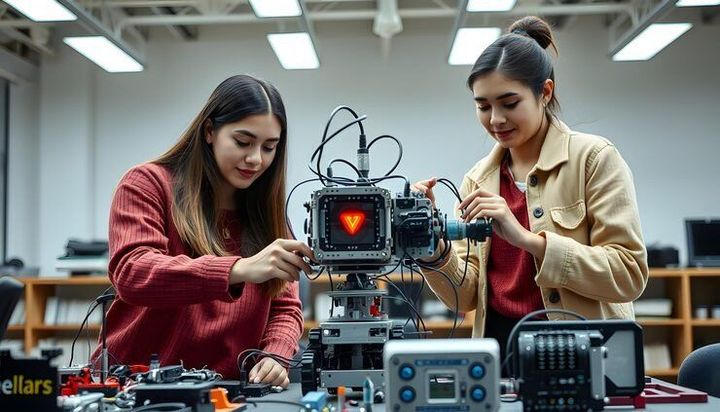
Robotics Training Courses Guide: Learning Paths, Practical Skills, Technologies and Applications
Robotics training courses help learners understand how robots are designed, programmed, operated, and maintained. Robotics combines mechanical engineering, electronics, computer programming, sensors, and control systems to create machines that perform tasks with different levels of human supervision. Training programs developed alongside industrial automation and have expanded as robots have become more common in manufacturing, healthcare, education, agriculture, logistics, and research.
Context
Robotics training courses help learners understand how robots are designed, programmed, operated, and maintained. Robotics combines mechanical engineering, electronics, computer programming, sensors, and control systems to create machines that perform tasks with different levels of human supervision. Training programs developed alongside industrial automation and have expanded as robots have become more common in manufacturing, healthcare, education, agriculture, logistics, and research.
Modern robotics training courses range from introductory lessons for beginners to specialized programs covering industrial robot programming, autonomous navigation, machine vision, and artificial intelligence. Some courses focus on theory and simulations, while others include practical exercises with physical robots, electronic components, or robotic arms. The learning path depends on the learner's background, intended application, and the technologies covered.
Understanding Robotics Training
Robotics training generally teaches learners how different components work together. A typical robot may contain a mechanical structure, motors, sensors, a controller, and software that interprets commands and coordinates movement.
Training can include several subjects:
Robot mechanics: Understanding joints, links, actuators, movement, and mechanical structures.
Electronics: Learning about circuits, power supplies, motor drivers, and electrical connections.
Programming: Writing instructions that control movement, process sensor data, or complete a sequence of tasks.
Sensors and perception: Using cameras, distance sensors, encoders, and other devices to collect information about surroundings.
Control systems: Understanding how a robot follows commands and adjusts its actions.
System integration: Connecting hardware, software, safety equipment, and communication systems into a working arrangement.
These subjects are connected. For example, a robotic arm requires mechanical components to move, electronic systems to operate its motors, software to define movements, and sensors or control methods to support accurate operation.
Importance
Robotics training matters because automated equipment is used in an increasing range of technical and everyday environments. Manufacturers use robots for repetitive assembly, welding, packaging, and material handling. Other organizations apply robotics to warehouse operations, agricultural monitoring, laboratory research, medical procedures, and educational projects.
Training helps learners understand both the capabilities and limitations of robotic systems. It also addresses practical challenges such as programming errors, inaccurate sensor readings, equipment maintenance, integration difficulties, and workplace safety. The knowledge can be relevant to students, technicians, engineers, researchers, and people exploring technical subjects.
Practical Skills Developed Through Training
The skills taught depend on the course level and equipment available. Introductory learners may assemble simple robotic systems, while advanced learners may program industrial arms or develop navigation systems.
Common practical skills include:
Programming and debugging: Writing instructions, testing behavior, and identifying errors.
Hardware assembly: Connecting motors, controllers, sensors, and structural components.
Calibration: Adjusting equipment so that movements and measurements match the intended settings.
Simulation: Testing robot behavior in a virtual environment before using physical equipment.
Troubleshooting: Identifying mechanical, electrical, communication, or software problems.
Safety procedures: Understanding operating zones, emergency stops, protective equipment, and safe testing practices.
Robotics training also develops problem-solving skills. A learner may need to determine why a robot misses an object, moves inaccurately, or responds incorrectly to sensor information. Solving such problems requires systematic testing rather than changing several settings without understanding their effects.
Common Robotics Learning Paths
Different courses serve different learning goals. The following table compares several common options.
| Learning path | Main subjects | Typical practical activity |
|---|---|---|
| Beginner robotics | Basic mechanics, electronics, simple programming | Building a small moving robot |
| Educational robotics | Sensors, block-based coding, logic | Programming a classroom robot |
| Industrial robotics | Robot arms, coordinates, safety, programming | Simulating a pick-and-place task |
| Mobile robotics | Navigation, mapping, obstacle detection | Guiding a robot through a test area |
| AI and robotics | Machine learning, perception, decision-making | Classifying objects using camera data |
| Advanced research | Motion planning, control, robot perception | Developing and testing specialized algorithms |
These learning paths can overlap. A learner studying mobile robotics may also need programming and electronics, while an industrial robotics student may require knowledge of manufacturing processes and workplace safety.
Recent Updates
Robotics training has increasingly incorporated simulation software, collaborative robots, artificial intelligence, and virtual learning environments. Developments from 2024 through 2026 reflect wider interest in preparing learners to work with automated systems that can collect information, interpret surroundings, and perform tasks in changing environments. Course availability and technical depth vary by institution and training provider.
Simulation and Virtual Learning
Robotics simulators allow learners to experiment with robot movement, sensor behavior, and programming without depending entirely on physical equipment. Some platforms provide virtual robot models, simulated environments, and tools for testing algorithms before transferring suitable programs to hardware.
Simulation is particularly useful when equipment is expensive, limited, or potentially hazardous. However, simulated results may differ from real-world behavior because physical robots encounter friction, sensor noise, unexpected obstacles, and mechanical variation. Practical training remains important for understanding these differences.
Artificial Intelligence and Collaborative Robots
Artificial intelligence is becoming a more visible part of robotics education. Courses may introduce computer vision, machine learning, natural-language interfaces, and data-based decision-making. These methods can help robots recognize objects or interpret information, although performance depends on the quality of data, software, sensors, and operating conditions.
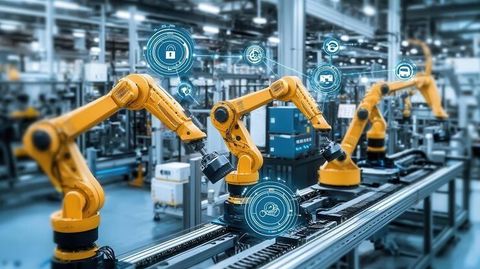
Collaborative robots, often called cobots, are designed for applications in which people and robots may share a work area under suitable safety arrangements. Training can cover setup, task programming, risk assessment, and interaction with other equipment. Collaboration does not remove the need for safety measures; the complete application must be evaluated before operation.
Open-Source Tools and Connected Systems
Open-source robotics software and development boards have also influenced learning methods. Learners can study code, modify programs, connect sensors, and experiment with robot control. The Robot Operating System (ROS 2), for example, supports software development for robotics through tools and communication frameworks.
Training increasingly connects robotics with industrial networks, cloud-based data systems, and automated production equipment. These connections introduce additional subjects, including network communication, cybersecurity, software compatibility, and data management.
Laws or Policies
Robotics training is shaped by educational standards, workplace safety requirements, equipment regulations, and rules governing particular applications. Requirements differ according to the training location, the equipment used, and whether a robot is operated in a classroom, factory, laboratory, or public environment.
Robotics Training and Skills Development in India
In India, technical education and vocational training may be provided through universities, engineering colleges, industrial training institutes, private training organizations, and recognized skills-development programs. The National Education Policy 2020 emphasizes multidisciplinary learning, practical education, and vocational exposure. Robotics-related courses may form part of engineering, electronics, mechatronics, automation, or computer science programs.
The National Skill Development Corporation and relevant Sector Skill Councils support aspects of vocational skills development. The availability of a particular robotics qualification, its recognition, and its assessment requirements depend on the program and issuing organization. Learners should distinguish between a course-completion certificate and a qualification formally recognized within a specific framework.
Workplace and Equipment Safety
Industrial robot operation may be subject to applicable occupational safety requirements, factory rules, electrical safety provisions, and machinery standards. International standards such as ISO 10218 address safety requirements for industrial robots and robot applications. Their legal status and application depend on the relevant jurisdiction, contracts, and regulatory framework.
Training commonly covers protective barriers, emergency stops, restricted operating zones, lockout procedures where applicable, and risk assessment. Educational robots also require suitable supervision, especially when students work with moving parts, electrical components, batteries, or tools.
Data Protection and Responsible AI
Robots that use cameras, microphones, or connected software may collect information about people, workplaces, or surroundings. Training should explain appropriate data handling, access controls, and cybersecurity practices. In India, applicable data-protection requirements depend on the systems involved and the legal provisions in force.
AI-enabled robotics also raises questions about reliability, privacy, accountability, and human supervision. Learners should understand that automated decisions can be incorrect and that sensitive or safety-critical applications require appropriate testing and oversight.
Tools and Resources
Robotics learners use a combination of programming environments, simulators, hardware platforms, documentation, and structured exercises. The appropriate resources depend on the learner's experience, available equipment, and intended project.
Robotics Software and Programming Platforms
Several established tools support robotics education:
ROS 2: A software framework used to develop robotic applications, manage communication between components, and integrate sensors and algorithms.
Gazebo: A robotics simulator for testing robot models and environments.
Webots: A simulation platform for developing and testing different types of robots.
Arduino: A hardware and software ecosystem used for learning electronics, sensor connections, and embedded programming.
Python: A programming language commonly used in robotics projects, automation scripts, data processing, and AI experiments.
Each platform has different requirements and capabilities. A beginner working with a small wheeled robot may need only basic programming and sensor tools, while a research project may require simulation, advanced mathematics, and specialized hardware.
Courses, Documentation, and Practice Projects
Educational resources can be found through university course catalogs, technical training institutes, official software documentation, and established online learning platforms such as Coursera and edX. Course descriptions should be reviewed for prerequisites, practical assignments, instructor support, assessment methods, and certificate recognition.
Practice projects help connect theory with real equipment. Examples include building a line-following robot, programming a robotic arm in simulation, measuring distance with ultrasonic sensors, or developing an obstacle-avoidance system. Each project introduces different challenges and provides a way to test whether the learner understands the underlying principles.
A learning record can track the course name, technologies studied, completed projects, programming languages, troubleshooting notes, and assessment results. This record makes progress easier to review and helps learners identify areas that need further practice.
FAQs
What are robotics training courses?
Robotics training courses teach the principles and practical methods used to design, program, operate, and maintain robots. They may cover mechanics, electronics, programming, sensors, automation, and artificial intelligence.
Can beginners learn robotics without engineering experience?
Yes. Beginner courses often introduce basic programming, electronics, and robot movement gradually. Familiarity with mathematics or coding can be useful, but the prerequisites depend on the course.
Which technologies are covered in robotics training courses?
Common technologies include Arduino, Python, ROS 2, robotics simulators, sensors, motor controllers, machine vision, and industrial robot programming. Advanced courses may include machine learning and autonomous navigation.
How long does robotics training take?
Duration varies by course structure and depth. Introductory workshops may take a few hours or days, while comprehensive technical programs may extend over several months or longer.
What should learners check before choosing a robotics course?
Learners should examine prerequisites, practical training opportunities, equipment access, syllabus coverage, assessment methods, safety instruction, and certificate recognition. These details help clarify what the course actually teaches.
Conclusion
Robotics training courses cover a broad range of subjects, from basic electronics and programming to industrial automation and AI-enabled systems. Learning paths differ according to experience, application, and the equipment available for practice. Simulation tools and modern software support experimentation, while safety training and physical testing remain important parts of robotics education. Course requirements and qualification recognition depend on the institution, program, and applicable regulations.