Sandblasting Machines: Key Facts About Abrasive Media and Surface Preparation
ndblasting Machines are industrial systems used to clean, prepare, texture, or modify surfaces by directing abrasive particles against a material at controlled velocity.
Despite the common name, modern systems may use abrasives such as glass beads, steel shot, aluminum oxide, garnet, or other media rather than natural sand. These machines are used on metals, concrete, stone, machinery components, vehicle parts, and various manufactured products where surface preparation is required.
Context
What Are Sandblasting Machines?
Sandblasting machines use compressed air or another controlled propulsion method to move abrasive media toward a surface. When the particles strike the material, they can remove contaminants, corrosion, old coatings, scale, or unwanted surface layers.
The process is also called abrasive blasting. Depending on the equipment and abrasive material, blasting can create different surface textures and levels of cleanliness. The selected method depends on the material, surface condition, required finish, and environmental controls.
Sandblasting developed from early abrasive-blasting techniques used for surface cleaning and preparation. Over time, equipment evolved from simple pressure vessels and air systems into enclosed cabinets, automated blasting cells, portable pressure systems, and digitally monitored industrial machines.
How Sandblasting Machines Work
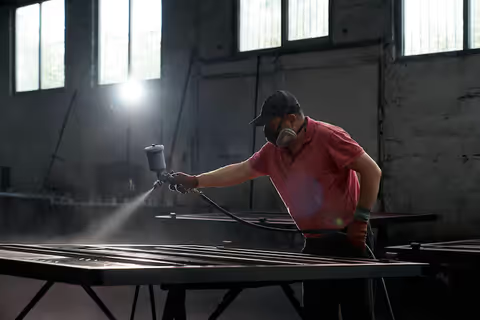
A typical pressure-blasting system stores abrasive media in a pressure vessel. Compressed air pressurizes the vessel and carries the abrasive through a hose toward a nozzle.
The operator controls the flow of air and abrasive according to the application. The nozzle determines the direction and concentration of the abrasive stream, while the distance and angle between the nozzle and surface also influence the result.
A typical process involves:
- Loading suitable abrasive media
- Preparing the surface and work area
- Pressurizing the blasting system
- Directing abrasive particles through a nozzle
- Removing contaminants or altering the surface
- Collecting used abrasive and removed material
- Inspecting the treated surface
Enclosed systems may include ventilation, dust collection, abrasive recovery, lighting, and automated movement systems.
Main Types of Sandblasting Machines
Different machine configurations are used according to component size, production volume, surface geometry, and containment requirements.
Pressure blast machines use a pressurized vessel to propel abrasive media through the blasting nozzle. They can provide substantial particle velocity for industrial surface preparation.
Suction or siphon systems use compressed air to draw abrasive media into the air stream. These systems are commonly associated with enclosed blasting cabinets.
Blast cabinets provide an enclosed workspace for smaller components. The operator places the component inside the cabinet and uses gloves and a viewing window to control the blasting process.
Automated blasting machines use mechanical movement, robotics, or programmed nozzle paths to process components with limited direct operator exposure.
Wet blasting combines abrasive media with liquid, which can reduce airborne dust in suitable applications and produce a different surface effect.
| Machine Type | Main Feature | Typical Application |
|---|---|---|
| Pressure blast | Pressurized abrasive vessel | Industrial surface preparation |
| Suction blast | Air stream draws abrasive | Cabinet blasting |
| Blast cabinet | Enclosed work area | Small and medium components |
| Automated blast cell | Programmed movement | Repeated production tasks |
| Wet blasting system | Abrasive combined with liquid | Surface cleaning and finishing |
Importance
Why Surface Preparation Matters
Many manufacturing, maintenance, construction, and restoration processes require a clean or suitably textured surface. Rust, paint, scale, dirt, oxidation, and previous coatings can interfere with later treatment.
Sandblasting Machines can prepare surfaces before painting, coating, bonding, repair, or inspection. The process can also be used to create a controlled texture where a particular surface profile is required.
Industrial Applications
Abrasive blasting is used across several industries. Metal fabrication facilities may use it to remove mill scale or corrosion from steel components. Automotive and equipment workshops may use enclosed blasting systems for restoration and component preparation.
Construction and infrastructure work can involve blasting for concrete, structural steel, bridges, tanks, and other large structures. Foundries and manufacturing facilities may also use abrasive blasting to clean castings and manufactured components.
Common applications include:
- Rust and corrosion removal
- Paint and coating removal
- Surface preparation before coating
- Cleaning metal castings
- Preparation of structural steel
- Restoration of selected components
- Concrete and masonry preparation
- Surface texturing
- Removal of scale and contaminants
Abrasive Selection
The abrasive material has a major effect on the blasting process. Different media vary in hardness, particle shape, density, recyclability, and surface effect.
Common media include:
- Aluminum oxide for relatively aggressive surface preparation
- Glass beads for selected finishing applications
- Steel shot for repeated blasting applications
- Garnet for particular surface-preparation tasks
- Plastic media for some sensitive materials
- Other mineral or synthetic abrasives for specialized applications
Silica sand requires particular attention because respirable crystalline silica can create serious health hazards when inhaled. Modern abrasive-blasting practices therefore frequently use alternative media and appropriate containment and respiratory protection.
Surface Profile
Blasting does more than remove unwanted material. It can create microscopic peaks and valleys across a surface. This texture, commonly known as a surface profile, can affect how coatings adhere to the prepared material.
Surface-profile measurement instruments can be used to determine whether a treated surface falls within a specified range. The required profile depends on the coating system and technical specification.
Recent Updates
Automation and Robotic Blasting
From 2024 through 2026, abrasive-blasting technology has continued to incorporate automation and robotic movement. Automated systems can move nozzles along programmed paths or rotate components during processing.
Robotic systems are particularly relevant where components have repeatable geometries or where direct human exposure to blasting conditions needs to be reduced. Their operation depends on suitable programming, enclosure design, sensors, and process validation.
Dust Collection and Containment
Dust management remains an important area of equipment development. Modern enclosed systems may combine sealed work chambers, ventilation, cartridge filters, cyclone separators, abrasive recovery systems, and monitoring devices.
Improved containment can help control airborne particles and keep abrasive material within designated processing areas. The effectiveness of a dust-control arrangement depends on system design, maintenance, airflow, filtration, and the material being processed.
Digital Monitoring
Industrial Sandblasting Machines increasingly incorporate sensors and control systems that can monitor air pressure, abrasive flow, cycle duration, filter condition, and machine status.
Digital records can help operators identify changes in operating conditions. Automated systems may also record process parameters for repeated production cycles.
Abrasive Recovery and Resource Management
Some machines recover and separate reusable abrasive media from dust and removed surface material. Recovery systems can reduce the amount of abrasive leaving the blasting enclosure and can support more controlled material handling.
The suitability of recovery depends on the abrasive type, contamination level, particle breakdown, and process requirements. Abrasive media may need inspection or replacement after repeated use.
Laws or Policies
Indian Regulatory Context
In India, Sandblasting Machines are subject to several areas of workplace, environmental, and industrial safety regulation. Requirements can vary according to the facility, abrasive material, equipment configuration, location, and type of work.
The Occupational Safety, Health and Working Conditions Code, 2020 provides a national framework for workplace health and safety, subject to its applicability and implementation framework. Industrial establishments may also be subject to state-level rules and requirements from relevant authorities.
Worker Protection
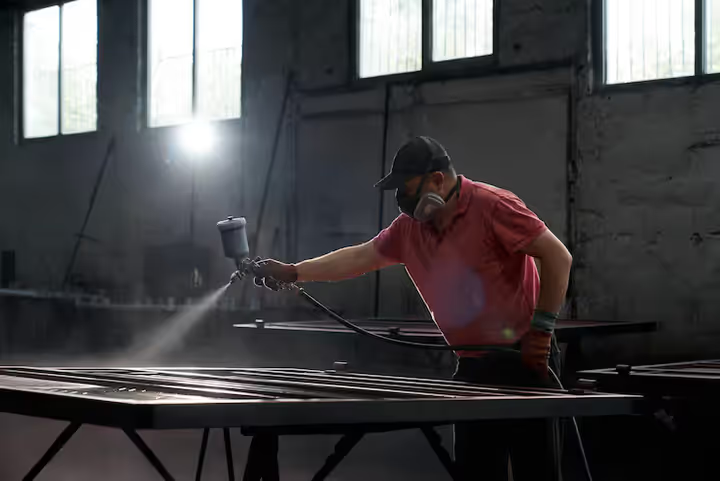
Abrasive blasting can generate airborne dust, high noise levels, flying particles, and other physical hazards. Workers may therefore require appropriate engineering controls, protective equipment, training, and controlled operating procedures.
Important safety measures can include:
- Enclosed blasting areas
- Suitable ventilation and dust collection
- Appropriate respiratory protection
- Eye and face protection
- Hearing protection
- Protective clothing
- Machine guarding
- Inspection of hoses and pressure vessels
- Controlled access to blasting areas
The exact protective measures depend on the abrasive, equipment, workplace, and exposure conditions.
Environmental Considerations
Blasting can generate dust, spent abrasive, removed coatings, paint residues, and other waste materials. Some old coatings may contain hazardous substances, making waste identification and handling particularly important.
The Central Pollution Control Board and State Pollution Control Boards provide environmental frameworks relevant to industrial emissions and waste management. Facilities should determine applicable requirements based on their materials, processes, location, and waste characteristics.
Silica Exposure
Where abrasive materials contain crystalline silica, airborne exposure requires particular attention. Occupational exposure to respirable silica can cause serious respiratory disease.
For this reason, abrasive selection, enclosure design, ventilation, respiratory protection, exposure assessment, and worker training are important considerations. Regulatory requirements should be checked against the specific workplace and applicable Indian rules.
Tools and Resources
Air Pressure and Abrasive Measurement
Pressure gauges, airflow instruments, abrasive-flow controls, and nozzle inspection tools help monitor blasting conditions. Maintaining appropriate pressure and media flow is important for controlling the blasting process.
Surface Profile Measurement
Surface-profile comparators, replica tape, and electronic profile gauges can be used to assess surface texture after blasting. The selected measurement method depends on the surface and applicable technical specification.
Dust Monitoring
Workplace particle monitoring equipment can help assess airborne particulate conditions. Filter inspection and airflow measurements can also provide information about the performance of dust-collection systems.
Technical Standards and References
Useful resources may include:
- Bureau of Indian Standards publications
- Central Pollution Control Board resources
- State Pollution Control Board guidance
- Occupational safety regulations
- Abrasive-blasting equipment manuals
- Coating manufacturer technical specifications
- ISO and other relevant surface-preparation standards
Technical requirements should be matched to the specific material, coating, abrasive, equipment, and workplace.
FAQs
What are Sandblasting Machines used for?
Sandblasting Machines are used to remove rust, paint, scale, contaminants, and selected surface layers. They can also prepare or texture surfaces before coating, repair, bonding, or other processing.
How do Sandblasting Machines work?
Sandblasting Machines propel abrasive particles toward a surface using compressed air or another controlled method. The impact of the particles removes unwanted material or changes the surface texture.
What abrasive materials are used in Sandblasting Machines?
Common abrasive materials include aluminum oxide, glass beads, steel shot, garnet, and selected synthetic or mineral media. The appropriate material depends on surface hardness, required texture, contamination, and equipment design.
Are Sandblasting Machines suitable for removing paint and rust?
Yes, abrasive blasting is commonly used for paint and rust removal from suitable surfaces. The abrasive type, pressure, nozzle, blasting distance, and surface condition influence the result.
Why is dust control important in Sandblasting Machines?
Abrasive blasting can generate airborne particles from the abrasive and the material being removed. Enclosures, ventilation, filtration, suitable respiratory protection, and controlled work practices help manage exposure risks.
Conclusion
Sandblasting Machines use controlled abrasive streams to clean, prepare, or texture a wide range of surfaces. Pressure systems, suction cabinets, automated cells, and wet-blasting equipment serve different applications and operating conditions. Recent developments have focused on automation, dust containment, digital monitoring, abrasive recovery, and workplace exposure control. In India, abrasive-blasting operations may need to address workplace safety, environmental management, equipment safeguards, and requirements related to specific abrasive materials.