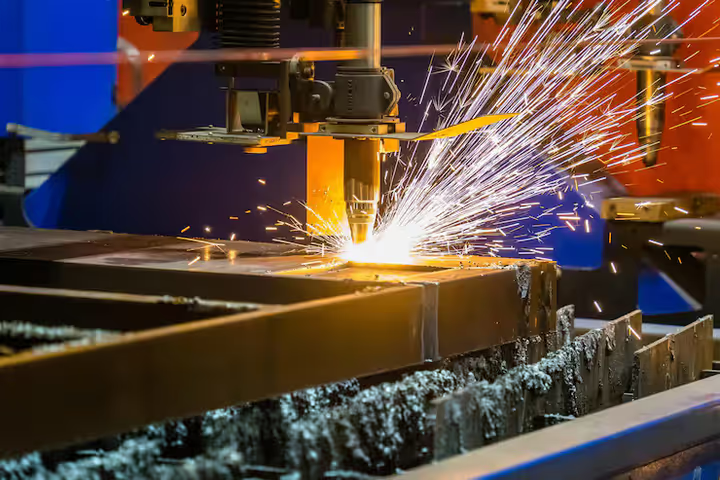
Welding Machines Explained: Types, Features, Prices & Costs
Welding equipment ranges from compact MIG and TIG machines for fabrication shops to automated laser, orbital and robotic systems used in large industrial plants.
Industrial welding equipment includes machines, power sources, torches, wire feeders, positioners, controllers and automation systems used to permanently join metal components.
Different technologies are designed for different metals, thicknesses and production requirements. Common processes include MIG/MAG, TIG, plasma, laser, orbital and automated robotic welding.
Main Types of Welding Machines
• MIG Welding Machines
MIG welding uses a continuously fed wire electrode and shielding gas to create the weld. It is widely used in fabrication, automotive work, structural manufacturing and general workshops because it can provide relatively fast welding speeds and is suitable for both manual and automated production.
• TIG Welding Machines
TIG welding uses a non-consumable tungsten electrode and can provide precise control over the weld. It is commonly selected for stainless steel, aluminium, thin materials and applications where appearance or weld quality is particularly important, although it generally requires more operator skill than conventional MIG welding.
• Laser Welding Machines
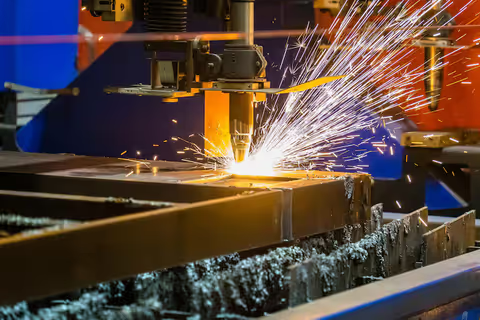
Laser welding concentrates a high-energy beam onto the joint, allowing fast welding with relatively low heat input. Modern systems range from handheld fibre-laser machines to fully enclosed automated cells used for automotive, battery, electronics, medical and precision manufacturing applications.
• Plasma Welding Machines
Plasma arc welding uses a constricted arc to produce a concentrated heat source. It can provide stable, precise welding on thin or specialised materials and is used in applications requiring controlled penetration, although it is less common in general fabrication than MIG or TIG equipment.
MIG Welding Machine Price
MIG welding machine price varies according to amperage, duty cycle, input voltage, wire-feeding system and whether the unit supports several welding processes.
Workshop and professional MIG machines commonly fall around USD 1,000–7,000, while heavy industrial configurations with separate feeders, cooling systems or automation interfaces can cost more.
What Affects MIG Welding Cost?
• Output Capacity
Higher-amperage equipment can weld thicker materials and generally requires larger electrical components, cooling capacity and heavier-duty wire feeders. Buyers should match output to the intended metal thickness rather than paying for capacity that will rarely be used.
• Duty Cycle
Duty cycle indicates how long a machine can operate at a particular output before cooling is required. Production workshops performing long welds generally need higher-duty-cycle equipment than users completing occasional repair work.
• Multiprocess Capability
Some machines combine MIG, TIG and stick welding within one power source. Multiprocess equipment can reduce the number of machines required in a workshop, although advanced features and broader process capability can increase the purchase price.
TIG Welding Machine Cost
TIG welding machine cost can range from approximately USD 1,500–7,000 for professional workshop systems, with specialised industrial units costing considerably more.
AC/DC TIG machines designed for aluminium and stainless steel generally cost more than basic DC-only equipment because they include additional waveform control, pulse functions and power electronics.
What to Compare in a TIG Welder
• AC and DC Capability
DC TIG is commonly used for steel and stainless steel, while AC capability is particularly important for aluminium welding. Workshops handling several materials may therefore benefit from an AC/DC machine rather than purchasing separate equipment.
• Pulse Control
Pulsed TIG allows current to alternate between higher and lower levels during welding. This can help control heat input on thin materials and provide greater control in precision applications where distortion needs to be limited.
• Cooling System
Higher-output TIG torches may use water cooling rather than air cooling. A water-cooled package costs more but can improve operator comfort and allow extended welding at higher amperages during demanding production work.
Laser Welding Machine Price
Laser welding machine price varies greatly according to power, laser source, cooling system, safety equipment and automation.
Current handheld fibre-laser equipment commonly starts around USD 3,500–5,000, while higher-powered professional systems can reach approximately USD 10,000–18,000. Fully automated laser cells can cost well into six figures.
Handheld vs Automated Laser Welding
• Handheld Laser Welding
Handheld systems are designed to give an operator direct control of the welding head and are commonly used for sheet-metal fabrication and relatively thin components. Buyers must also budget for appropriate laser safety controls, operator training, shielding gas and any wire-feeding equipment required.
• Automated Laser Welding
Automated laser systems integrate the laser source with robotic or multi-axis motion, guarding, process monitoring and software. These installations are suited to repeated production where speed and consistent weld positioning can justify the much higher capital investment.
Robotic Welding Systems
Robotic welding systems use programmable industrial robots or collaborative robots to control torch movement.
They are widely used where manufacturers repeatedly weld similar parts and require consistent cycle times. A complete cell may include the robot, welding power source, positioner, fixtures, safety system, torch-cleaning equipment and programming software.
Robotic Welding System Costs
• Cobot Welding Cells
Collaborative welding systems generally provide a lower-cost route into automation for smaller or high-mix fabrication shops. Current industry estimates commonly place complete cobot welding cells around USD 50,000–125,000, depending on robot size, welding equipment, safety requirements, fixturing and integration.
• Industrial Robot Cells
A conventional robotic cell with guarding, positioners and dedicated fixtures may cost approximately USD 100,000–250,000. Custom systems with multiple robots, specialised handling or complex inspection equipment can cost several hundred thousand dollars or more.
• Integration Costs
The robot arm is only one part of the investment. Fixtures, programming, guarding, electrical modifications, positioners, extraction systems and commissioning can substantially increase the final project cost and should be included when comparing supplier quotations.
Automatic Welding Machines
Automatic welding machines carry out controlled welding movements with limited manual torch handling.
Unlike a six-axis robot, some systems use fixed rails, carriages, turntables or linear mechanisms. They are commonly used for longitudinal seams, circular welds, tanks, pipes and repetitive fabrication where the welding path remains predictable.
Benefits of Automatic Welding
• Repeatable Welds
Automation can repeat specified travel speeds, torch positions and welding parameters more consistently than purely manual operation. This can be useful for high-volume production where the same joint geometry is welded repeatedly.
• Higher Productivity
Automatic equipment can reduce the time spent manually positioning and moving the torch during repetitive work. Actual productivity gains depend on part loading, fixture design, welding process and the amount of preparation required between cycles.
• Reduced Operator Exposure
Mechanised welding can keep operators farther from heat, fumes and the welding arc during parts of the production process. Suitable extraction, guarding and personal protective equipment remain necessary even when torch movement is automated.
Welding Automation Equipment
Welding automation equipment can include robots, cobots, welding carriages, seam trackers, positioners, turntables, manipulators, sensors and control systems.
Manufacturers can combine these components with MIG, TIG, plasma or laser welding processes depending on product geometry and required production volume.
CNC Welding Machine
A CNC welding machine uses programmed motion control to move the welding torch or workpiece along defined paths.
These systems can be particularly useful for repetitive components, circular parts, complex seams and fabrication where consistent torch positioning matters. Pricing varies from relatively simple mechanised systems to highly customised multi-axis industrial machines.
CNC Welding Machine Costs
• Basic Automated Systems
Entry-level programmable welding tables, positioners and seam systems may begin at several thousand dollars. Cost depends strongly on axis count, table size, welding power source and whether the machine is supplied as a complete turnkey package.
• Industrial CNC Systems
Larger CNC welding installations with multiple axes, automated positioning, sensors and integrated controls can move into the tens of thousands of dollars or considerably higher. Custom engineering and tooling can become major parts of the total project budget.
Orbital Welding Equipment
Orbital welding equipment automatically moves the welding arc around a pipe or tube.
It is particularly important in applications where repeatable circumferential weld quality is required, including pharmaceutical processing, food production, semiconductor manufacturing, aerospace, energy and specialised pipeline fabrication.
Orbital Welding Equipment Cost
• Entry-Level Systems
Portable orbital welding packages can cost approximately USD 15,000–25,000, depending on power source, weld head and pipe diameter. These systems may suit smaller fabrication operations handling relatively limited tube sizes.
• Professional Systems
More advanced orbital systems with multiple heads, data logging and broader pipe capacity may cost around USD 30,000–50,000. The exact configuration depends on tube size, wall thickness, material and documentation requirements.
• High-End Equipment
Industrial orbital welding packages with advanced monitoring, large-diameter capability and automation integration can reach approximately USD 55,000–80,000 or more. Additional weld heads, tooling and cooling systems can further increase the investment.
Pipe Welding Equipment
Pipe welding equipment includes conventional welding power sources as well as specialised orbital systems, rotators, positioners, beveling machines and pipe-handling equipment.
The appropriate setup depends on pipe diameter, wall thickness, material, welding position and whether the work takes place in a fabrication shop, industrial plant or field environment.
Plasma Welding Machine Price
Plasma welding machine price varies substantially because equipment ranges from specialised manual power sources to fully automated precision systems.
Professional configurations can cost several thousand dollars, while integrated plasma welding cells can move into the tens of thousands. Buyers should request application-specific quotations because torch design, cooling and automation strongly influence price.
Commercial Welding Equipment
Commercial welding equipment generally sits between light hobby equipment and highly customised production machinery.
Fabrication shops, maintenance contractors and small manufacturers may need higher-duty-cycle power sources, durable wire feeders, industrial torches and better cooling than occasional users, without requiring a complete robotic production line.
Industrial Welding Machine Cost
Industrial welding machine cost depends more on application than on the welding process name alone.
• Manual Industrial Equipment
Professional MIG and TIG equipment may cost from a few thousand dollars to approximately USD 10,000 or more once feeders, torches, cooling units and accessories are included. High-amperage specialised machines can exceed this range.
• Laser Equipment
Handheld laser systems can begin below USD 5,000 in some international markets, while premium systems with established service networks can cost significantly more. Automated laser cells can require investments exceeding USD 100,000.
• Robotic Equipment
Turnkey robotic welding installations commonly begin around USD 50,000 for simpler collaborative solutions and can exceed USD 250,000 for conventional engineered cells. Large multi-robot production lines can move beyond USD 500,000.
Hidden Welding Equipment Costs
• Consumables
Wire, tungsten electrodes, contact tips, nozzles, shielding gas, liners and replacement optics create ongoing operating expenses. Consumable use should be included when comparing different welding technologies.
• Safety Equipment
Welding helmets, gloves, curtains, extraction equipment and laser-safe enclosures may need to be purchased separately. Laser systems in particular can require more specialised safety controls than conventional arc welding.
• Electrical Installation
Industrial welding machines may require high-current single-phase or three-phase power. New circuits, transformers or electrical panels can add substantially to installation cost, particularly when adding automated production equipment.
• Training
Advanced TIG, laser, orbital and robotic equipment may require operator or programmer training. Training costs should be considered during procurement rather than assuming staff can immediately achieve production-level results.
• Maintenance
Preventive maintenance, calibration, replacement torches, cooling-system service and robot servicing can affect long-term cost. Businesses should compare available service support before purchasing unfamiliar equipment solely because its initial price is lower.
What to Compare Across Welding Machines
• Material Type
Steel, stainless steel, aluminium, titanium and other metals respond differently to welding processes. The selected machine should support the materials and filler systems regularly used by the workshop.
• Metal Thickness
Thin sheet requires different heat control from heavy structural material. Buyers should compare the manufacturer's recommended thickness range and duty cycle rather than selecting equipment based only on maximum amperage.
• Production Volume
Occasional repair work does not require the same machine as multi-shift manufacturing. High-volume applications can justify automation when repetitive welding, labour requirements and cycle times create a reasonable business case.
• Service Network
Industrial equipment can create costly downtime if technical support or replacement components are unavailable. Global service coverage and access to local welding equipment suppliers can therefore be important selection criteria.
Major Welding Equipment Suppliers and Manufacturers
• Miller Electric
Miller manufactures professional MIG, TIG, multiprocess and engine-driven welding equipment. Its product families include Multimatic multiprocess systems and Dynasty TIG equipment, with models aimed at fabrication, construction, maintenance and heavier industrial applications.
• Fronius
Fronius supplies manual MIG/MAG and TIG equipment along with extensive welding automation equipment. Its portfolio includes mechanised welding, robotic cells, orbital systems, sensors, software and customised production solutions used across automotive, rail, energy, heavy engineering and other industries.
• ESAB
ESAB is a major international welding and cutting supplier offering manual welding machines, consumables, CNC cutting, mechanised welding and automation. Through its AMI brand, ESAB also provides specialised automated orbital TIG welding equipment for tube and pipe applications.
• IPG Photonics
IPG Photonics specialises in fibre-laser technology and supplies handheld, integrated and robotic laser welding systems. Its portfolio includes LightWELD handheld machines, collaborative robot solutions, precision workstations and industrial LaserCell systems for applications such as automotive, batteries, electronics and general manufacturing.
How to Compare Welding Equipment Suppliers
• Application Support
A capable supplier should help match the welding process and machine to the actual material, thickness, joint design and production target rather than recommending equipment solely on maximum rated output.
• Training and Commissioning
Industrial buyers should determine whether installation, programming, process development and operator training are included in the quotation. These services become increasingly important as equipment moves from manual welding toward automation.
• Spare Parts
Consumables and replacement parts should be readily available in the region where the machine will operate. Long overseas lead times can create costly production interruptions even when the original equipment price appears attractive.
• Warranty and Service
Compare warranty terms, response times and access to qualified technicians. An established local welding equipment supplier may provide better long-term value than an inexpensive machine with limited technical support.
Choosing Between Manual and Automated Welding
Manual equipment remains practical for repairs, prototypes, low-volume fabrication and parts that change frequently.
Automatic welding machines and robotic welding systems become more attractive when components repeat consistently, production volumes are high and fixture design allows reliable positioning.
Automation should therefore be justified by the complete production process rather than by welding speed alone.
Final Thoughts
Welding equipment ranges from relatively affordable commercial welding equipment to highly engineered robotic and laser systems. MIG welding machine price and TIG welding machine cost commonly begin in the low thousands of dollars, while orbital, CNC and robotic installations can require much larger budgets. Businesses comparing industrial welding equipment should consider materials, thickness, production volume, automation, safety, consumables and after-sales support before purchasing.