Laser Cutting Machines: An Informative Guide to Technology and Applications
Laser cutting machines use concentrated light energy to cut, engrave, mark, or shape materials with controlled precision.
They are used across manufacturing, fabrication, electronics, automotive production, architecture, signage, and other industries. Modern laser cutting machines combine a laser source with motion-control systems, optics, software, and safety equipment to produce programmed patterns from digital designs.
Context
What Are Laser Cutting Machines?
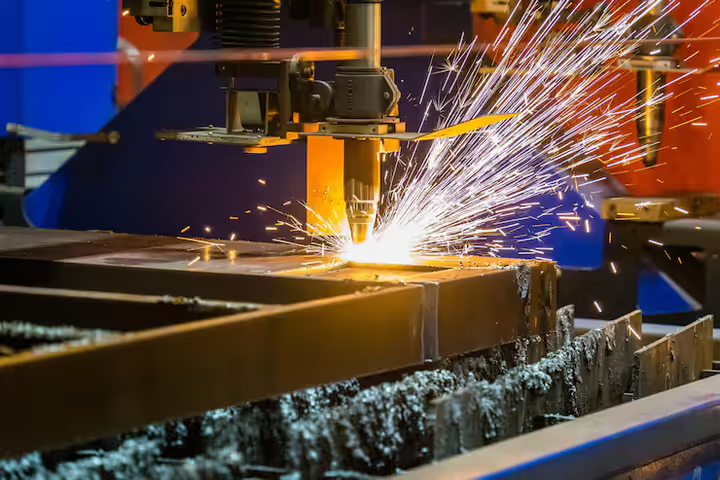
Laser cutting machines are computer-controlled systems that direct a focused laser beam onto a material. The concentrated energy heats, melts, vaporizes, or otherwise separates the material along a programmed path.
A typical system contains a laser source, focusing optics, a cutting head, motion system, control software, work table, and extraction equipment. Depending on the material and machine configuration, an assist gas such as oxygen, nitrogen, or compressed air can also be used during cutting.
Laser technology is used for both two-dimensional sheet processing and specialized three-dimensional applications. Machine configuration depends on the material, thickness, required accuracy, production volume, and desired edge characteristics.
How Laser Cutting Works
The process begins with a digital drawing or computer-aided design file. Software converts the geometry into instructions that control the movement of the cutting head and the laser parameters.
The laser beam travels through optical components and is focused into a small area on the workpiece. The concentrated energy creates a narrow cutting zone, while the machine moves the beam along the programmed path.
Assist gas can help remove molten material from the cut area. The selection of laser power, focus position, cutting speed, gas pressure, and other parameters influences the resulting cut.
Main Types of Laser Sources
Several laser technologies are used in industrial cutting.
| Laser Type | General Characteristics | Common Material Applications |
|---|---|---|
| Fiber laser | Efficient solid-state technology with high beam quality | Metals and thin to medium sheet materials |
| CO₂ laser | Gas-based laser technology | Metals and many non-metallic materials |
| Nd and related solid-state lasers | Pulsed or continuous configurations | Specialized metal processing |
| Diode laser | Semiconductor-based laser source | Marking, welding, and selected cutting applications |
The appropriate laser source depends on material properties, thickness, machine configuration, and processing requirements.
Materials Used With Laser Cutting
Laser cutting machines can process many materials, although compatibility depends on the laser wavelength, power, machine configuration, and material composition.
Common applications include:
- Mild steel
- Stainless steel
- Aluminum
- Copper and selected alloys
- Plastics compatible with laser processing
- Wood
- Acrylic
- Paper and board
- Textiles
- Certain composite materials
Not every material is suitable for laser processing. Some plastics and coated materials can release hazardous gases or particles when heated, so material compatibility and ventilation requirements must be evaluated before processing.
Importance
Precision and Repeatability
Laser cutting machines can follow digital toolpaths with controlled movement, allowing complex shapes to be reproduced across multiple workpieces. The narrow cutting zone can also reduce the amount of material affected around the cut compared with some conventional thermal processes.
Actual precision depends on machine construction, calibration, material condition, optical alignment, software settings, and operating parameters.
Digital Manufacturing
Laser cutting fits naturally into computer-controlled manufacturing workflows. A designer can create a digital model, prepare the cutting path, and transfer instructions to the machine.
This connection between design software and production equipment supports applications where shapes change frequently. It can also reduce the need for physical cutting templates in digitally controlled production environments.
Material Utilization
The width of a laser cut, known as the kerf, can be relatively narrow. This allows designers to arrange parts closely on a sheet, although practical spacing must account for heat, machine movement, material properties, and part removal.
Nesting software can calculate arrangements of multiple components on a sheet. The resulting layout depends on the geometry, material dimensions, cutting sequence, and manufacturing requirements.
Applications Across Industries
Laser cutting is used in many sectors because different machine configurations can process different materials and component sizes.
Examples include:
- Automotive components
- Sheet-metal fabrication
- Electrical enclosures
- Machinery parts
- Architectural panels
- Signage and decorative products
- Consumer products
- Aerospace components
- Electronics manufacturing
- Laboratory and research equipment
Factors That Affect Cutting Results
Cut quality does not depend on laser power alone. Important variables include:
- Material type and thickness
- Laser wavelength
- Beam quality
- Cutting speed
- Focus position
- Assist-gas type and pressure
- Nozzle condition
- Lens condition
- Machine alignment
- Material flatness
A change in one parameter can affect edge appearance, heat-affected areas, cutting speed, or the ability to complete the cut.
Recent Updates
Fiber Laser Development
From 2024 through 2026, fiber laser technology has continued to develop for metal-processing applications. Research and industrial development have focused on beam control, power management, automation, monitoring, and process stability.
Higher-power systems are available for particular industrial applications, but machine capability must be matched with appropriate optics, cutting heads, cooling systems, electrical infrastructure, and material thickness.
Automation and Digital Integration
Laser cutting machines are increasingly integrated with automated material handling, production scheduling, nesting software, sensors, and manufacturing execution systems.
Automated loading and unloading can reduce manual movement of large sheets. Sensors can also monitor selected process conditions and help detect deviations during production.
Artificial Intelligence and Process Monitoring
Machine-learning techniques are being researched for monitoring cutting processes, detecting irregularities, predicting maintenance requirements, and analyzing production data.
Machine vision and sensor systems can examine edges, sparks, material positioning, or other process signals. These technologies are developing alongside conventional control systems rather than replacing the need for engineering knowledge.
Improved Energy Management
Energy efficiency remains an important area of development in industrial laser equipment. Improvements can involve laser-source efficiency, cooling systems, standby modes, motion control, and automated power adjustment.
The overall energy requirement depends on the machine, laser source, material, thickness, cutting parameters, operating schedule, and auxiliary equipment.
Software and Connected Manufacturing
Modern systems increasingly connect CAD/CAM software, nesting applications, machine controllers, production databases, and monitoring platforms. This creates a digital workflow from design preparation through production tracking.
Connectivity also introduces cybersecurity considerations. Industrial networks should be configured to protect machine controllers and production data from unauthorized access.
Laws or Policies
Industrial Safety in India
Laser cutting equipment used in Indian workplaces is subject to occupational health and safety requirements applicable to the facility and manufacturing activity. The Occupational Safety, Health and Working Conditions Code, 2020 provides a national framework for workplace safety, subject to its implementation and applicable rules.
State-level requirements and industry-specific regulations can also apply depending on the facility and activity.
Laser Safety
Laser radiation can create hazards to the eyes and skin, depending on wavelength, power, exposure duration, and operating conditions. Industrial systems therefore commonly use enclosed cutting areas, interlocks, warning systems, protective viewing arrangements, and controlled access.
Applicable safety practices should reflect the laser classification, equipment design, workplace conditions, and relevant standards.
Electrical and Machine Safety
Laser cutting equipment contains high-voltage electrical systems, moving components, compressed gases, cooling systems, and hot materials. Appropriate electrical protection, machine guarding, emergency controls, ventilation, and maintenance procedures are therefore important.
Bureau of Indian Standards publications and international standards such as IEC and ISO standards may provide technical guidance relevant to particular equipment and workplace conditions.
Environmental and Waste Considerations
Laser processing can generate fumes, smoke, particulates, and solid waste depending on the material being cut. Industrial facilities may therefore need suitable extraction, filtration, ventilation, and waste-handling arrangements.
Environmental requirements can involve the Central Pollution Control Board, State Pollution Control Boards, and other applicable authorities. Requirements vary according to the facility, material, emissions, and location.
Tools and Resources
CAD and CAM Software
Computer-aided design software is commonly used to create the geometry that a laser cutting machine will process. CAM software can then prepare toolpaths, cutting sequences, lead-ins, lead-outs, and other machine instructions.
Common file formats include DXF, DWG, SVG, and other formats depending on the machine-control software.
Nesting Software
Nesting applications arrange multiple parts on a sheet to make efficient use of available material. Parameters can include sheet dimensions, part orientation, minimum spacing, grain direction, and cutting sequence.
Measurement Equipment
Calipers, micrometers, thickness gauges, and optical measurement systems can help verify dimensions after cutting. More advanced production environments may use coordinate measurement systems or machine vision.
Maintenance and Monitoring Tools
Useful resources can include:
- Laser power monitoring equipment
- Lens and nozzle inspection tools
- Gas-pressure monitoring systems
- Cooling-system monitors
- Alignment equipment
- Preventive-maintenance checklists
- Machine diagnostic software
- Production data dashboards
Equipment manuals and manufacturer specifications should be consulted for maintenance intervals and operating limits.
FAQs
What are laser cutting machines used for?
Laser cutting machines are used to cut and process materials such as metals, plastics, wood, acrylic, textiles, and selected composites. Applications include fabrication, automotive production, electronics, architecture, signage, and industrial manufacturing.
How do laser cutting machines work?
Laser cutting machines focus concentrated laser energy onto a material while a computer-controlled motion system follows a programmed path. Heat generated by the beam can melt, vaporize, or separate the material, while assist gas may remove material from the cutting zone.
Which laser cutting machine is suitable for metal?
Fiber laser systems are widely used for industrial metal cutting, particularly for sheet and plate materials. The appropriate configuration depends on metal type, thickness, required accuracy, production requirements, and machine specifications.
Are laser cutting machines safe to operate?
Laser cutting machines can be operated safely when appropriate engineering controls, enclosure systems, ventilation, electrical protection, machine guarding, training, and maintenance procedures are in place. Laser radiation, hot materials, fumes, moving components, and electrical systems require appropriate controls.
What software is used with laser cutting machines?
CAD software is commonly used to create component geometry, while CAM and nesting software can prepare cutting paths and arrange parts on sheets. The supported software and file formats depend on the particular machine-control system.
Conclusion
Laser cutting machines combine laser technology, precision motion systems, digital controls, optics, and material-processing knowledge to produce programmed cuts and patterns. Fiber and CO₂ technologies remain important, while automation, monitoring, digital integration, and process analysis continue to develop. Safe operation requires attention to laser radiation, fumes, electrical systems, moving machinery, materials, and applicable workplace requirements. Machine selection and operating parameters depend on the material, thickness, application, and required processing characteristics.