Shaping Machines Guide: Machine Types, Cutting Tools, Operations and Industrial Applications
A shaping machine is a machine tool used to remove material from a workpiece and create flat surfaces, grooves, slots, shoulders, and other forms. It uses a reciprocating cutting motion in which the tool moves across the workpiece while the table supports and positions the material. Shaping machines have a long history in metalworking and remain useful for certain machining tasks because their operating principle is straightforward and adaptable.
How Shaping Machines Work
Shaping machines developed during the growth of industrial metalworking, when manufacturers needed repeatable ways to produce flat and stepped surfaces. Unlike a lathe, which normally rotates the workpiece, a shaper generally uses a reciprocating ram to move the cutting tool over a mostly stationary workpiece.
A typical machine includes a base, column, ram, tool head, table, cross-rail, and feed mechanism. The workpiece is secured on the table, while the tool removes a small amount of material during the cutting stroke. The return stroke usually does not perform cutting.
Importance
Shaping machines matter because they demonstrate a basic machining method that is still relevant for maintenance workshops, educational facilities, tool rooms, and some production environments. They can produce flat surfaces and internal or external features without requiring the workpiece to rotate continuously.
For industrial users, important considerations include selecting an appropriate tool, securing the workpiece, setting the stroke correctly, managing cutting forces, and maintaining safe clearance around moving parts. Incorrect setup can affect dimensional accuracy, tool life, surface quality, and operator safety.
Machine Types and Main Components
Shaping machines can be classified by their construction and the way the ram or table is arranged. Common forms include standard shapers, crank shapers, hydraulic shapers, and specialized arrangements used for particular workpieces.
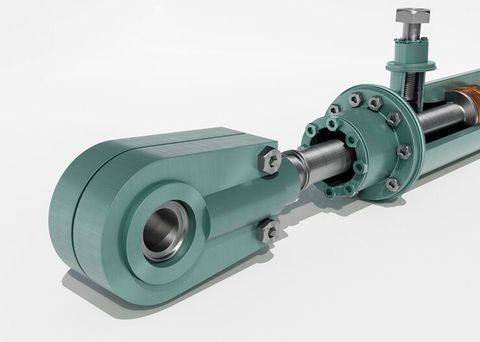
A standard shaper uses a reciprocating ram and a table that can be adjusted vertically and horizontally. Crank-type mechanisms convert rotary motion from the drive into the back-and-forth movement of the ram. Hydraulic versions use fluid power to control ram movement and can provide smooth motion.
The main components have distinct roles:
- Base: supports the machine and absorbs operating forces.
- Column: houses or supports the drive and ram mechanism.
- Ram: carries the tool head and moves through the cutting stroke.
- Tool head: holds the cutting tool and allows adjustment of tool position.
- Table: supports the workpiece and provides movement for positioning.
- Cross-rail: supports table adjustment and helps set work height.
- Feed mechanism: advances the workpiece or table between strokes.
Cutting Tools and Tool Selection
Shaping machines generally use single-point cutting tools. These tools have a defined cutting edge that removes material during the forward stroke.
Tool material can include high-speed steel or carbide, depending on the workpiece material, cutting conditions, and machine arrangement. Tool geometry affects cutting action, chip formation, heat generation, and surface finish.
Important tool features include rake angle, clearance angle, cutting-edge condition, and nose shape. A suitable geometry depends on factors such as whether the workpiece is mild steel, cast iron, aluminum, or another engineering material.
Operations Performed on Shaping Machines
A shaping machine can perform several basic operations when the workpiece and tool are correctly positioned.
- Plain shaping creates flat horizontal surfaces.
- Vertical shaping produces vertical or stepped faces.
- Angular shaping creates inclined surfaces by adjusting the tool head or workpiece.
- Slotting forms narrow grooves or slots.
- Keyway cutting produces a groove used to locate a key in a mechanical assembly.
- Form shaping creates a selected profile using an appropriately shaped tool.
- Shoulder cutting produces a step between two surface levels.
The cutting stroke removes material, while the return stroke moves the tool back to its starting position. Feed is applied after successive strokes so that the tool gradually covers the required surface.
Key Operating Parameters
Several settings influence the result of a shaping operation. Cutting speed describes the relative movement between the cutting edge and workpiece during cutting. Feed describes the amount of lateral or table movement between strokes, while depth of cut describes how much material is removed in one pass.
| Parameter | General role |
|---|---|
| Cutting speed | Influences cutting action, heat, and tool wear |
| Feed | Controls how much material is covered between strokes |
| Depth of cut | Determines material removed per pass |
| Stroke length | Sets the ram travel across the work area |
| Stroke position | Determines where cutting begins and ends |
| Tool geometry | Influences cutting force and surface finish |
Recent Updates
From 2024 through 2026, the broader machine-tool sector has continued moving toward automation, digital monitoring, robotics, and connected manufacturing systems. Industry events in India have highlighted smart machines, multitasking equipment, robots, collaborative robots, automated guided vehicles, manufacturing software, and Industry 4.0 technologies.
For conventional shaping machines, this trend does not mean that every machine is being replaced by a computer-controlled system. Instead, shaping remains one part of a wider machining landscape, while newer production environments increasingly combine traditional machine tools with measurement systems, digital planning, automation, and data collection.
Machine safety standardization has also received continued attention. Indian standards and certification guidance cover machine-tool safety, risk reduction, electrical equipment, and specific categories of metal-cutting machinery. This makes safety design and conformity an important consideration when machines are manufactured, installed, or used in regulated industrial settings.
Industrial Applications
Shaping machines are used for tasks where a reciprocating cutting motion is suitable. Their applications can include maintenance work, repair of mechanical components, tool-room operations, fabrication of machine parts, and production of grooves or flat faces.
Typical workpieces may include machine bases, brackets, guideways, slots, keyways, and stepped components. The machine can also be useful for producing features that may require a different setup on other equipment.
| Application | Typical shaping task |
|---|---|
| Machine maintenance | Reworking flat faces or steps |
| Tool-room work | Producing slots and simple profiles |
| Fabrication | Creating flat or stepped metal surfaces |
| Mechanical components | Cutting keyways and shoulders |
| Educational workshops | Demonstrating fundamental machining principles |
Shaping machines are generally associated with metalworking, although machining principles can apply to other rigid materials when the machine, tool, and cutting conditions are appropriate. Material compatibility should always be considered before an operation begins.
Safety and Work Practices
Safe operation depends on machine condition, correct setup, suitable tooling, and controlled working practices. Moving parts such as the ram, tool head, and feed mechanisms can create pinch, impact, and entanglement hazards.
Important practices include:
- Secure the workpiece firmly before cutting.
- Check that the tool is correctly clamped and aligned.
- Keep hands and loose items away from moving parts.
- Confirm that the ram has sufficient clearance.
- Use suitable eye and personal protective equipment according to the workplace risk assessment.
- Stop the machine before making adjustments or clearing chips.
- Inspect cutting tools for damage or excessive wear.
Training and workplace procedures should reflect the machine manufacturer's instructions and applicable safety requirements. Risk assessment is particularly important when working with unfamiliar equipment or unusual workpieces.
Laws or Policies in India
In India, industrial machine use is influenced by occupational safety legislation, factory requirements, and technical standards. The Occupational Safety, Health and Working Conditions Code, 2020 provides a national framework covering occupational safety and working conditions, while applicable state requirements and implementation arrangements also matter.
The Bureau of Indian Standards maintains standards and certification information for machinery safety. India's Machinery and Electrical Equipment Safety framework includes metal-cutting machine tools within its listed machinery categories, with applicable standards covering machine-tool safety and related requirements.
Tools and Resources
- BIS Know Your Standard: a searchable resource for Indian Standards, amendments, notifications, and related information.
- BIS machine-safety guidance: useful for understanding risk assessment, machine-tool hazards, and applicable standards.
- Manufacturer manuals: provide machine-specific information about controls, lubrication, stroke settings, tooling, and maintenance.
- Machining handbooks: explain cutting tools, feeds, speeds, materials, and workshop practices.
- Engineering drawings and CAD software: help define dimensions, tolerances, and feature locations before machining.
- Measurement tools such as vernier calipers, micrometers, and dial indicators: help check dimensions and alignment.
FAQs
What is a shaping machine?
A shaping machine is a machine tool that removes material through a reciprocating cutting motion. It is commonly used to create flat surfaces, slots, shoulders, keyways, and simple profiles.
What are the main types of shaping machines?
Common types include standard or mechanical shapers, crank shapers, hydraulic shapers, and specialized designs. Their differences mainly relate to the ram drive, control method, and machine arrangement.
Which cutting tools are used in a shaping machine?
Shaping machines normally use single-point cutting tools. High-speed steel and carbide are common tool materials, with selection depending on the workpiece, machining conditions, and required surface finish.
What operations can a shaping machine perform?
Common operations include plain shaping, vertical shaping, angular shaping, slotting, keyway cutting, shoulder cutting, and form shaping. The appropriate operation depends on the required feature and workpiece geometry.
Are shaping machines still used in modern industry?
Yes. They continue to have applications in maintenance, tool rooms, training environments, repair work, and selected machining tasks. Modern manufacturing also increasingly combines conventional machine tools with digital measurement, automation, and connected systems.
Conclusion
A shaping machine uses a reciprocating cutting motion to create flat surfaces, grooves, steps, keyways, and other features. Understanding machine types, cutting tools, operating parameters, and work-holding methods helps explain how shaping fits into modern machining. From 2024 through 2026, broader manufacturing trends have emphasized automation, digital systems, robotics, and machine safety, while conventional shaping remains relevant for selected applications. In India, occupational safety requirements and BIS standards provide an important framework for responsible machine use.