Steel Coil Slitting Machine Guide With Automated Slitting Systems and Industrial Engineering Solutions
A steel coil slitting machine is an industrial system that cuts wide metal coils into narrower strips of specified widths. These strips are used in manufacturing components for construction, automotive production, electrical equipment, metal furniture, appliances, and other engineered products.
The process helps manufacturers prepare metal material for operations that require consistent strip dimensions.
Steel coils are produced by rolling metal into long, continuous sheets and winding them into large rolls. However, many manufacturing processes require narrower strips rather than the original coil width. A steel coil slitting machine addresses this requirement by feeding the metal through rotating circular blades that divide the sheet lengthwise.
How Steel Coil Slitting Works
The slitting process begins with a master coil mounted on an uncoiler. The machine gradually releases the steel sheet and guides it through leveling equipment, where necessary, before it reaches the slitting section.
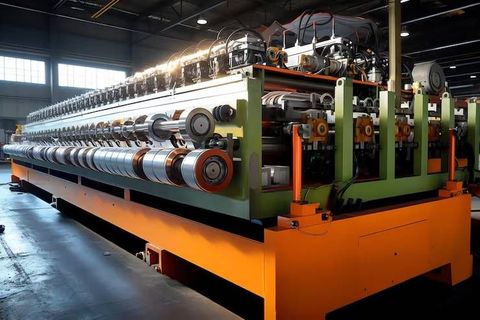
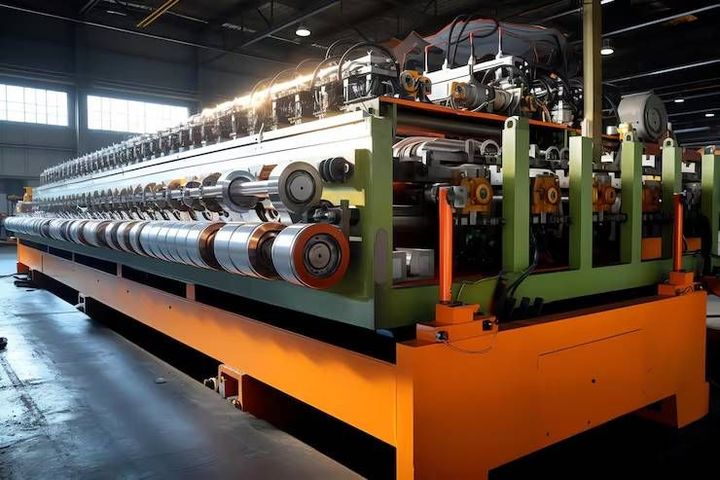
Circular knives positioned along a common shaft cut the moving steel into multiple narrower strips. A recoiler then winds the separated strips into smaller coils for storage, transportation, or further manufacturing.
A typical steel coil slitting line contains several components:
Uncoiler: Holds and releases the incoming steel coil.
Entry guides: Align the sheet before it enters the cutting section.
Leveling unit: Reduces certain forms of waviness or shape variation.
Slitting head: Uses circular blades to divide the sheet into narrower strips.
Scrap winder: Collects narrow edge material removed during processing.
Tension control system: Maintains suitable strip tension throughout the line.
Recoiler: Winds the finished strips into separate coils.
The exact configuration depends on the metal type, thickness, coil width, production speed, and required strip dimensions.
Main Types of Steel Coil Slitting Machines
Different production requirements influence the selection of a slitting system. Conventional mechanical systems use shafts, spacers, and circular blades to establish the cutting arrangement. Automated systems add electronic controls, powered adjustments, sensors, and programmed operating sequences.
Compact slitting lines are generally designed for narrower coils or specific production requirements. Heavy-duty systems can handle wider and thicker steel material, subject to their rated operating limits. Some installations also incorporate inspection equipment, automated coil handling, and integrated production monitoring.
The choice between these configurations depends on production volume, material properties, changeover frequency, available floor space, and the degree of automation required.
Importance
Steel coil slitting plays an important role in modern manufacturing because metal components often require specific widths before they can be formed, stamped, welded, or assembled. Without accurate preparation, downstream equipment may experience feeding difficulties, material waste, and dimensional inconsistencies.
The process affects manufacturers, metal processors, equipment operators, construction suppliers, and industries that rely on precision metal components. Consistent strip dimensions help simplify subsequent production stages and improve coordination between material preparation and component manufacturing.
Industrial Applications
Steel coil slitting machines support a range of applications across different sectors.
Automotive manufacturing: Prepares steel strips for selected body components, brackets, reinforcement parts, and other formed products.
Construction: Produces strips used in roofing profiles, framing systems, structural components, and metal building products.
Electrical equipment: Processes suitable steel grades for enclosures, cabinets, and selected magnetic components.
Appliance manufacturing: Prepares sheet material for housings, panels, and internal metal structures.
Tube and pipe production: Supplies narrow steel strips that can be formed into tubular sections.
General fabrication: Produces material for stamping, bending, roll forming, and other metalworking operations.
The required steel grade and surface condition vary according to the intended application. Stainless steel, carbon steel, galvanized steel, and certain coated materials may require different blade arrangements and handling practices.
Production Accuracy and Material Utilization
Slitting accuracy depends on blade positioning, machine rigidity, material thickness, sheet alignment, and operating conditions. Incorrect settings can cause burrs, uneven strip edges, width variation, or telescoping during recoiling.
Material utilization is another important consideration. The planned strip widths should account for the original coil width, the required number of strips, blade clearances, and edge-trimming allowances. Suitable planning can reduce unnecessary scrap while maintaining the dimensional requirements of the finished material.
Operational Challenges
Steel coil processing involves heavy loads, moving machinery, sharp cutting tools, and significant stored mechanical energy. Improper handling can damage material or create serious risks for operators.
Common operational challenges include blade wear, inconsistent strip tension, coil misalignment, vibration, and interruptions during product changeovers. Preventive maintenance, operator training, suitable guarding, and clear operating procedures help manage these challenges.
Recent Updates
Industrial metal processing continues to move toward greater automation, digital monitoring, and more consistent production control. Developments in steel coil slitting machines increasingly focus on reducing manual adjustments, improving equipment visibility, and coordinating material handling with other manufacturing operations.
Automated Slitting Systems
Modern automated slitting systems can use programmable logic controllers, or PLCs, to coordinate feeding, cutting, tension control, and recoiling. Human-machine interfaces allow operators to enter production parameters and monitor operating conditions from a central control panel.
Depending on the equipment configuration, automated features may include powered blade positioning, recipe storage, automatic tension adjustment, and controlled acceleration or deceleration. These functions can reduce repetitive manual work, although setup verification and operator supervision remain necessary.
Sensors and Digital Monitoring
Sensors can measure parameters such as line speed, motor load, tension, and selected alignment conditions. Industrial monitoring systems use this information to identify operating variations and help maintenance teams investigate potential equipment problems.
Some manufacturers are also integrating production data with manufacturing execution systems and broader factory management platforms. This can improve traceability by associating production records with material batches, machine settings, and inspection results.
Energy Efficiency and Material Management
Manufacturing facilities increasingly examine electricity consumption, compressed-air use, idle running time, and material waste. Variable-frequency drives can regulate motor speed where the machine design supports their use, while suitable shutdown sequences can limit unnecessary operation.
Blade maintenance and accurate slitting layouts also contribute to material management. These measures do not eliminate waste, but they can help facilities understand where losses occur and identify areas for process improvement.
Comparison of Slitting System Features
The following table summarizes common differences between conventional and automated equipment. Actual capabilities vary by manufacturer and machine configuration.
Feature | Conventional system | Automated system |
|---|---|---|
Blade positioning | Often adjusted manually | May include powered positioning |
Operating controls | Basic or partially automated | PLC-based control may be available |
Production monitoring | Operator observation and basic indicators | Sensors and digital monitoring may be integrated |
Changeover | Manual setup is common | Stored settings may simplify repeated setups |
Tension regulation | Mechanical or operator-adjusted | Electronic closed-loop control may be available |
Maintenance | Inspection and scheduled servicing | May include condition monitoring |
Production records | Manual recording may be used | Digital records may be integrated |
Automation does not automatically guarantee better output. The results depend on system design, material consistency, operator competence, maintenance, and the accuracy of the production settings.
Laws or Policies
Steel coil slitting machine requirements depend on the country where the equipment is installed, the nature of the manufacturing activity, and the machinery's design. Relevant considerations commonly include workplace safety, electrical installations, machine guarding, lifting operations, environmental management, and industrial noise.
Because requirements vary by jurisdiction, manufacturers and facility operators must identify the rules that apply to their specific equipment and workplace.
Machinery Safety and Operator Protection
Industrial machinery generally requires suitable protection against foreseeable hazards. Slitting equipment presents particular risks around rotating shafts, exposed blades, powered rollers, and moving coils.
Depending on applicable local requirements, protective measures may include fixed or interlocked guards, emergency-stop devices, lockout procedures, warning labels, and controlled access to hazardous areas. Maintenance activities should follow established isolation procedures before workers enter danger zones.
Electrical and Industrial Safety
Electrical panels, motors, control circuits, and grounding arrangements must be designed and maintained according to the applicable electrical safety framework. Operators should receive training on normal operation, emergency responses, material handling, and abnormal machine conditions.
Risk assessments should consider both routine production and non-routine activities, including blade replacement, coil loading, cleaning, and troubleshooting.
Environmental and Noise Considerations
Slitting operations may generate noise, metal scrap, lubricant residues, and electricity demand. Facilities may need to comply with local rules covering industrial noise, waste segregation, emissions where relevant, and the handling of oils or other process materials.
In India, applicable requirements may involve workplace safety legislation, factory-related rules, electrical safety provisions, and environmental requirements administered by relevant authorities. The specific obligations depend on the facility, activity, and current legal framework. This overview is general information rather than legal advice.
Tools and Resources
Several technical resources help manufacturers evaluate, operate, and maintain steel coil slitting equipment. The appropriate tools depend on the material being processed, the production layout, and the accuracy requirements of the finished strips.
Engineering Calculators and Planning Tools
Slitting layout calculators help determine how many strips can be produced from a master coil. They use input values such as incoming width, target strip widths, and edge-trimming allowances to evaluate a proposed cutting arrangement.
Other useful calculations include:
Coil weight estimation based on material dimensions and density.
Production throughput estimation using line speed and operating time.
Motor load assessment based on machine requirements.
Strip width tolerance checks against product specifications.
Material yield calculations that compare usable output with incoming material.
These calculations support planning, but equipment-specific limits and material specifications must still be verified.
Technical Documentation
Machine manuals, electrical diagrams, blade setup instructions, maintenance schedules, and operating procedures provide essential information about equipment limits and safe operation. Documentation should identify approved material ranges, maximum operating parameters, lubrication requirements, and inspection intervals.
Material certificates and inspection records can help confirm steel grade, thickness, and relevant mechanical properties. Traceability records are particularly useful when different steel batches require separate processing settings.
Production Monitoring and Maintenance
Digital production dashboards can track output, downtime, machine alarms, and maintenance activity. Maintenance teams may also use vibration measurements, motor-current monitoring, and inspection checklists where appropriate.
A structured maintenance record should document blade condition, alignment checks, tension-related issues, lubrication, replaced components, and recurring production defects. These records help distinguish isolated problems from repeated equipment or process issues.
FAQs
What is a steel coil slitting machine used for?
A steel coil slitting machine divides wide steel coils into narrower strips. These strips are used in construction, automotive production, tube manufacturing, appliance production, and other metalworking applications.
How does an automated steel coil slitting system work?
An automated steel coil slitting system uses coordinated controls, sensors, and powered mechanisms to manage selected stages of feeding, cutting, tension regulation, and recoiling. The level of automation depends on the machine design.
Which factors determine steel coil slitting machine capacity?
Capacity depends on material thickness, coil width, steel grade, line speed, cutting configuration, coil weight limits, and recoiling requirements. The machine's rated specifications determine its permitted operating range.
What maintenance does a steel coil slitting machine require?
Typical maintenance includes inspecting blades, checking shaft alignment, examining bearings, verifying tension controls, lubricating specified components, and testing safety devices. Maintenance intervals should follow the equipment manufacturer's instructions.
Which safety measures are important for coil slitting equipment?
Important measures include suitable machine guarding, emergency stops, safe coil lifting, operator training, electrical protection, and isolation of hazardous energy during maintenance. Site-specific risk assessments should determine the necessary controls.
Conclusion
Steel coil slitting machines prepare wide metal coils for manufacturing processes that require narrower strips with controlled dimensions. Conventional and automated systems differ in their control methods, adjustment mechanisms, monitoring capabilities, and integration with production equipment. Equipment selection and operation depend on material characteristics, output requirements, maintenance practices, and workplace safety measures. Engineering calculations, technical documentation, and production records support informed decisions throughout the slitting process.