Strand Pelletizing Machine Overview: Extrusion Process, Cooling Methods, Pellet Cutting
A strand pelletizing machine is an industrial system used to convert molten polymer material into small, manageable pellets. The process generally begins with an extruder that melts and mixes polymer material before forcing it through a die to create continuous strands. These strands are then cooled, dried, and cut into pellets of relatively consistent dimensions.
Context
Strand pelletizing developed alongside plastic extrusion as manufacturers needed practical ways to transform continuous extruded material into a form that could be handled, stored, transported, and later processed into finished plastic products. The basic principle remains straightforward, although modern systems can include automated controls, temperature monitoring, water circulation, strand guidance, and pellet-size adjustment.
A typical strand pelletizing line contains several connected stages. Material preparation and extrusion are followed by die formation, strand cooling, water removal, cutting, and pellet collection. The performance of each stage can influence the shape, moisture level, size, and consistency of the final pellets.
Main stages of strand pelletizing
The process can be viewed as a sequence of connected operations:
Polymer feeding introduces raw or recycled material into the extrusion system.
Extrusion melts and homogenizes the material before pushing it through the die.
Strand formation creates continuous polymer strands through multiple die openings.
Cooling reduces strand temperature and allows the material to become sufficiently rigid.
Dewatering removes surface water after wet cooling.
Pellet cutting divides the cooled strands into shorter pieces.
Collection gathers the finished pellets for subsequent handling or processing.
The exact configuration varies according to polymer type, throughput requirements, pellet dimensions, and the properties of the material being processed.
Importance
Strand pelletizing is important because pellet form makes many polymer materials easier to handle during subsequent manufacturing operations. Pellets can be metered into injection molding, extrusion, compounding, and other polymer-processing equipment more consistently than long strands or irregular pieces.
The technology is also relevant to plastics recycling. Reprocessed polymer can pass through an extrusion stage and emerge as strands before being cooled and cut into pellets. The resulting material can then undergo quality checks and further processing according to its intended application.
Why cooling is important
Cooling must be controlled because the polymer leaves the extrusion die at an elevated temperature. If a strand remains too soft when it reaches the cutter, cutting can become irregular. If cooling conditions are unsuitable for the material, strand breakage, deformation, or variations in pellet shape may occur.
Water is commonly used because it can remove heat from the strands relatively quickly. Air-based cooling can also be used in certain configurations, particularly where water contact is undesirable or where the material and process conditions permit another cooling approach.
Main equipment components
A conventional strand pelletizing machine can contain several major components:
Extruder for melting, mixing, and conveying polymer.
Die head for forming multiple continuous strands.
Cooling bath or cooling section for reducing strand temperature.
Strand guide for keeping individual strands aligned.
Air knife or dewatering section for removing surface moisture.
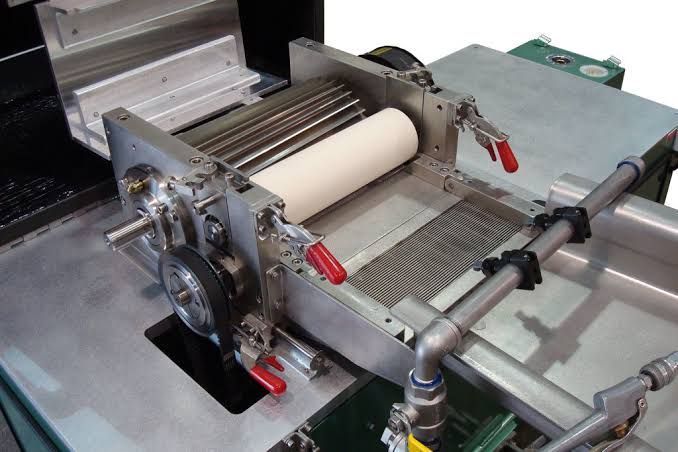
Pelletizer for cutting strands into smaller pieces.
Collection system for gathering the finished pellets.
The interaction between these components determines how smoothly material moves through the line.
Typical material and process relationship
| Process stage | Main purpose | Important operating factor |
|---|---|---|
| Feeding | Introduce polymer into extruder | Feed consistency |
| Extrusion | Melt and homogenize material | Temperature and screw operation |
| Die formation | Create continuous strands | Die condition and strand spacing |
| Cooling | Reduce strand temperature | Water or air conditions |
| Dewatering | Remove surface moisture | Airflow and strand movement |
| Cutting | Produce pellets | Cutter speed and strand speed |
| Collection | Gather pellets | Transfer and separation |
Recent Updates
From 2024 through 2026, developments around strand pelletizing have increasingly focused on process monitoring, recycling applications, material efficiency, and automated control. Industry discussions have placed greater attention on sensors that monitor variables such as melt temperature, strand condition, water temperature, and cutting performance.
Another trend is greater integration between extrusion and downstream pelletizing controls. Instead of treating extrusion, cooling, and cutting as completely separate operations, modern lines can coordinate these stages to maintain more consistent process conditions.
Recycling is another important influence. As more manufacturing systems incorporate recycled polymer streams, pelletizing equipment may need to handle variations in material composition, moisture, contamination, and melt behavior. This places greater emphasis on material preparation and process control rather than relying only on the pelletizer itself.
Automation and monitoring
Automated strand handling can reduce the amount of manual intervention required during normal operation. Sensors and control systems may monitor strand movement, temperatures, water conditions, and other process variables.
Some systems also incorporate data logging and connected monitoring. These functions can help operators identify changes in process conditions and compare operating information over time.
However, automation does not remove the need for appropriate process setup. Polymer characteristics, die condition, cooling conditions, strand tension, and cutter settings continue to influence the final pellet.
Focus on pellet-loss prevention
Plastic pellet handling has also received increased regulatory attention in some markets. Recent environmental rules have placed greater emphasis on preventing accidental pellet losses during manufacturing, transportation, and handling. For example, European Union measures introduced requirements concerning containment, cleanup, and risk management for certain operators handling plastic pellets.
This broader trend makes pellet containment an increasingly relevant consideration in plant layout and material-handling procedures.
Recycling and circular-material applications
Recent policy developments have also increased attention on recycled plastic content and traceability. Regulatory frameworks in some regions are introducing methods for calculating, verifying, and reporting recycled content, which can influence how recycled polymers are processed and documented.
For strand pelletizing systems, this can increase the importance of consistent material identification, controlled processing, and documentation of production conditions.
Laws or Policies
Strand pelletizing machines are industrial processing equipment, but the materials processed through them can be subject to environmental, product, workplace, waste-management, and chemical regulations. Requirements differ substantially between jurisdictions and according to the polymer, application, facility, and material source.
Plastic recycling operations may also be subject to rules governing waste classification, material handling, emissions, workplace conditions, and the movement of recycled materials. These requirements should be assessed according to the location and intended application rather than assumed to be identical worldwide.
Plastic pellet containment has become an area of particular regulatory attention. For example, recent European Union measures address accidental releases of plastic pellets and establish requirements for certain operators that handle specified quantities.
Packaging regulations are another developing area. Recent European rules include measures related to recyclability and recycled plastic content, demonstrating the broader policy movement toward circular material use.
A strand pelletizing machine itself does not determine whether a recycled polymer is legally suitable for a particular application. Material-specific requirements, testing, documentation, and applicable regulations remain separate considerations.
Tools and Resources
Several technical resources can help with understanding and evaluating strand pelletizing processes.
Process-flow diagrams
A process-flow diagram can map the movement of polymer from feeding through extrusion, die formation, cooling, dewatering, cutting, and collection. This is useful for identifying where temperature, moisture, pressure, and material flow change.
Material data sheets
Polymer technical data sheets can provide information such as melt-flow characteristics, density, recommended processing ranges, and thermal properties. These values help explain why different materials can behave differently during extrusion and cooling.
Pellet-size calculations
Pellet length is influenced by strand speed and cutter speed. In simplified terms, increasing cutter frequency while maintaining strand speed can produce shorter pellets, while reducing cutter frequency can produce longer pellets. Actual results depend on cutter geometry, strand diameter, material behavior, and equipment design.
Water-quality monitoring
For water-cooled systems, monitoring water temperature, cleanliness, circulation, and filtration can help maintain stable cooling conditions. Changes in water conditions can influence heat removal and the cleanliness of the strand surface.
Maintenance records
A maintenance record can document inspection of cutter blades, bearings, strand guides, water systems, filters, and other components. Recording these activities can make it easier to relate equipment condition to changes in pellet quality.
FAQs
What is a strand pelletizing machine?
A strand pelletizing machine converts continuous polymer strands into smaller pellets. The strands are produced through an extrusion die, cooled, guided into a cutter, and divided into shorter pieces.
How does the extrusion process work in a strand pelletizing machine?
The extrusion process begins when polymer material enters the extruder. Heat and mechanical action soften and mix the material, which is then pushed through a die containing multiple openings to form continuous strands.
What cooling methods are used in strand pelletizing?
Water cooling is commonly used because it can remove heat from polymer strands efficiently. Air cooling or other configurations may be used when the material characteristics and process requirements make them suitable.
How does pellet cutting work?
After cooling, strands are guided toward a rotating cutter. The cutter divides the strands into smaller sections, with pellet dimensions influenced by strand diameter, strand speed, cutter speed, and knife configuration.
What factors affect pellet quality?
Pellet quality can be influenced by polymer properties, extrusion temperature, die condition, strand diameter, cooling conditions, moisture removal, cutter settings, and equipment condition. Consistent control of these factors can help maintain more uniform pellet characteristics.
Conclusion
A strand pelletizing machine converts extruded polymer strands into manageable pellets through a sequence involving extrusion, cooling, dewatering, and cutting. Water cooling is commonly used, although alternative cooling arrangements can be appropriate for particular materials and processes. Recent developments have focused on automation, process monitoring, recycling applications, and improved pellet containment. Regulatory requirements vary by location and application, particularly where recycled materials and plastic pellet handling are involved.