Automated Assembly Machines Guide With Robotics Technology and Modern Manufacturing Solutions
Automated assembly machines are industrial systems designed to combine individual components into finished products with limited manual intervention. They use mechanical equipment, sensors, programmable controls, conveyors, vision systems, and robotics technology to move, position, join, inspect, and organize parts during production.
The development of automated assembly machines grew from the need to make repetitive manufacturing processes more consistent and organized. Traditional assembly often depended heavily on people performing the same sequence of movements repeatedly. As product designs became more complex and production requirements increased, manufacturers began integrating automation into individual assembly steps and eventually into complete production lines.
Modern automated assembly machines can handle activities such as component feeding, fastening, pressing, inserting, welding, dispensing, labeling, inspection, and packaging. A system may use industrial robots, collaborative robots, pneumatic equipment, electric actuators, programmable logic controllers, and machine vision within one production environment.
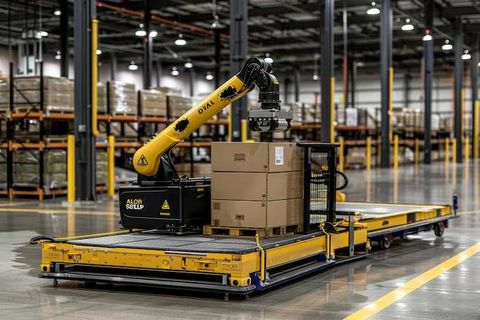
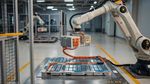
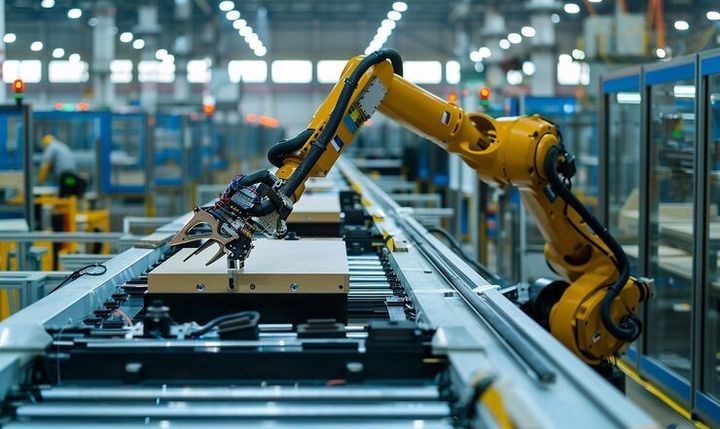
Robotics technology has become an important part of this development. Robotic arms can move components between stations, while vision systems can identify part orientation and detect certain physical differences. Sensors can monitor position, pressure, temperature, movement, and other operating conditions.
Modern manufacturing solutions are therefore increasingly built around connected equipment rather than isolated machines. Data from production equipment can be used to understand machine operation, identify process interruptions, monitor quality, and support maintenance planning.
Importance
Automated assembly machines matter because many products require hundreds or thousands of repeated assembly actions. Performing these activities manually can create challenges involving consistency, physical fatigue, process timing, and coordination between different production stages.
Automation can help standardize repetitive movements. When a machine is programmed to perform a defined sequence, the same basic process can be repeated according to established operating parameters.
Industries affected by assembly automation
Automated assembly machines are used across many manufacturing areas, including:
- Automotive components
- Electronics and electrical equipment
- Household appliances
- Medical equipment
- Consumer products
- Packaging equipment
- Industrial machinery
- Batteries and energy systems
- Precision mechanical products
The exact automation level depends on the product, component characteristics, production volume, required accuracy, and available manufacturing space.
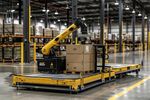
Robotics technology can also help when components need to be moved between multiple stations. For example, a robotic arm may pick a component from a feeder, position it in a fixture, and transfer the assembled part to an inspection station.
Common manufacturing challenges
Modern manufacturing environments can face several recurring challenges. These include inconsistent component positioning, production bottlenecks, difficult repetitive tasks, inspection requirements, equipment downtime, and changes in product configuration.
Automated assembly machines address some of these challenges by integrating multiple process steps into a controlled workflow. However, automation does not remove the need for human supervision. Operators, engineers, technicians, and production planners remain important for setup, programming, monitoring, troubleshooting, and process improvement.
Main machine categories
Different automated assembly machines are designed for different processes. Some common categories include:
| Machine Type | Typical Function | Common Technology |
|---|---|---|
| Assembly Press | Joining or inserting components | Electric or pneumatic actuation |
| Screwdriving System | Fastening components | Servo drive and torque monitoring |
| Robotic Assembly Cell | Handling and assembly | Industrial or collaborative robots |
| Pick-and-Place Machine | Moving components | Robot arms and vision |
| Dispensing System | Applying controlled materials | Pumps, valves, and controllers |
| Machine Vision Station | Component inspection | Cameras and image processing |
| Automated Testing Station | Functional checking | Sensors and programmable controls |
These systems may operate independently or as interconnected production cells.
Recent Updates
Recent developments in automated assembly machines have focused on greater flexibility, connected equipment, robotics technology, and data-based production management. Modern systems are increasingly designed to handle product variations without requiring complete mechanical reconstruction.
Robotics and flexible automation
Robotic systems are becoming more adaptable through improved motion control, machine vision, and software integration. A robot can use information from sensors or cameras to adjust its movement according to component position.
Collaborative robots are also being incorporated into selected assembly environments where their operating characteristics are suitable for the application. These systems are designed around interaction between people and robotic equipment, although appropriate risk assessment and protective measures remain necessary.
Machine vision and inspection
Machine vision has become an important component of modern assembly automation. Cameras can capture images of components while software evaluates characteristics such as position, orientation, shape, markings, or visible assembly conditions.
Vision inspection can operate alongside robotic systems. A robot may position a component while a camera checks its placement before the product moves to the next stage.
Connected manufacturing systems
Industrial connectivity is another significant trend. Automated assembly machines can communicate operational information through industrial networks and manufacturing software.
This can support monitoring of production quantities, machine states, cycle information, alarms, and selected quality indicators. Connected systems can also help production teams understand where interruptions occur within an assembly process.
Artificial intelligence and data analysis
Artificial intelligence is increasingly being explored for visual inspection, anomaly detection, process analysis, and predictive maintenance. These applications can analyze large amounts of machine or image data to identify patterns that may require further investigation.
The role of artificial intelligence varies considerably between applications. It generally works alongside conventional automation controls rather than replacing the entire control structure.
Laws or Policies
Automated assembly machines are influenced by machinery safety requirements, electrical rules, workplace safety frameworks, and equipment-specific standards. The exact legal requirements depend on the country, machine type, workplace, and intended use.
Manufacturers and organizations working with automated machinery generally need to consider risks related to moving parts, electrical systems, unexpected machine movement, pressure systems, heat, noise, and interaction between people and robots.
Machine safety
Machine guarding is an important part of automated assembly equipment. Physical guards, interlocked access points, emergency stopping systems, safety sensors, and controlled operating procedures can be used to reduce exposure to hazardous machine movements.
Risk assessment is also an important principle. Before an automated assembly machine is placed into operation, potential hazards should be identified and appropriate protective measures should be considered.
Robotics safety
Robotic equipment can create hazards because of rapid movement, unexpected positioning, or interaction with surrounding equipment. Safety requirements can include controlled operating zones, protective devices, safe operating modes, and procedures for maintenance and programming.
International machinery and robot safety standards provide technical frameworks that manufacturers and users can use when designing or evaluating automated systems. Local laws may establish additional requirements.
Documentation and training
Machine documentation commonly includes operating instructions, maintenance information, safety procedures, electrical documentation, and technical specifications.
Personnel working with automated assembly machines may require training appropriate to their responsibilities. Programming, maintenance, troubleshooting, and machine operation can each require different levels of technical knowledge.
Tools and Resources
Several tools support the planning, design, operation, and analysis of automated assembly machines. Computer-aided design software can be used to develop machine layouts, fixtures, robotic movements, and component arrangements before physical construction.
Simulation platforms can model robotic motion and production sequences. These tools can help engineers examine reach, movement paths, cycle sequences, and possible interference between equipment.
Programmable logic controller software is commonly used for machine sequencing and control. Human-machine interfaces provide visual information about machine states, alarms, production counts, and operating parameters.
Other useful resources include:
- Robotic simulation software for movement planning
- CAD platforms for mechanical design
- Machine vision software for image analysis
- PLC programming environments for machine control
- Digital maintenance systems for equipment records
- Production monitoring platforms for operational data
- Safety assessment templates for identifying machine hazards
- Preventive maintenance schedules for planned inspections
- Technical manuals for controllers, sensors, and robotic equipment
The selection of these tools depends on machine complexity, production requirements, available infrastructure, and personnel expertise.
FAQs
What are automated assembly machines?
Automated assembly machines are industrial systems that perform repeated assembly activities using mechanical equipment, sensors, controllers, robotics, and other automation technologies. They can handle tasks such as inserting, fastening, positioning, inspection, and material handling.
How does robotics technology work in automated assembly machines?
Robotics technology allows programmable machines to move and position components according to defined instructions. Robots can work with sensors, cameras, fixtures, and controllers to complete specific assembly sequences.
What industries use automated assembly machines?
Automated assembly machines are used in automotive manufacturing, electronics, appliances, industrial equipment, consumer products, energy equipment, and other production environments where repeated assembly processes are required.
Are automated assembly machines replacing human workers?
Automation changes how manufacturing tasks are performed rather than removing the need for people from every production environment. Human personnel remain involved in equipment programming, supervision, quality management, maintenance, engineering, safety, and process planning.
What is the role of machine vision in assembly automation?
Machine vision uses cameras and image-processing software to evaluate components or assembly conditions. It can help identify position, orientation, visible defects, markings, and other predefined characteristics during production.
Conclusion
Automated assembly machines combine mechanical systems, programmable controls, sensors, robotics technology, and inspection equipment to perform structured manufacturing processes. Their development reflects the growing need for consistent production, flexible automation, connected equipment, and controlled assembly workflows. Recent developments include improved robotic flexibility, machine vision, industrial connectivity, and data-based monitoring. Safety requirements, risk assessment, technical documentation, and appropriate training remain important parts of automated manufacturing environments.