Essential Kitchen Appliances Guide: Categories, Functions, Applications, Features and Key Considerations
Kitchen appliances are electrical, gas-powered, or manually operated devices designed to support food preparation, cooking, storage, cleaning, and related household tasks. Common examples include refrigerators, ovens, microwave ovens, mixers, blenders, induction cooktops, dishwashers, electric kettles, coffee makers, food processors, and kitchen ventilation equipment.
The development of kitchen appliances is closely connected with changes in household routines, cooking methods, electricity access, food preservation, and modern kitchen design. Earlier kitchens depended heavily on manual preparation and basic cooking equipment. Over time, electrical technology introduced appliances that could perform specific tasks with greater consistency and less physical effort.
Today, kitchen appliances are available in many sizes, configurations, and operating methods. Some are designed for a single function, while others combine several functions. Their use can vary according to household size, cooking habits, kitchen layout, available power supply, and the types of food prepared.
Main appliance categories
Kitchen appliances can generally be grouped according to their primary function:
- Cooking appliances include ovens, induction cooktops, electric stoves, microwave ovens, grills, and rice cookers.
- Food preparation appliances include mixers, blenders, food processors, grinders, choppers, and hand mixers.
- Food storage appliances include refrigerators, freezers, and specialized cooling units.
- Cleaning appliances include dishwashers and certain countertop cleaning devices.
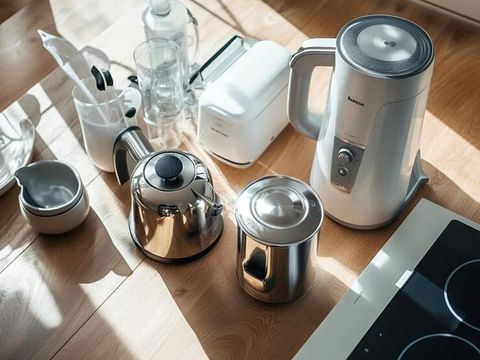
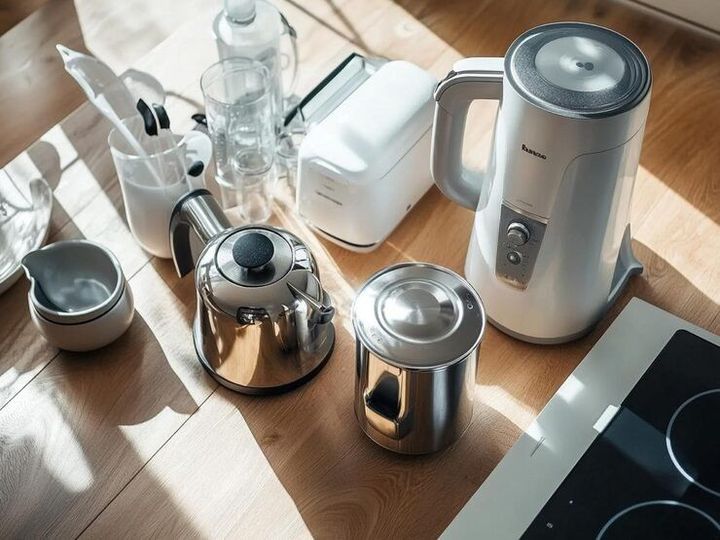
- Beverage appliances include electric kettles, coffee makers, tea makers, and beverage mixers.
- Ventilation appliances include range hoods, exhaust systems, and kitchen air-cleaning equipment.
Understanding these categories helps explain how different appliances fit into household cooking and food-management routines.
Importance
Kitchen appliances matter because food preparation involves several repetitive activities, including chopping, mixing, heating, cooling, boiling, baking, and cleaning. Appliances can perform some of these activities through controlled electrical or mechanical processes, reducing the amount of manual work involved.
They also influence how kitchens are planned. A refrigerator requires suitable ventilation and door clearance, while an oven or cooktop needs appropriate electrical or gas connections. Countertop appliances require accessible outlets and enough working space for safe operation.
Everyday household considerations
The usefulness of an appliance depends on how it fits a particular household. A person who prepares fresh meals frequently may use a mixer, food processor, refrigerator, and cooking appliance regularly. Another household may have different requirements because of limited kitchen space or different food habits.
Several practical factors affect appliance selection and use:
- Available kitchen space
- Electrical voltage and power requirements
- Cooking frequency
- Household size
- Capacity requirements
- Cleaning requirements
- Noise levels
- Energy consumption
- Safety features
- Control systems
- Installation requirements
Energy consumption is another important consideration. Appliances that operate for long periods, such as refrigerators, can have a continuing effect on household electricity use. BEE's Standards and Labelling program provides energy-performance information for covered appliances and uses star ratings to help users compare similar products.
Common functions and applications
| Appliance Category | Main Function | Common Application |
|---|---|---|
| Refrigerator | Cooling and food preservation | Storing perishable foods |
| Microwave oven | Rapid heating | Reheating and cooking |
| Oven | Controlled heating | Baking, roasting, and cooking |
| Blender | Mixing and liquidizing | Smoothies, sauces, and purees |
| Food processor | Cutting and processing | Chopping, slicing, and preparation |
| Induction cooktop | Pan heating | Boiling and cooking |
| Electric kettle | Water heating | Tea, coffee, and hot water |
| Dishwasher | Dish cleaning | Washing plates, utensils, and cookware |
| Range hood | Air extraction | Removing cooking fumes |
Recent Updates
Kitchen appliance development from 2024 through 2026 has increasingly focused on energy efficiency, connected controls, improved safety, compact designs, and more precise cooking functions. Manufacturers have also continued developing appliances that combine multiple operating modes into a single unit.
Smart connectivity is another visible trend. Some modern appliances can connect with mobile applications or home networks, allowing users to monitor operating conditions, adjust selected settings, or receive notifications. The usefulness of these functions depends on the appliance and the household's requirements.
Energy information has also received continued attention in India. BEE currently lists a range of appliances under its Standards and Labelling framework, with both mandatory and voluntary categories. Its published information shows continued expansion of appliance coverage and digital tools related to energy labels.
Safety standards have also continued to evolve. BIS records updated requirements for household and similar electrical appliances, including provisions covering kitchen machines, cooking ranges, hobs, ovens, toasters, grills, microwave ovens, and refrigerating appliances.
Smart and connected appliances
Connected kitchen appliances can include digital displays, sensors, programmable controls, wireless connectivity, and automated operating modes. These features can provide information about temperature, cooking progress, operating status, or selected settings.
However, connected functions also introduce additional considerations, such as network compatibility, software updates, privacy settings, and dependence on electronic controls. A conventional appliance with simple controls may be appropriate where connectivity is not needed.
Energy-conscious designs
Energy efficiency is becoming a more visible part of appliance specifications. Refrigerator compressors, induction cooking systems, heating elements, motors, and electronic controls can use different amounts of electricity depending on their design and operating conditions.
Energy labels can help users compare applicable appliances using standardized information. BEE's current program includes a broad set of covered equipment, while individual categories can have different labeling requirements and rating periods.
Laws or Policies
In India, kitchen appliances are affected by product safety, electrical safety, energy labeling, and environmental regulations. The Bureau of Indian Standards, or BIS, establishes and administers standards for many products, while the Bureau of Energy Efficiency, or BEE, manages the Standards and Labelling program for covered energy-using appliances.
BIS safety requirements
BIS maintains standards covering household and similar electrical appliances. The Electrical Appliances for Kitchen Quality Control framework includes categories such as toasters, grills, roasters, range hoods, and kitchen-related electrical equipment. BIS also maintains specific standards for electric kitchen machines and cooking appliances.
The applicable requirement depends on the particular appliance and its classification. Users can therefore check relevant product markings and documentation when evaluating electrical kitchen equipment.
Energy labeling
BEE's Standards and Labelling program provides standardized energy-performance information for covered appliances. The program includes mandatory and voluntary categories, and the exact requirements can change as appliance schedules and regulations are revised.
A star label is intended to communicate energy-performance information within a particular appliance category. Comparisons should therefore be made between products covered by the same applicable labeling framework.
Environmental considerations
Kitchen appliances contain electrical components, metals, plastics, electronic circuits, refrigerants, and other materials depending on their design. When an appliance reaches the end of its useful life, appropriate electronic-waste handling becomes relevant.
Environmental requirements in India can involve manufacturers, producers, recyclers, and other participants in the electronic-waste management system. Specific obligations depend on the product category and the applicable rules.
Tools and Resources
Several resources can help readers understand kitchen appliances without relying only on product descriptions.
Energy information tools
The BEE Standards and Labelling resources provide information about covered appliances, energy labels, efficiency ratings, and applicable categories. The BEE platform also includes tools for searching and comparing certain labeled appliances.
BIS standards resources
The BIS website provides information about Indian Standards, product certification, quality-control orders, and product-specific requirements. This can help readers understand the safety framework associated with different electrical appliances.
Household planning tools
Simple household planning tools can also be useful. A kitchen measurement sheet can record cabinet dimensions, counter depth, appliance width, ventilation space, and electrical outlet locations. An energy-use worksheet can record appliance wattage, estimated daily operating time, and approximate electricity consumption.
Manufacturer manuals are another useful resource because they contain appliance-specific information about installation, operating conditions, cleaning procedures, safety precautions, and maintenance intervals.
FAQs
What are the main categories of kitchen appliances?
The main categories include cooking appliances, food preparation appliances, refrigeration equipment, cleaning appliances, beverage appliances, and ventilation equipment. Some multifunction appliances can belong to more than one category.
How do kitchen appliances use energy?
Energy use depends on the appliance type, power rating, operating duration, temperature setting, and operating cycle. Refrigerators generally operate repeatedly throughout the day, while appliances such as kettles or microwave ovens may run for shorter periods.
What features should be considered in a kitchen appliance guide?
Important features can include capacity, dimensions, controls, power requirements, safety functions, energy information, cleaning requirements, noise levels, and installation needs. The relevance of each feature depends on the appliance and its intended application.
What is the role of BIS in kitchen appliances in India?
BIS develops and administers Indian Standards and supports conformity assessment for products covered by applicable requirements. Electrical kitchen appliances can be subject to specific safety standards or quality-control requirements depending on their category.
What does a BEE star label mean for kitchen appliances?
A BEE star label communicates energy-performance information for appliances covered by the Standards and Labelling program. The rating allows comparison within the relevant appliance category under the applicable labeling framework.
Conclusion
Kitchen appliances cover a wide range of equipment used for cooking, food preparation, storage, cleaning, beverage preparation, and ventilation. Their functions, capacity, energy use, safety features, and installation requirements vary considerably between categories. Developments from 2024 through 2026 have included greater attention to energy performance, connected controls, digital features, and updated safety standards. In India, BIS requirements and BEE energy-labeling programs provide important frameworks for appliance safety and energy information.