Floor Care Explained: Cleaning Methods, Equipment, Surface Types, Benefits and Maintenance
Floor care refers to the regular cleaning, protection, and maintenance of indoor and outdoor floor surfaces. It includes different activities, such as sweeping, vacuuming, mopping, scrubbing, polishing, stain removal, and surface treatment. These methods help maintain cleanliness, preserve flooring materials, and reduce the accumulation of dust, dirt, and other contaminants.
Context
Floor care refers to the regular cleaning, protection, and maintenance of indoor and outdoor floor surfaces. It includes different activities, such as sweeping, vacuuming, mopping, scrubbing, polishing, stain removal, and surface treatment. These methods help maintain cleanliness, preserve flooring materials, and reduce the accumulation of dust, dirt, and other contaminants.
The practice of floor care has developed alongside changes in building materials, household designs, and commercial environments. Traditional cleaning methods mainly involved brooms, water, cloths, and manual scrubbing. As buildings became larger and flooring materials more varied, specialized cleaning equipment and surface-specific maintenance techniques became increasingly common.
Today, floor care is relevant in residential properties, offices, hospitals, schools, shopping centres, factories, warehouses, and public buildings. Different environments require different cleaning approaches because flooring materials respond differently to moisture, friction, chemicals, and physical pressure.
A complete floor care routine generally involves three important elements: removing loose dirt, cleaning the surface with an appropriate method, and maintaining the material according to its characteristics. Understanding these elements helps people manage different flooring types without causing unnecessary damage.
Importance
Floor care plays an important role in maintaining comfortable, hygienic, and functional indoor environments. Floors experience continuous contact with footwear, furniture, equipment, spilled liquids, and airborne dust. Without regular maintenance, these materials can accumulate and affect the appearance and condition of the surface.
Hygiene and Indoor Cleanliness
Dust, food particles, soil, and moisture can collect on floors throughout the day. In areas such as kitchens, hospitals, educational institutions, and food preparation facilities, regular cleaning is particularly important because these environments have specific hygiene requirements.
Effective floor cleaning removes visible dirt and helps reduce the accumulation of unwanted substances. Appropriate cleaning methods also help maintain indoor cleanliness without introducing excessive moisture or unsuitable chemicals.
Safety and Slip Prevention
Wet floors, grease, loose particles, and cleaning residues can create slipping hazards. This is particularly relevant in entrances, kitchens, industrial facilities, bathrooms, and busy public buildings.
Proper floor maintenance involves removing spills promptly, controlling water usage, and allowing surfaces to dry before normal activities resume. Warning signs and temporary barriers may also be necessary when cleaning public or workplace floors.
Surface Protection and Appearance
Different flooring materials experience wear in different ways. Wooden floors can be affected by excess moisture, while natural stone may react to acidic cleaning products. Tiles can develop residue, and carpets can retain dust and moisture within their fibres.
Using suitable cleaning methods helps maintain the original surface characteristics. Regular maintenance also makes it easier to identify scratches, loose tiles, damaged coatings, and other conditions that require attention.
Everyday Applications
Floor care is relevant to several environments:
Residential buildings: Maintaining cleanliness in bedrooms, kitchens, bathrooms, and living areas.
Healthcare facilities: Following appropriate cleaning procedures for floors in patient rooms and shared spaces.
Commercial buildings: Managing dirt accumulation in offices, shopping centres, and reception areas.
Industrial facilities: Removing dust, production residues, and other materials from work areas.
Educational institutions: Maintaining floors in classrooms, corridors, laboratories, and common areas.
Recent Updates
Floor care has gradually moved beyond traditional manual cleaning methods. Developments in automation, battery-powered equipment, cleaning materials, and water management are influencing how residential and commercial buildings maintain their flooring.
Robotic Floor Cleaning Equipment
Robotic floor cleaners are becoming more visible in residential and commercial environments. These machines use sensors, navigation systems, and programmed cleaning routes to move across designated areas.
Some commercial models can perform automated sweeping or scrubbing in large buildings. Their applications include airports, warehouses, shopping centres, and office complexes. However, their suitability depends on floor layouts, obstacles, surface conditions, and cleaning requirements.
Smart Cleaning Technologies
Modern cleaning equipment increasingly includes digital controls, automated scheduling, battery monitoring, and operational tracking. These features help facility managers organize cleaning activities and monitor equipment usage.
Artificial intelligence and sensor-based navigation are also being incorporated into certain robotic cleaning systems. These technologies can help machines identify obstacles, follow planned routes, and adjust their movement within designated spaces.
Water-Efficient Cleaning Methods
Water management has become an important consideration in commercial and industrial floor care. Modern scrubbers can collect dirty water while applying controlled quantities of cleaning solution to the floor.
Microfiber materials, controlled-dosing systems, and low-moisture cleaning methods are also used in appropriate environments. Their effectiveness depends on the flooring material, cleaning requirements, and equipment design.
Developments in India
India's cleaning and hygiene sector is showing increased interest in automation, environmentally conscious cleaning products, and mechanized floor maintenance.
The Clean India Show 2025 highlighted robotic cleaning systems, green cleaning chemicals, facility management software, and water-efficient technologies. These developments reflect growing attention to technology-based cleaning practices in commercial and public environments.
Automated floor cleaning has also appeared in major infrastructure facilities. For example, Ahmedabad's Sardar Vallabhbhai Patel International Airport introduced a fleet of autonomous floor scrubbers, demonstrating the application of robotic equipment in large public spaces.
Overall, current developments indicate a gradual transition toward more automated, resource-conscious, and organized floor care practices. Traditional cleaning methods nevertheless remain relevant, particularly in smaller spaces and areas requiring detailed manual attention.
Laws or Policies
Floor care in India is influenced by workplace safety requirements, environmental regulations, chemical standards, and building maintenance practices. The applicable requirements depend on the type of property, its activities, and the materials being handled.
Occupational Safety and Workplace Hygiene
The Occupational Safety, Health and Working Conditions Code, 2020, provides a framework for workplace health, safety, and hygiene in covered establishments.
The Occupational Safety, Health and Working Conditions (Central) Rules, 2026, include requirements relating to cleanliness and hygiene in factories. These provisions address maintaining clean and reasonably dry floors, preventing slippery conditions, controlling dust during cleaning, and arranging appropriate waste collection and disposal.
Such requirements are relevant to industrial floor care because accumulated materials, wet surfaces, and obstructed walkways can create workplace hazards.
Chemical Handling and Product Standards
Cleaning chemicals must be handled according to their intended applications and safety instructions. Concentrated cleaning agents, disinfectants, and industrial cleaning substances may require specific precautions during storage, dilution, application, and disposal.
The Bureau of Indian Standards (BIS) develops Indian Standards for different products and materials. Certain products are also subject to mandatory certification through applicable Quality Control Orders.
However, not every floor cleaning chemical or machine automatically requires BIS certification. Requirements depend on the specific product category and applicable notifications.
Waste Management and Environmental Considerations
Floor cleaning activities can generate wastewater, collected dust, packaging waste, and chemical residues. Commercial and industrial facilities must consider applicable waste management and environmental requirements when handling these materials.
The Environment (Protection) Act, 1986, and relevant waste management rules provide broader environmental frameworks in India. Facilities handling industrial effluents or regulated waste may also have additional obligations under applicable pollution control requirements.
These regulations encourage responsible handling of cleaning materials and waste rather than uncontrolled disposal.
Tools and Resources
Floor care involves different tools and equipment depending on the floor material, cleaning frequency, and size of the area.
Common Floor Cleaning Equipment
Brooms and dustpans: Used to collect loose dirt, dust, and larger particles.
Microfiber mops: Designed to collect dust and surface debris while supporting controlled moisture application.
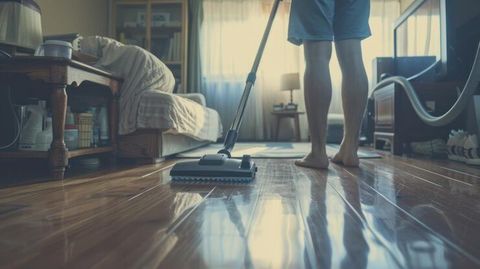
Vacuum cleaners: Remove dust, hair, and loose particles from hard floors and carpets.
Floor scrubbers: Use rotating brushes or pads with cleaning solutions to remove accumulated dirt.
Floor polishers: Maintain suitable hard-floor finishes through controlled mechanical polishing.
Carpet extractors: Apply cleaning solutions and extract moisture and loosened dirt from carpet fibres.
Steam cleaners: Use heated water vapour for selected surfaces where the manufacturer's instructions permit their application.
Floor Surfaces and Suitable Cleaning Methods
Different materials require different cleaning approaches. The following table provides a general overview.
| Floor Type | Common Cleaning Method | Maintenance Consideration |
|---|---|---|
| Ceramic tiles | Sweeping and damp mopping | Clean grout lines regularly |
| Porcelain tiles | Vacuuming and damp mopping | Avoid unsuitable abrasive materials |
| Marble | Gentle cleaning with pH-neutral products | Avoid acidic substances |
| Granite | Damp mopping and suitable stone cleaners | Maintain surface protection |
| Hardwood | Dry dusting and lightly damp cleaning | Prevent excess moisture |
| Vinyl flooring | Sweeping and damp mopping | Avoid harsh abrasive tools |
| Laminate flooring | Dry cleaning and controlled damp wiping | Prevent water penetration |
| Carpet | Vacuuming and periodic extraction | Allow sufficient drying |
| Concrete | Sweeping and mechanical scrubbing | Monitor cracks and surface wear |
Digital and Information Resources
Several information platforms help people understand flooring materials, cleaning procedures, and equipment requirements.
Bureau of Indian Standards: Provides access to Indian Standards, certification information, and product-related technical documents.
India Code: Contains central legislation and regulatory information relevant to workplace and environmental requirements.
Central Pollution Control Board: Provides information about environmental regulations, waste management, and pollution control.
Manufacturer instruction manuals: Explain equipment operation, compatible surfaces, maintenance procedures, and safety precautions.
Facility maintenance checklists: Help organize cleaning schedules, equipment inspections, and routine floor condition assessments.
These resources can help homeowners, facility managers, and cleaning personnel understand the requirements associated with different flooring environments.
FAQs
What Is Floor Care and Why Is It Important?
Floor care involves cleaning, protecting, and maintaining different floor surfaces. It helps remove accumulated dirt, maintain indoor hygiene, reduce slipping hazards, and preserve flooring materials.
What Are the Main Types of Floor Cleaning Equipment?
Common floor cleaning equipment includes vacuum cleaners, microfiber mops, floor scrubbers, polishers, carpet extractors, steam cleaners, and robotic cleaning machines. Each type performs a different cleaning function.
Which Floor Cleaning Method Is Suitable for Different Surfaces?
The appropriate method depends on the flooring material. Ceramic tiles generally tolerate damp mopping, hardwood requires controlled moisture, marble needs suitable pH-neutral cleaners, and carpets are commonly maintained through vacuuming and periodic extraction.
How Often Should Commercial Floors Be Cleaned?
Cleaning frequency depends on foot traffic, building activities, floor materials, and hygiene requirements. Busy entrances and shared spaces may require several cleaning sessions throughout the day, while less frequently used areas may follow a different schedule.
How Are Robotic Floor Cleaning Machines Used?
Robotic floor cleaning machines use sensors, navigation technology, and programmed routes to clean designated areas. Depending on their design, they can vacuum, sweep, or scrub floors with limited manual intervention. Human supervision and routine equipment maintenance remain necessary.
Conclusion
Floor care combines cleaning methods, specialized equipment, and surface maintenance practices to support clean and functional environments. Different flooring materials require suitable approaches because moisture, chemicals, and mechanical cleaning can affect surfaces in different ways. Developments in robotic equipment, digital monitoring, and water-efficient technologies are gradually changing commercial floor maintenance in India. Understanding cleaning requirements, workplace safety rules, and equipment functions provides a foundation for effective floor care across residential, commercial, and industrial environments.