Room Air Purifier Guide: Filtration Technology, Airflow, Room Size and Key Features
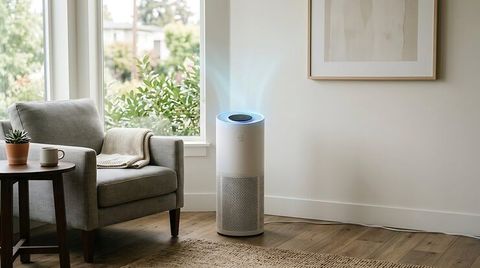
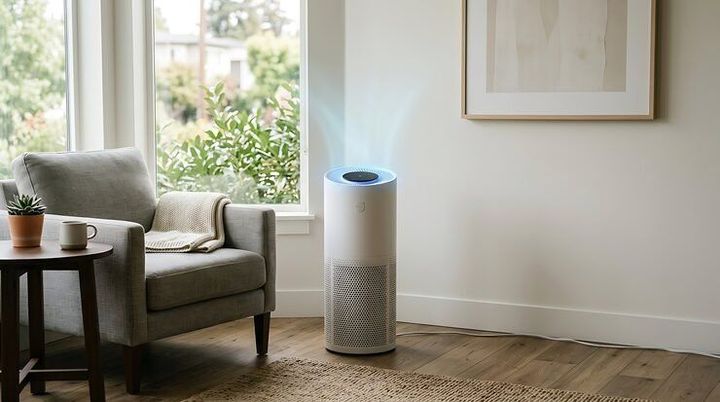
A room air purifier is an indoor appliance designed to reduce certain airborne particles and, depending on its filtration technology, some gases and odors. A Room Air Purifier Guide explains how filtration technology, airflow, room size, and key features influence an appliance's operation. These devices developed from air-cleaning methods used in industrial environments, hospitals, laboratories, and residential buildings, where airborne particles needed to be controlled.
Context
A room air purifier is an indoor appliance designed to reduce certain airborne particles and, depending on its filtration technology, some gases and odors. A Room Air Purifier Guide explains how filtration technology, airflow, room size, and key features influence an appliance's operation. These devices developed from air-cleaning methods used in industrial environments, hospitals, laboratories, and residential buildings, where airborne particles needed to be controlled.
Modern room air purifiers commonly draw indoor air through one or more filters and return the treated air to the surrounding space. Their performance depends on the filter design, airflow rate, room layout, maintenance, and the type of pollutants present. Some units primarily capture particles, while others use additional materials or technologies to address selected gases and odors.
Understanding Air Purification Technology
Different technologies work in different ways. High-efficiency particulate air (HEPA) filters capture airborne particles as air passes through a dense filter medium. Depending on their specifications, these filters can capture particles such as dust, pollen, and some particles associated with smoke.
Other technologies include activated carbon, which can adsorb certain gases and odors, and electrostatic collection, which uses electrical charges to collect particles. Some devices use ultraviolet light or ionization technologies, but their effectiveness and potential by-products vary. The presence of a particular technology does not automatically mean that an appliance removes every type of indoor pollutant.
Importance
Indoor air quality matters because people spend substantial amounts of time inside homes, offices, classrooms, and other buildings. Airborne particles can enter through open windows, doors, ventilation systems, cooking activities, cleaning, and outdoor pollution. Indoor sources may also include dust, pet dander, pollen brought indoors, and smoke.
A room air purifier can help reduce certain airborne pollutants when appropriately selected and maintained. However, it does not replace ventilation, moisture control, source reduction, or other measures needed to manage indoor air quality. Its usefulness depends on the pollutant, the room, and the equipment's verified performance.
Filtration, Airflow, and Room Size
Three factors are particularly important when comparing air purifiers. Filtration determines which pollutants the device can capture, airflow affects how much air passes through the filter, and room size influences how frequently the air can be cleaned.
The clean air delivery rate (CADR) is a useful measure for comparing the delivery of filtered air for specific particle categories. A higher CADR generally means that a unit delivers more filtered air under the conditions of the relevant test. The appropriate rating depends on the room's floor area, ceiling height, and intended operating speed.
Common Air Purifier Technologies
HEPA filtration: Captures airborne particles through a mechanical filter medium.
Activated carbon filtration: Adsorbs certain gases and odor-causing compounds, depending on the carbon quantity and design.
Pre-filters: Capture larger particles, such as hair and visible dust, helping reduce the load on finer filters.
Electrostatic collection: Uses electrical charges to collect particles; performance and maintenance requirements vary.
Ultraviolet technology: Uses UV radiation to inactivate certain microorganisms under suitable exposure conditions, but ordinary room units may not provide sufficient exposure for every application.
Ionization: Produces charged particles that may attach to airborne contaminants or surfaces; some designs can generate ozone, which can irritate the lungs.
No single technology addresses every indoor air concern. Particle filtration, gas removal, and biological inactivation are different functions and should be evaluated separately.
Comparing Key Features
| Feature | Main purpose | Important consideration |
|---|---|---|
| HEPA filter | Captures airborne particles | Filter specification and replacement needs |
| Activated carbon | Adsorbs selected gases and odors | Carbon quantity and pollutant compatibility |
| CADR rating | Indicates filtered-air delivery | Rating, particle category, and room area |
| Fan-speed settings | Adjusts airflow | Noise and performance at each setting |
| Filter indicator | Signals possible maintenance needs | Indicator method and manufacturer's guidance |
| Automatic mode | Adjusts operation using sensors | Sensor limitations and calibration |
| Energy rating or power data | Helps estimate electricity use | Actual power consumption and operating hours |
Feature names alone do not establish performance. Specifications, independent test results, and maintenance instructions provide more useful information when comparing models.
Recent Updates
Developments in room air purification from 2024 through 2026 have generally emphasized improved monitoring, energy awareness, quieter operation, and more detailed performance information. Product capabilities differ, and not every model includes the same technologies or independently verified results.
Smart Sensors and Air Quality Monitoring
Some air purifiers include sensors that estimate particulate matter levels and adjust fan speed automatically. Connected models may display readings through a mobile application or provide reminders about filter maintenance. These features can help users understand changes in measured particle levels, although the readings depend on sensor quality, placement, and the pollutants being measured.
A particle sensor does not detect every gas or chemical compound. For example, a device displaying a low particle reading cannot establish that all indoor air pollutants are absent. Monitoring information should therefore be interpreted according to the sensor's stated capabilities.
Energy Use and Filter Design
Manufacturers continue to develop filter configurations and fan systems intended to balance airflow, noise, and electricity use. Some designs use washable pre-filters alongside replaceable fine-particle filters, while others combine particulate filtration with activated carbon.
Filter maintenance remains important because accumulated material can affect airflow and operation. Washable components should only be cleaned as directed, since washing a filter that is not designed for it can damage its structure. Replacement intervals vary with use, pollutant levels, and the manufacturer's instructions.
Understanding Performance Claims
Air purifier testing may evaluate particle removal, airflow, noise, energy use, or specific gas-removal capabilities. Results from a controlled test do not necessarily predict identical performance in every occupied room. Room dimensions, open doors, outdoor air entering the room, and pollutant sources can change the outcome.
Consumers increasingly encounter detailed specifications and indoor air monitoring displays. Understanding the difference between a laboratory result, a sensor reading, and real-world room performance remains important when interpreting these claims.
Laws or Policies
Air purifier requirements vary by country and may include electrical safety, electromagnetic compatibility, energy labeling, chemical emissions, and product advertising rules. In the United States, several federal agencies and standards organizations provide information relevant to indoor air quality and appliance safety.
Product Safety and Performance Information in the United States
The U.S. Consumer Product Safety Commission oversees consumer product safety under applicable federal laws. Electrical appliances may also need to meet relevant safety standards, depending on the product and its distribution. Buyers can review product documentation and applicable certification information to understand the safety testing associated with a particular unit.
The U.S. Environmental Protection Agency (EPA) provides educational information about air cleaners and indoor air quality. The EPA explains that portable air cleaners can reduce indoor particle pollution but do not eliminate every pollutant. It also advises against using air-cleaning devices that intentionally produce ozone in occupied spaces.
Energy and Advertising Considerations
The U.S. Department of Energy publishes information about energy efficiency and appliance energy use. Specific labeling requirements depend on the type of appliance and the rules applicable to that product; not every room air purifier necessarily carries the same federal energy label.
Advertising claims about pollutant removal should accurately reflect the evidence and test conditions. Claims about removing allergens, gases, or microorganisms should be checked against the product's actual capabilities. A claim about particle filtration should not be interpreted as proof that a device prevents illness or removes every harmful substance.
Ozone and Indoor Air Safety
Ozone is a reactive gas that can irritate the respiratory system. Some air-cleaning technologies can produce ozone as a by-product, and devices marketed around ozone generation require particular caution. The EPA advises consumers to avoid ozone generators in occupied spaces and to consider the potential risks associated with ozone-producing air cleaners.
Air purification should be considered alongside source control and ventilation. Persistent dampness, combustion pollutants, and chemical emissions may require addressing their underlying sources rather than relying on filtration alone.
Tools and Resources
Several public resources can help people assess room air purifier specifications, understand indoor pollutants, and estimate the requirements of a particular room. These resources provide general information rather than a guarantee of results in an individual home.
Room Size and Airflow Calculations
A room's floor area can be calculated by multiplying its length by its width. For example, a room measuring 12 feet by 15 feet has an area of 180 square feet. Ceiling height also matters because a taller room contains more air than a room with the same floor area and a lower ceiling.
The Association of Home Appliance Manufacturers (AHAM) publishes information about CADR testing and room air cleaners. Its guidance can help readers understand how particle-specific ratings relate to room coverage. A manufacturer's stated coverage area should be checked against the conditions and fan speed used to determine it.
Indoor Air Quality Resources
The U.S. EPA's indoor air quality resources explain common pollutants, ventilation, air cleaners, and ways to reduce pollution sources. The EPA's AirNow website provides outdoor air quality information, which can help people understand when outdoor pollution may affect indoor conditions.
Product specification sheets can provide details about filter types, replacement components, rated airflow, noise levels, and power consumption. A comparison spreadsheet can record these details alongside room area, ceiling height, operating settings, and maintenance requirements.
Maintenance and Operating Checks
Routine checks can help keep an air purifier functioning according to its design. These include inspecting the filter, keeping air inlets and outlets unobstructed, and following the manufacturer's cleaning and replacement instructions.
A unit should be positioned with enough clearance for air to circulate. Noise, electricity use, and airflow can change between fan settings, so the operating mode matters when comparing performance. Air purifiers should not be treated as substitutes for functioning smoke alarms, carbon monoxide alarms, or appropriate ventilation.
FAQs
How does a room air purifier work?
A room air purifier draws indoor air through a filter or treatment system and releases the treated air back into the room. The pollutants it can remove depend on the technologies used and the unit's performance specifications.
What size air purifier is suitable for a room?
Room size can be assessed using floor area, ceiling height, and the unit's clean air delivery rate. A suitable rating depends on how much filtered air is needed and the operating conditions used to calculate room coverage.
What is the difference between HEPA and activated carbon filtration?
HEPA filtration captures airborne particles, including dust and pollen. Activated carbon adsorbs certain gases and odors, but its effectiveness depends on the materials, quantity, and specific pollutants involved.
Do room air purifiers remove every indoor pollutant?
No. Particle filters do not automatically remove gases, and gas filters do not necessarily capture all particles. Ventilation, source control, and suitable pollutant-specific measures may also be necessary.
How often should an air purifier filter be replaced?
The interval depends on the filter design, usage, indoor pollution levels, and manufacturer instructions. Some units include maintenance indicators, but these should be interpreted according to the product documentation.
Conclusion
Room air purifier performance depends on filtration technology, airflow, room size, and maintenance. HEPA filters capture particles, while activated carbon and other technologies address different types of pollutants with varying effectiveness. CADR ratings, product specifications, and established indoor air quality resources help explain a device's intended capabilities. Air cleaning remains one part of indoor air management, alongside ventilation and reducing pollution at its source.