Explore Air Purification Systems With HEPA Filters, Activated Carbon, and Modern Technology
Air purification systems are designed to reduce certain airborne particles, odors, and pollutants inside enclosed spaces. They use filtration materials, airflow mechanisms, and sometimes electronic technologies to process indoor air.
These systems are used in homes, offices, healthcare facilities, laboratories, educational buildings, and industrial environments where indoor air quality is an important consideration.
Indoor air can contain dust, pollen, pet dander, smoke particles, mold spores, and gases released by furniture, cleaning products, paints, and other materials. Outdoor pollution can also enter buildings through windows, doors, ventilation systems, and gaps in the structure. Air purification technology developed to address these concerns by capturing or reducing selected contaminants as air passes through a treatment unit.
Modern air purification systems use different methods depending on the pollutants they are designed to address. High-Efficiency Particulate Air (HEPA) filters capture fine particles, while activated carbon filters help reduce certain gases and odors. Other systems incorporate ultraviolet light, particle sensors, automated controls, or connected monitoring features.
Understanding these technologies helps readers compare air purification systems based on their intended applications, filtration performance, maintenance requirements, and operating conditions.
How Air Purification Systems Work
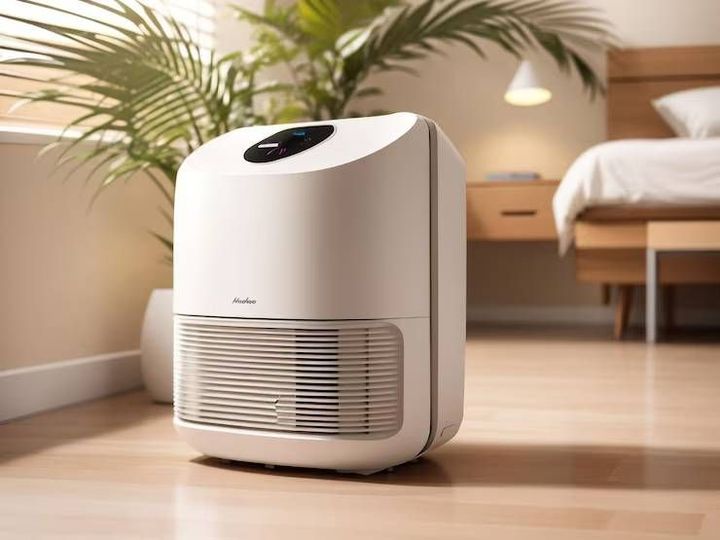
Most portable air purifiers draw indoor air through an intake, move it through one or more treatment stages, and return the processed air to the room. A fan usually provides the airflow needed to move air through the filters.
The main stages may include:
Pre-filtration: Captures larger particles such as hair, lint, and visible dust.
Particle filtration: Uses a HEPA filter or another suitable filter to capture smaller airborne particles.
Gas and odor treatment: Uses activated carbon or another adsorbent material to reduce selected gaseous pollutants.
Airflow and monitoring: Uses fans, sensors, and electronic controls to regulate operation.
Not every unit includes all these stages. The actual performance depends on the filter design, airflow rate, pollutant type, room conditions, and maintenance practices.
Common Types of Air Purification Technology
HEPA filtration is widely used when the primary objective is to reduce airborne particles. A properly specified HEPA filter is designed to capture at least 99.97% of particles measuring 0.3 micrometers under the relevant test conditions. This figure describes filter performance, not the percentage of all pollution removed from an entire room.
Activated carbon filtration works differently. Its porous structure adsorbs certain gases and odor-causing compounds onto the material's surface. Its effectiveness depends on the amount and type of carbon, the target chemical, humidity, airflow, and the condition of the filter.
Other technologies include electrostatic particle collection, ultraviolet germicidal irradiation, and photocatalytic oxidation. Their performance and limitations vary, so their presence alone does not establish that a system will improve indoor air quality in every situation.
Importance
Indoor air quality matters because people spend considerable time inside buildings, where pollutants can accumulate if ventilation is inadequate or pollution sources remain uncontrolled. Cooking, cleaning, renovation, heating equipment, outdoor pollution, and everyday household activities can contribute to indoor airborne contaminants.
Air purification systems can help address some of these concerns, particularly when the selected technology matches the pollutant. However, filtration is only one part of indoor air management. Controlling pollution sources and maintaining appropriate ventilation remain important.
Who Benefits From Air Purification Systems?
Different environments have different air quality requirements. The selection of an air purification system depends on the room's purpose, the people using it, and the pollutants present.
Examples include:
Residential spaces: Systems with suitable particle filters can reduce airborne dust, pollen, and pet dander.
Offices and educational buildings: Appropriately sized units can supplement existing ventilation and filtration arrangements.
Healthcare environments: Specialized air cleaning equipment may support infection-control procedures when selected and operated according to the facility's requirements.
Industrial workplaces: Dedicated extraction and filtration equipment can help control specific dusts, fumes, or process emissions.
Workshops and laboratories: Application-specific systems may be needed for fine particles or chemical contaminants.
Air purifiers are not interchangeable across these environments. A household unit may not be appropriate for industrial emissions, hazardous chemicals, or specialized healthcare applications.
Problems Addressed by Air Cleaning
Air purification can help reduce selected airborne pollutants, but its effectiveness varies by contaminant.
HEPA filtration targets airborne particles, including many allergens and fine particles associated with smoke. Activated carbon can reduce certain gases and odors, although ordinary carbon filters may have limited capacity for particular chemicals.
Air purification systems do not automatically remove pollutants from every surface, eliminate all indoor contaminants, or correct problems such as excessive moisture. Identifying the pollution source is therefore an important part of understanding which technology is appropriate.
Comparing Major Air Purification Technologies
The following table summarizes common technologies and their typical applications.
Technology | Main function | Important limitation |
|---|---|---|
HEPA filter | Captures airborne particles | Does not generally remove gases |
Activated carbon | Adsorbs selected gases and odors | Capacity varies with carbon quantity and pollutant type |
Pre-filter | Captures larger particles | Does not replace fine-particle filtration |
Electrostatic filtration | Collects electrically charged particles | Performance and ozone emissions depend on design |
Ultraviolet treatment | Inactivates susceptible microorganisms under suitable conditions | Effectiveness depends on exposure, intensity, and system design |
Air quality sensors | Measures selected air quality indicators | Cannot detect every pollutant |
Connected controls | Adjusts operation and displays selected measurements | Monitoring features do not guarantee accurate pollution assessment |
Recent Updates
Air purification technology continues to develop through improvements in filtration materials, sensor integration, airflow design, and automated controls. Current product development increasingly focuses on combining particle filtration with gas treatment and providing users with clearer information about operating conditions.
Smart Monitoring and Automated Operation
Many modern air purification systems include sensors that estimate particulate matter levels or track other selected environmental indicators. Some models adjust fan speed automatically when measured particle concentrations change.
Connected applications may display operating status, filter replacement indicators, and historical sensor readings. These features can help users understand system operation, although consumer-grade sensors have limitations and should not be treated as comprehensive assessments of indoor air quality.
Improvements in Filter Design
Manufacturers continue to develop filter media intended to balance particle capture, airflow resistance, durability, and energy consumption. Filter geometry and fan design influence how much air passes through the system and how effectively the unit treats a room.
Activated carbon filters are also available in different forms and quantities. A thicker carbon bed may provide greater adsorption capacity for some compounds, but performance still depends on the specific gases, contact time, and operating environment.
Energy Efficiency and Combined Technologies
Energy-efficient motors, variable fan speeds, and programmable operating modes are increasingly relevant to air purifier design. These features can help manage electricity use while maintaining suitable airflow.
Some products combine mechanical filtration with ultraviolet treatment or other supplemental methods. These combinations require careful evaluation because additional technology does not necessarily improve overall performance, and some electronic air cleaning methods can generate ozone. Ozone can irritate the respiratory system, making emissions an important consideration when comparing equipment.
Laws or Policies
Air purification systems are influenced by product safety requirements, building ventilation rules, environmental standards, and technical testing methods. The applicable requirements vary by country, intended application, and whether a unit is designed for domestic, commercial, healthcare, or industrial use.
Product Standards and Performance Testing
Several technical standards help describe air filter performance and air cleaning capacity. Common examples include HEPA filter classifications, particulate filtration testing, and clean air delivery measurements.
The Association of Home Appliance Manufacturers (AHAM) uses the Clean Air Delivery Rate (CADR) framework to describe how quickly certain portable air cleaners deliver filtered air for specific particle categories. International and regional standards may use different test procedures or classifications, so figures should be compared within their relevant testing framework.
A manufacturer’s stated performance should be interpreted according to the test method, filter configuration, and operating speed used during evaluation.
Building Ventilation and Indoor Air Quality
Building regulations may specify ventilation rates, filtration requirements, equipment installation conditions, and maintenance practices. Requirements differ according to building type and local jurisdiction.
In healthcare and industrial settings, additional rules may apply to infection control, workplace exposure, hazardous emissions, or specialized ventilation. Portable air purifiers generally supplement these systems rather than replace required engineering controls.
Safety and Environmental Considerations
Electrical safety, noise, energy consumption, and ozone emissions are relevant considerations when evaluating air cleaning equipment. Devices that intentionally generate ozone should not be treated as ordinary substitutes for particle filtration.
In many applications, the appropriate approach combines pollution source control, suitable ventilation, and correctly selected filtration. Compliance with a particular product standard does not necessarily mean a unit is suitable for every room or pollutant.
Tools and Resources
Several technical resources can help readers interpret air purification specifications and understand indoor air conditions. The usefulness of each resource depends on the type of building, the intended application, and the pollutants being assessed.
Room Size and Clean Air Delivery Calculations
Room area and ceiling height help establish the volume of air that a system must treat. Clean Air Delivery Rate and air changes per hour are useful measurements for comparing equipment capacity with room requirements.
Air changes per hour (ACH) estimates how many times the equivalent volume of room air passes through a treatment process each hour. A simplified calculation is:
ACH = Clean Air Delivery Rate ÷ Room Volume
When the delivery rate is measured in cubic meters per hour and room volume in cubic meters, the result is expressed as air changes per hour. Actual particle removal depends on airflow patterns, pollutant sources, filtration efficiency, and other room conditions.
Air Quality Monitoring Tools
Portable particle monitors can provide estimates of particulate matter concentrations, including PM2.5. Some monitoring devices also measure carbon dioxide, humidity, temperature, or selected gases.
These measurements represent different aspects of indoor conditions. For example, carbon dioxide is often used as an indicator of occupancy-related ventilation conditions, but it does not directly measure all airborne pollutants.
Filter Specifications and Maintenance Records
Product documentation helps readers evaluate filtration ratings, replacement intervals, airflow performance, noise levels, and electrical requirements. Maintenance records can also help identify when filters need inspection or replacement.
Useful information to review includes:
CADR ratings and the particle categories tested.
HEPA classification and applicable test standards.
Activated carbon quantity and intended gas-treatment applications.
Filter replacement guidance and availability of compatible components.
Noise levels, power consumption, and operating modes.
Safety information regarding ozone and other emissions.
These details provide a more complete picture than a single efficiency percentage or a general claim about air cleaning performance.
FAQs
What Is the Difference Between HEPA and Activated Carbon Filters?
HEPA filters capture airborne particles, including fine dust and pollen. Activated carbon filters adsorb certain gases and odors. Systems designed for both particle and gas pollution may combine the two technologies.
How Do I Choose an Air Purification System for a Room?
Consider room volume, clean air delivery rate, intended pollutants, noise, and maintenance requirements. A system with suitable capacity for the room is important because a small unit may not process enough air to achieve the intended level of particle reduction.
Do Air Purification Systems Remove PM2.5?
Air purification systems equipped with suitable particle filters can reduce indoor PM2.5 concentrations. The degree of reduction depends on airflow, filter performance, room conditions, and whether pollution continues to enter the space.
Can Activated Carbon Filters Remove All Indoor Odors?
No. Activated carbon can reduce certain odor-causing compounds, but its effectiveness varies by chemical, carbon quantity, and filter condition. Some odors may require removal of the underlying source rather than air filtration alone.
Are Air Purification Systems a Replacement for Ventilation?
No. Air purification and ventilation serve different purposes. Filtration can reduce selected airborne contaminants, while ventilation helps exchange indoor air with outdoor air when the incoming air and ventilation conditions are appropriate.
Conclusion
Air purification systems use technologies such as HEPA filtration, activated carbon, sensors, and specialized treatment methods to address different indoor air quality concerns. Their effectiveness depends on the pollutants involved, equipment capacity, filter condition, and operating environment. Understanding performance measurements, applicable safety standards, and maintenance requirements helps clarify the capabilities and limitations of individual systems. Source control and appropriate ventilation remain important components of indoor air quality management.

You May Also Like