Explore Custom Injection Molding Services With Advanced Manufacturing Technology
Custom injection molding is a manufacturing method used to create plastic components with specific shapes, dimensions, surface finishes, and material characteristics. The process uses an injection molding machine, a mold, and a selected polymer to produce repeated components with consistent geometry.
It is widely associated with products used in electronics, automotive systems, medical equipment, packaging, appliances, consumer products, and industrial machinery.
The basic concept of injection molding developed from earlier plastic-processing techniques and gradually became more sophisticated as polymers, machinery, mold-making methods, and computer controls improved. Modern custom injection molding combines mechanical equipment with digital design, automated controls, material science, and quality inspection.
A typical process begins with product design. Engineers create a digital model that defines dimensions, wall thickness, openings, ribs, curves, and other features. A mold is then designed around that geometry. Plastic material is heated until it reaches a suitable processing state before being injected into the mold cavity under controlled pressure.
After the material fills the cavity, it cools and solidifies. The mold opens, the component is removed, and the cycle begins again. This repeated process allows manufacturers to produce large quantities of similar components while maintaining defined dimensional characteristics.
Main Components of the Process
Several elements work together in custom injection molding:
- Injection molding machine: Controls material heating, injection, pressure, cooling, and mold movement.
- Mold: Defines the shape and surface characteristics of the finished component.
- Polymer material: Determines properties such as strength, flexibility, temperature resistance, and appearance.
- Mold cooling system: Controls heat removal and helps maintain cycle consistency.
- Control system: Monitors machine settings and process conditions.
- Inspection equipment: Measures dimensions and identifies visible or functional defects.
The relationship between these elements affects production efficiency and component quality. Mold design, material selection, processing temperature, injection pressure, cooling conditions, and cycle timing all need to work together.
Importance
Custom injection molding matters because many modern products contain plastic components that require specific shapes or performance characteristics. Standardized components may not always match the dimensional, functional, or design requirements of a particular product.
For manufacturers, custom molding can support the creation of components with complex geometries. Features such as clips, channels, mounting points, thin walls, ribs, and integrated connection areas can often be incorporated directly into a mold design.
Industries That Use Custom Injection Molding
The technology is used across a wide range of industries. Automotive manufacturers may use molded components for interior systems, electrical housings, brackets, clips, and under-the-hood applications. Electronics manufacturers can use injection molding for protective enclosures, connectors, switches, and structural parts.
Medical equipment manufacturers may use specialized polymers and controlled molding environments for certain components. Packaging applications can include containers, closures, protective inserts, and structural packaging elements.
Other applications include:
- Household appliances
- Industrial machinery
- Electrical equipment
- Consumer electronics
- Telecommunications equipment
- Agricultural equipment
- Construction products
- Laboratory equipment
- Sporting products
- Transportation components
The requirements differ between applications. A component exposed to heat may require a polymer with suitable thermal properties, while an electrical enclosure may need appropriate insulation characteristics.
Design and Production Considerations
Product design has a major influence on injection molding. Uneven wall thickness can create cooling differences, deformation, or dimensional variation. Sharp internal corners may also create unnecessary stress within the component or increase manufacturing complexity.
Draft angles are commonly incorporated so that components can be removed from the mold more easily. Ribs can increase structural stiffness without requiring extremely thick walls, while carefully positioned gates and cooling channels can influence material flow and cooling behavior.
The following table summarizes several common considerations:
| Factor | Purpose | Typical Effect |
|---|---|---|
| Mold design | Defines component geometry | Influences accuracy and repeatability |
| Material selection | Provides required physical properties | Influences strength and temperature behavior |
| Injection pressure | Moves polymer into the cavity | Affects filling and surface formation |
| Cooling control | Removes process heat | Influences cycle consistency |
| Draft angle | Supports component removal | Reduces mold-release difficulties |
| Quality inspection | Checks finished components | Helps identify dimensional variation |
Recent Updates
Recent developments in injection molding have focused on automation, digital process monitoring, energy efficiency, advanced materials, and greater control over production conditions. Modern equipment increasingly combines sensors and software with conventional mechanical systems.
Digital Manufacturing
Computer-aided engineering tools allow designers to simulate material flow before a physical mold is produced. Flow analysis can help identify potential filling problems, air traps, weld lines, cooling differences, and other design considerations.
Digital simulation can therefore be used earlier in the development process. Changes to a component or mold concept can be assessed digitally before extensive physical testing takes place.
Automated Process Monitoring
Automation is becoming more common in modern injection molding environments. Sensors can monitor variables such as temperature, pressure, cycle duration, and machine position. Data from these systems can be reviewed to identify changes in process conditions.
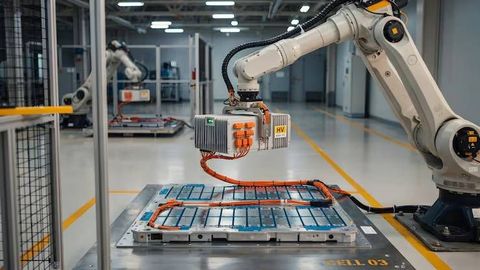
Robotic systems can also perform repetitive activities such as component removal, handling, inspection, and packaging. Automation does not eliminate the need for engineering oversight, but it can reduce the amount of manual intervention required for repetitive operations.
Advanced Materials
Material development is another important area. Engineering polymers are available with different combinations of strength, stiffness, chemical resistance, temperature resistance, and dimensional stability.
Reinforced polymers containing materials such as glass fibers can provide different mechanical characteristics from conventional unfilled plastics. Recycled and bio-based polymers are also receiving increased attention as manufacturers examine material efficiency and environmental considerations.
Material selection still depends on the intended application, processing conditions, required properties, and applicable technical requirements.
Energy and Process Efficiency
Modern injection molding machines increasingly use electronic controls, improved hydraulic systems, and electric drive technologies to manage energy use. Better process control can also reduce unnecessary material waste associated with unstable production conditions.
Manufacturers are examining cycle optimization, efficient heating and cooling, material recovery, and equipment monitoring as part of broader manufacturing efficiency programs.
Laws or Policies
Custom injection molding is influenced by different rules depending on the product, material, industry, and jurisdiction. There is no single worldwide regulatory framework covering every molded component.
Manufacturers producing components for regulated applications may need to follow requirements related to product safety, material composition, environmental protection, workplace safety, labeling, waste management, or electrical performance.
Product and Material Requirements
Plastic products used in certain applications may be subject to restrictions concerning specific substances or material characteristics. Packaging, electrical components, medical equipment, automotive products, and products intended for direct contact with food can each have different regulatory considerations.
Manufacturers may therefore need documentation concerning material composition, testing, traceability, or product specifications. The applicable requirements depend on the destination market and intended use.
Workplace and Environmental Considerations
Injection molding facilities generally need to manage machinery safety, heat exposure, electrical hazards, moving equipment, ventilation, and material handling. Environmental requirements can also address industrial waste, emissions, energy use, and disposal practices.
Because requirements vary between jurisdictions, businesses normally need to identify the regulations applicable to their facility and product category. This article provides general information rather than legal or regulatory advice.
Tools and Resources
Several technical tools can help people understand and plan custom injection molding projects. Computer-aided design software is commonly used to create three-dimensional component models and prepare geometry for mold development.
Mold-flow simulation platforms can examine how polymer moves through a cavity under defined processing conditions. These tools can help analyze filling behavior, cooling patterns, pressure requirements, and possible deformation.
Other useful resources include:
- CAD modeling software for component design
- Mold-flow analysis platforms for process simulation
- Material property databases for polymer comparison
- Measurement equipment for dimensional inspection
- Production monitoring software for process data
- Mold maintenance templates for inspection planning
- Design-for-manufacturing checklists for early-stage review
- Quality control documentation for recording inspection results
Technical drawings and specification sheets are also important resources. They can define dimensions, tolerances, materials, surface requirements, and other characteristics that need to remain consistent during production.
Understanding Production Data
Production data can provide useful information about process stability. Measurements such as cycle time, injection pressure, temperature, cooling duration, and dimensional results can be compared across production cycles.
A structured approach to data collection can help identify recurring variation. Statistical process control techniques may also be used in suitable manufacturing environments to monitor process behavior over time.
FAQs
What is custom injection molding?
Custom injection molding is a manufacturing process used to create plastic components according to specified shapes, dimensions, materials, and design requirements. Heated polymer is injected into a mold cavity, where it cools and takes the required form.
How does custom injection molding work?
The process generally involves preparing a polymer, heating it, injecting it into a mold, cooling the material, opening the mold, and removing the finished component. The sequence is then repeated for subsequent production cycles.
What materials are used in custom injection molding?
Common materials include thermoplastics such as polypropylene, polyethylene, ABS, polycarbonate, nylon, and various engineering polymers. The appropriate material depends on mechanical, thermal, chemical, electrical, and environmental requirements.
Why is mold design important in injection molding?
Mold design determines the geometry of the component and influences material flow, cooling, removal, surface appearance, and dimensional consistency. Poorly designed features can create manufacturing difficulties or unwanted variation.
What role does automation play in injection molding?
Automation can monitor process conditions and handle repetitive activities such as component removal, material handling, inspection, and equipment coordination. Modern systems may combine sensors, controllers, robotics, and production software.
Conclusion
Custom injection molding combines polymer materials, precision molds, controlled processing conditions, and modern manufacturing technologies to produce shaped plastic components. Digital design, simulation, automation, advanced materials, and process monitoring are changing how injection molding is planned and controlled. Regulatory requirements vary according to the product, material, industry, and jurisdiction. Understanding design principles, material characteristics, process conditions, and quality requirements provides useful context for evaluating modern injection molding applications.