Explore Global Manufacturing Technology With Smart Factories and Industrial Automation
Global manufacturing technology has evolved from manual production lines toward connected systems that combine machines, software, sensors, robotics, and data analysis. The development of smart factories and industrial automation reflects a long shift toward production environments where equipment can exchange information and where many routine activities can be monitored or controlled digitally.
Earlier manufacturing systems relied heavily on fixed machinery and human observation. Modern manufacturing technology adds sensors, programmable controllers, robotics, machine vision, industrial networks, cloud platforms, and analytics. These systems allow information to move between machines, operators, maintenance teams, and management systems.
A smart factory is a facility designed around connected equipment and data. Industrial automation controls or assists production activities with limited manual intervention. Automation focuses on process control, while smart manufacturing adds connectivity and data analysis.
The growth of this field comes from practical needs such as managing complex processes, maintaining consistent quality, reducing avoidable downtime, tracking equipment conditions, and responding to changing production requirements. These technologies are used across automotive, electronics, food processing, packaging, metalworking, and other industries.
Core technologies
Several technology groups form the foundation of modern manufacturing environments:
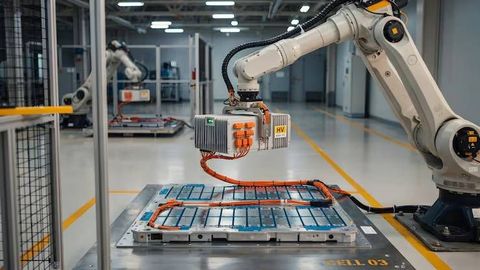
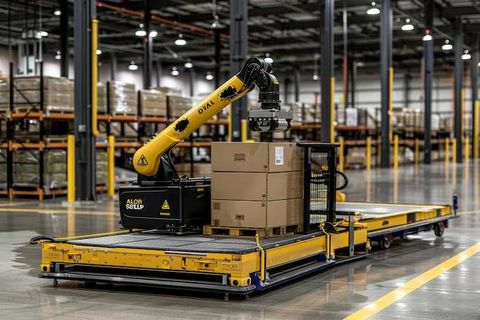
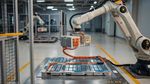
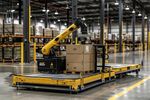
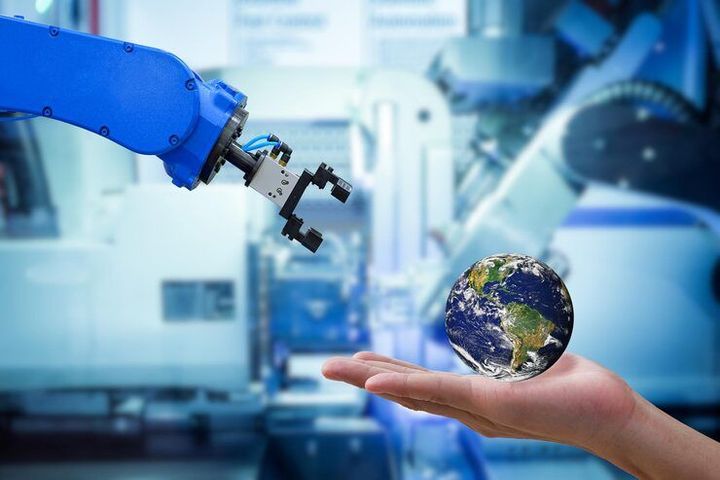
- Industrial robots can handle repetitive movement, assembly, welding, material handling, and other controlled tasks.
- Industrial sensors collect information about temperature, pressure, vibration, position, flow, speed, and other conditions.
- Programmable logic controllers coordinate machines and production sequences.
- Machine vision systems inspect objects using cameras and image-processing software.
- Industrial software connects production information with planning, maintenance, quality, and inventory systems.
- Industrial networks allow machines and devices to exchange information within production environments.
Importance
Smart factories and industrial automation matter because manufacturing affects the availability, quality, and consistency of many everyday products. Production interruptions, equipment failures, inaccurate measurements, and inefficient material handling can create operational difficulties that extend through supply chains.
Automation can change how people interact with industrial equipment. Workers may supervise automated systems, interpret production information, conduct inspections, manage exceptions, or maintain equipment. This makes training in digital manufacturing tools increasingly relevant.
Problems addressed
Modern manufacturing systems are commonly designed to address several operational issues:
- Unplanned equipment downtime can interrupt production schedules.
- Manual inspection can be difficult to apply consistently at high production volumes.
- Disconnected machines can make production information harder to understand.
- Repetitive physical activities can create ergonomic challenges.
- Limited process data can make it harder to identify recurring equipment or quality issues.
- Complex production lines may require precise coordination between multiple machines.
Smart manufacturing technology can collect information continuously and present it in dashboards or other software interfaces. This creates a clearer operational record, although the usefulness of the information depends on sensor quality, system integration, data management, and human interpretation.
Who is affected
The effects extend beyond factory operators. Engineers, maintenance personnel, quality teams, managers, equipment manufacturers, logistics teams, and technology developers all interact with manufacturing technology.
Older machinery may not have modern communication capabilities, so integrating new systems can require careful planning. Cybersecurity, workforce training, data governance, and interoperability are additional considerations.
Recent Updates
From 2024 through 2026, the general direction of global manufacturing technology has continued toward connected production, industrial artificial intelligence, robotics, digital twins, and more flexible automation. Rather than relying only on isolated automated machines, many industrial environments are connecting equipment and software to create broader production information systems.
Artificial intelligence in manufacturing
Artificial intelligence is increasingly being explored for quality inspection, predictive maintenance, production planning, anomaly detection, and process optimization. Machine-learning systems can examine large amounts of historical and real-time data, while computer-vision applications can identify visual differences that may require human review.
The practical value of these systems depends on reliable data and appropriate validation. Manufacturing teams still need defined objectives, suitable data, testing procedures, and human oversight.
Digital twins and simulation
Digital twins are another important development. A digital twin is a software representation of a physical asset, production line, or process that can use operational information to represent changing conditions. Simulation can also be used to examine layouts, production sequences, or equipment behavior before physical changes are introduced.
These technologies can support planning and analysis, particularly when production systems are complex. Accuracy depends on the quality and completeness of the underlying data.
Connected industrial systems
Industrial Internet of Things technologies continue to connect sensors, machines, controllers, and software platforms. Edge computing is also used in situations where information needs to be processed close to the equipment rather than transferred entirely to a distant system.
The table summarizes several technologies and their common roles.
| Technology | Common role | Typical information |
|---|---|---|
| Industrial sensors | Condition monitoring | Temperature, pressure, vibration |
| Robotics | Repetitive physical tasks | Position, movement, cycle data |
| Machine vision | Visual inspection | Images, defects, measurements |
| PLC systems | Machine control | States, sequences, signals |
| Digital twins | Simulation and analysis | Process and equipment models |
| Edge computing | Local data processing | Machine and sensor data |
| Manufacturing software | Production coordination | Quality, maintenance, production records |
Laws or Policies
Manufacturing technology is shaped by rules covering workplace safety, machinery operation, electrical systems, environmental management, data protection, and cybersecurity. Requirements vary by jurisdiction, industry, equipment type, and production activity.
Safety and machinery rules
Industrial automation does not remove the need for physical safety controls. Automated machinery can create risks involving movement, heat, electricity, pressure, stored energy, and unexpected machine activation. Safety requirements commonly address guarding, emergency controls, risk assessment, operator protection, maintenance procedures, and equipment documentation.
Manufacturers and facility operators may also need to follow environmental rules related to emissions, waste, energy use, chemicals, water, and industrial processes. These requirements can influence equipment selection and factory design.
Data and cybersecurity policies
Connected manufacturing introduces another policy area: digital security. Industrial networks can contain operational information and control systems that need protection against unauthorized access or disruption. Organizations may therefore establish access controls, network segmentation, software update procedures, backups, incident-response plans, and monitoring practices.
There is no single worldwide manufacturing policy covering every smart factory. Requirements differ between jurisdictions, so organizations normally need to identify the rules applicable to their equipment, industry, facility, and location.
Tools and Resources
Tools help people understand, plan, operate, and analyze smart manufacturing environments. Manufacturing execution systems organize production information, while enterprise resource planning platforms connect manufacturing activities with broader processes.
Computer-aided design and engineering software can support equipment and product development. Simulation platforms can model production layouts or machine behavior, while maintenance management tools can record inspections, maintenance schedules, equipment history, and replacement activities.
Practical resources
Useful resources can include:
- Manufacturing process maps for documenting production steps.
- Equipment maintenance checklists for recording inspections and recurring tasks.
- Sensor dashboards for reviewing operational conditions.
- Production planning templates for organizing machine capacity and schedules.
- Risk assessment templates for identifying machine and process hazards.
- Cybersecurity checklists for reviewing access, networks, software, and backups.
- Training materials for PLCs, robotics, machine vision, industrial networks, and manufacturing software.
Technical documentation, engineering references, and equipment manuals can help non-specialists understand industrial systems. The appropriate resource depends on whether the goal is learning, planning, maintenance, quality analysis, or production monitoring.
FAQs
What is global manufacturing technology?
Global manufacturing technology refers to the machinery, software, automation systems, sensors, robotics, networks, and data tools used to design, operate, monitor, and improve manufacturing processes across different industries and regions.
How do smart factories work?
Smart factories connect production equipment with sensors, controllers, software, and data systems. Information from machines can be collected and analyzed to support monitoring, quality control, maintenance planning, and production coordination.
What is industrial automation used for?
Industrial automation is used to control or assist repetitive, precise, or continuous manufacturing activities. Common applications include assembly, packaging, material handling, welding, inspection, and process control.
How is artificial intelligence used in manufacturing technology?
Artificial intelligence can support applications such as visual inspection, anomaly detection, predictive maintenance, production analysis, and planning. Its results depend on data quality, system design, validation, and human oversight.
What are the main challenges of smart factories?
Common challenges include integrating older equipment, protecting industrial networks, training personnel, managing large amounts of data, maintaining interoperability, and establishing appropriate safety and cybersecurity controls.
Conclusion
Global manufacturing technology is moving toward connected, data-driven production environments that combine automation with digital tools. Smart factories use technologies such as industrial robots, sensors, machine vision, digital twins, and industrial software to monitor and coordinate complex processes. Recent developments have expanded the role of artificial intelligence, edge computing, and connected industrial systems. At the same time, safety, cybersecurity, environmental requirements, workforce training, and system integration remain important parts of modern manufacturing.