Food Processing Machines Guide With Modern Food Manufacturing Insights
Food processing machines are mechanical and automated systems used to prepare, transform, handle, package, and preserve food materials. They are found across many parts of the food manufacturing industry, from small processing facilities to large production plants.
Traditional food preparation often depended heavily on manual cutting, grinding, mixing, heating, drying, and packaging. As food production expanded, manufacturers introduced specialized equipment to handle larger quantities while maintaining controlled processing conditions. Modern food processing machines now combine mechanical systems, electronic controls, sensors, software, and automation technologies.
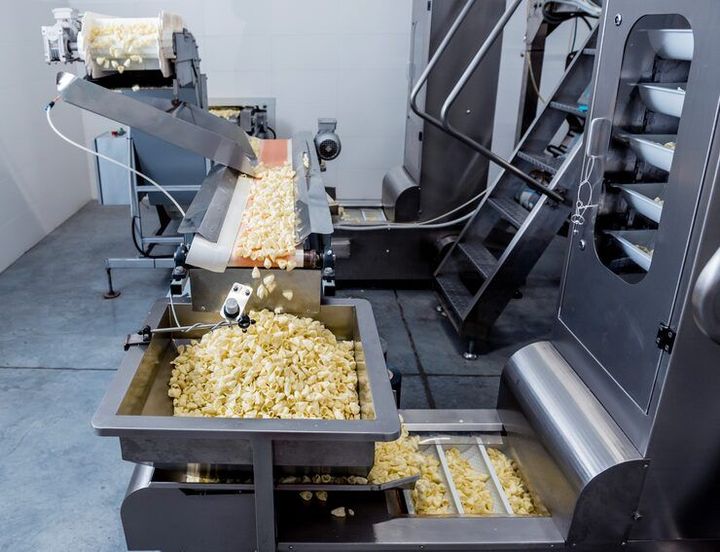
Common equipment includes mixers, grinders, slicers, cutters, conveyors, ovens, dryers, filling machines, packaging machines, refrigeration systems, and inspection equipment. Each machine performs a particular processing function, while integrated production lines can connect several stages into one continuous workflow.
Main Types of Food Processing Machines
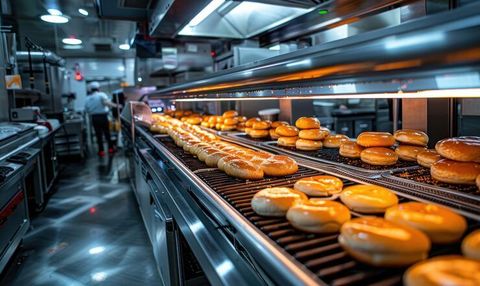
Different foods require different processing methods. A vegetable processing line may use washing, peeling, cutting, blanching, and packaging equipment, while a bakery production line can include dough mixers, dividers, ovens, cooling systems, and packaging equipment.
Some common categories include:
- Cutting machines for slicing, dicing, chopping, and portion preparation
- Mixing machines for combining ingredients into uniform mixtures
- Grinding machines for reducing solid materials into smaller particles
- Heating equipment for cooking, baking, pasteurization, and thermal processing
- Drying machines for reducing moisture in selected food materials
- Conveyors for controlled movement between processing stages
- Filling and packaging machines for measured product handling
- Refrigeration equipment for temperature-controlled processing and storage
- Inspection systems for identifying physical or production-related irregularities
The appropriate equipment depends on the food material, production method, required capacity, hygiene requirements, and desired level of automation.
Importance
Food processing machines matter because food manufacturing involves numerous repetitive and controlled operations. Equipment can help maintain consistent processing conditions while reducing dependence on manual handling during suitable production stages.
Supporting Consistent Production
Consistency is important when food products need similar texture, size, weight, moisture level, or cooking conditions across production batches. Automated equipment can maintain defined operating parameters such as temperature, speed, pressure, mixing duration, and portion size.
For example, an industrial food mixer can maintain a controlled mixing cycle, while an automated slicer can produce portions according to configured dimensions. Sensors and electronic controls can further monitor operating conditions.
Improving Hygiene and Handling
Food manufacturing requires careful control of contamination risks. Equipment design increasingly considers cleanable surfaces, controlled material flow, enclosed processing areas, and hygienic construction.
Reduced unnecessary manual contact can also support controlled handling. However, machine automation does not replace sanitation procedures, inspection, employee hygiene, or appropriate food safety management.
Supporting Different Production Scales
Food processing equipment is used for many production environments. Some facilities use individual machines for specific operations, while larger plants integrate multiple machines into automated processing lines.
The following table illustrates how equipment can correspond with common processing stages:
| Processing Stage | Typical Equipment | Main Function |
|---|---|---|
| Preparation | Washers, peelers | Remove dirt or outer material |
| Size Reduction | Cutters, slicers, grinders | Change food size or shape |
| Mixing | Industrial mixers | Combine ingredients |
| Thermal Processing | Ovens, heaters | Apply controlled heat |
| Moisture Reduction | Dryers | Reduce moisture |
| Cooling | Cooling systems | Lower product temperature |
| Inspection | Vision systems, sensors | Monitor selected characteristics |
| Packaging | Fillers, sealers | Contain and protect products |
Who Uses Food Processing Machines
These systems can affect food manufacturers, plant operators, quality teams, equipment technicians, packaging personnel, logistics teams, and consumers. Their influence extends across food categories such as grains, vegetables, fruits, dairy products, bakery products, beverages, prepared foods, and processed ingredients.
For everyday consumers, the main connection is that processing equipment contributes to how food is prepared, packaged, preserved, transported, and presented before reaching retail or institutional environments.
Recent Updates
Food manufacturing technology has been changing through greater automation, digital monitoring, energy management, robotics, and data collection. From 2024 through 2026, these developments have increasingly focused on connecting individual machines with broader production management systems.
Automation and Smart Controls
Modern food processing machines increasingly use programmable controls, sensors, variable-speed drives, and automated monitoring. These technologies allow operators to observe selected production parameters and adjust machine operation according to defined settings.
Digital controls can also record operational information, helping production teams review equipment performance and identify process variations.
Robotics and Machine Vision
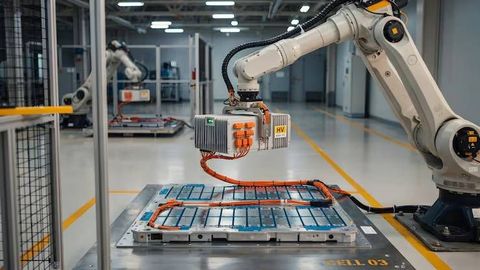
Robotic systems are becoming more relevant for repetitive activities such as product handling, sorting, palletizing, packing, and material movement. Machine vision systems can inspect shape, size, color, packaging position, or other visible characteristics.
Vision technology does not determine food quality by itself. Its effectiveness depends on camera configuration, lighting, software, product characteristics, and appropriate validation.
Energy and Resource Management
Energy efficiency has become an important consideration in modern food manufacturing. Heating, cooling, refrigeration, drying, compressed air, and mechanical processing can require substantial energy.
Manufacturers are therefore examining equipment designs that can improve thermal control, reduce unnecessary operation, recover usable heat, and monitor energy consumption. Water management is also relevant in processes involving washing, cleaning, and wet processing.
Connected Manufacturing
Industrial communication systems allow machines, sensors, control systems, and production software to exchange information. This can create a more connected manufacturing environment in which selected process information is available across different production stages.
Predictive monitoring is another developing area. Instead of relying only on fixed maintenance intervals, some systems analyze operating conditions to identify patterns associated with equipment deterioration. Such systems support maintenance planning but do not eliminate the need for physical inspection.
Laws or Policies
Food processing machines operate within a broader framework of food safety, workplace safety, environmental management, equipment hygiene, labeling, and manufacturing requirements. The exact rules depend on the country, food category, facility type, and production process.
Food Safety Requirements
Food manufacturers generally need procedures that control contamination, maintain hygienic conditions, monitor critical processing stages, and document relevant production activities. Thermal processing, refrigeration, allergen management, sanitation, and ingredient handling can be subject to specific requirements.
Machines used around food may therefore need construction and maintenance practices that support hygienic production. Materials that contact food may also be subject to applicable food-contact requirements.
Worker and Equipment Safety
Industrial equipment can create mechanical, electrical, thermal, pressure, or noise-related hazards. Facilities commonly use machine guarding, emergency controls, operating procedures, training, and maintenance programs to reduce workplace risks.
Automated systems require additional attention because moving robotic equipment, conveyors, cutters, and automated packaging systems can operate rapidly with limited manual intervention.
Environmental Considerations
Some food processing operations generate wastewater, organic residues, packaging waste, heat, or emissions. Environmental requirements may therefore influence equipment selection and plant operation.
Because regulations differ between jurisdictions, manufacturers need to identify the requirements applicable to their specific facility and food-processing activity.
Tools and Resources
Several technical tools help people understand, operate, monitor, and plan food processing systems.
Production Planning Tools
Production planning software can organize processing schedules, equipment utilization, material movement, batch information, and production records. These systems can be integrated with manufacturing management platforms in larger facilities.
Equipment Monitoring Systems
Sensors and industrial control platforms can monitor variables such as temperature, pressure, flow, speed, vibration, humidity, and equipment status. Historical records can help operators examine process patterns.
Calculation Tools
Engineering calculators and spreadsheets can assist with calculations involving throughput, heating requirements, drying conditions, conveyor capacity, mixing quantities, refrigeration loads, and production scheduling.
Food Safety Resources
Food safety management templates, sanitation checklists, hazard analysis documents, equipment manuals, and regulatory guidance can support structured production planning. Their relevance depends on the specific food process and jurisdiction.
FAQs
What are food processing machines?
Food processing machines are mechanical or automated systems used to prepare, transform, handle, preserve, inspect, or package food materials. Examples include mixers, cutters, grinders, ovens, dryers, conveyors, and packaging equipment.
What types of food processing machines are commonly used?
Common types include cutting machines, grinding machines, industrial mixers, heating systems, drying equipment, conveyors, refrigeration systems, inspection equipment, filling machines, and packaging systems. The equipment used depends on the food and processing method.
How do modern food processing machines use automation?
Modern food processing machines can use sensors, programmable controls, robotics, machine vision, and industrial communication systems. These technologies help monitor operating conditions and automate selected repetitive processes.
Why is machine vision used in food manufacturing?
Machine vision can inspect visible characteristics such as size, shape, color, product position, or packaging alignment. It is commonly used as one component of a broader quality-control process.
Are food processing machines regulated?
Food processing machines and their operating environments can be affected by food safety, workplace safety, food-contact materials, environmental, and equipment requirements. Specific obligations vary according to jurisdiction and processing activity.
Conclusion
Food processing machines support many stages of modern food manufacturing, including preparation, size reduction, mixing, thermal processing, drying, inspection, handling, and packaging. Automation, robotics, machine vision, connected controls, and resource monitoring are becoming increasingly integrated into production environments. Food safety, workplace protection, hygiene, and environmental requirements continue to influence equipment design and operation. Understanding these systems provides useful context for how modern food manufacturing processes are organized and controlled.