heavy duty plastic injection molding: Explore Industrial Molding Processes
Heavy duty plastic injection molding plays a central role in manufacturing components that must withstand mechanical stress, repeated use, demanding environments, and strict dimensional requirements.
From automotive housings and industrial enclosures to material-handling components, the process transforms engineered polymers into consistent, durable parts at production scale.
Industrial molding has become increasingly sophisticated as manufacturers work with stronger engineering plastics, complex geometries, tighter tolerances, and automated production systems. The molding process must account for material behavior, mold design, injection pressure, cooling, and part geometry rather than simply forcing molten plastic into a cavity.
Understanding how heavy duty plastic injection molding works provides useful context for evaluating industrial components and manufacturing processes. The key areas include material selection, mold construction, injection stages, quality control, and the operational factors that determine whether a molded part performs reliably.
Why Heavy Duty Molding Requires a Different Approach
Standard plastic parts may have relatively simple shapes and moderate performance requirements. Heavy duty components are different because they are often expected to withstand impact, vibration, load cycles, temperature changes, chemicals, or continuous mechanical use.
The material must therefore be selected according to the component's operating environment. Engineering polymers such as glass-fiber-reinforced nylon, polycarbonate, ABS blends, polypropylene compounds, and other specialized thermoplastics can provide combinations of strength, stiffness, impact resistance, and temperature performance.
Part geometry also matters. Thick sections can cool differently from thin sections, while sharp corners and sudden changes in wall thickness can create stress concentrations or molding defects. Industrial design therefore considers manufacturability alongside the final component's mechanical requirements.
Heavy duty molding is not defined by a single machine size or polymer. It is better understood as an approach in which material, tooling, processing conditions, and part design are coordinated around demanding operating requirements.
How the Industrial Injection Molding Process Works
Injection molding follows a sequence of controlled stages. Although machine configurations vary, the basic process remains consistent.
Plastic pellets are first fed into the injection unit, where a heated barrel and rotating screw gradually melt and prepare the material. The screw also meters a controlled quantity of molten polymer for the next cycle.
The mold then closes under clamping force. Molten plastic is injected through the mold's runner and gate system into the cavity, where pressure helps the material fill the intended geometry.
After filling, holding pressure is applied for a defined period. This compensates for material shrinkage as the polymer begins to cool and solidify. The part remains inside the mold until it reaches sufficient rigidity for ejection.
The general sequence includes:
- Material feeding and plasticization
- Mold closing and clamping
- Injection and cavity filling
- Packing and holding
- Cooling and solidification
- Mold opening
- Part ejection
Cycle conditions are carefully controlled because changes in temperature, pressure, injection speed, or cooling time can affect dimensional accuracy and surface quality.
Mold Design Determines Much of the Final Result
The mold is one of the most critical elements in heavy duty plastic injection molding. It must withstand repeated mechanical and thermal cycles while maintaining accurate cavity dimensions.
Industrial molds commonly use hardened steels or other tooling materials selected according to production requirements, material characteristics, and expected operating conditions. Internal features can include cores, slides, ejector systems, runners, gates, cooling channels, and vents.
Cooling design deserves particular attention. Molten polymer must lose heat consistently enough to prevent excessive warping, sink marks, or uneven shrinkage. A poorly balanced cooling system can create dimensional differences across the same component.
The gate location also influences how material flows through the cavity. Engineers consider filling patterns, weld-line locations, pressure requirements, and potential air entrapment when developing the mold layout.
For complex components, simulation software can help predict polymer flow, cooling behavior, shrinkage, and potential manufacturing issues before production tooling is finalized.
Choosing Materials for Heavy Duty Applications
Material selection begins with the environment in which the component will operate. Mechanical loading is only one consideration.
A part exposed to elevated temperatures may require a polymer with appropriate thermal stability. Components exposed to oils, solvents, moisture, or other chemicals need suitable chemical resistance. Outdoor applications may also require resistance to ultraviolet exposure and environmental aging.
Reinforcement can further change material performance. Glass fibers, mineral fillers, and other additives can increase stiffness or dimensional stability, although they may also affect flow behavior, surface appearance, tool wear, and shrinkage.
Designers therefore evaluate several characteristics together:
- Tensile and impact performance
- Heat resistance
- Chemical compatibility
- Moisture absorption
- Dimensional stability
- Wear characteristics
- Electrical properties where applicable
- Long-term environmental exposure
Material selection should be based on the actual operating conditions rather than simply choosing a polymer because it has a high nominal strength value.
Managing Pressure, Temperature, and Cooling
Process control is central to consistent injection molding. Each polymer has a processing window in which the material can flow correctly without excessive degradation or incomplete filling.
Injection pressure and speed influence how rapidly the cavity fills. Excessive pressure can contribute to flash or stress, while insufficient pressure may result in short shots, poor packing, or incomplete features.
Temperature control is equally important. The melt temperature affects viscosity and flow, while mold temperature influences filling behavior, surface quality, crystallization for certain polymers, and cooling time.
Cooling represents a significant portion of many molding cycles. The goal is not simply to cool the part quickly, but to remove heat in a controlled and balanced manner. Uneven cooling can produce internal stresses and dimensional distortion.
Process monitoring systems can track variables such as injection pressure, screw position, temperature, cycle time, and other parameters. Consistent monitoring helps identify deviations before they result in large quantities of nonconforming parts.
Quality Control in Industrial Molding
Quality control begins before the molding machine starts. Resin condition, mold condition, machine setup, and tooling maintenance all influence the final component.
During production, molded parts can be inspected for dimensions, surface defects, warpage, flash, short shots, sink marks, weld lines, and other characteristics. Depending on the application, manufacturers may also perform mechanical, thermal, environmental, or functional testing.
Dimensional inspection is particularly important for components that interface with other assemblies. Small variations in critical features can affect fit, alignment, sealing, or movement.
Process capability analysis can also help manufacturers determine whether a stable process can repeatedly produce components within specified tolerances. The emphasis is on controlling the process rather than relying solely on final inspection.
Automation and Modern Industrial Molding
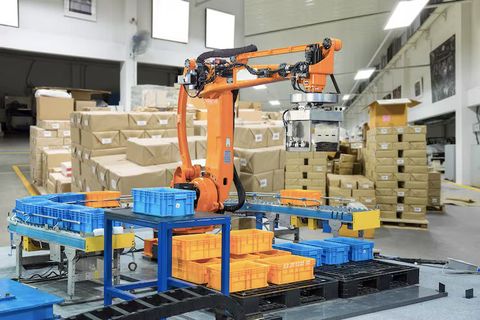
Automation has changed how large-scale molding operations handle repetitive production activities. Robots can remove molded components, manage runners, perform basic handling tasks, and transfer parts between production stages.
Automated material handling can also regulate resin feeding and drying, while sensors provide information about machine conditions and process consistency. These technologies can reduce manual intervention and improve repeatability.
Digital manufacturing systems increasingly connect molding machines with production monitoring and quality-management processes. Data from individual cycles can help identify unusual conditions and support preventive maintenance decisions.
However, automation does not eliminate the need for engineering judgment. Material behavior, tooling condition, and unexpected process interactions still require experienced technical oversight.
Common Challenges in Heavy Duty Injection Molding
Heavy duty components can present several manufacturing challenges because their geometry and performance requirements are often demanding.
Large parts may experience uneven shrinkage or warpage, particularly when wall thickness changes significantly. Fiber-reinforced polymers can introduce directional shrinkage and require careful attention to flow orientation.
Other common issues include:
- Flash caused by excessive pressure or inadequate mold closure
- Sink marks associated with thick sections
- Short shots caused by incomplete cavity filling
- Weld lines where separate flow fronts meet
- Warpage from uneven cooling or internal stress
- Surface defects caused by moisture, contamination, or processing conditions
Many defects have multiple possible causes. Correcting them therefore requires examining material condition, mold design, machine settings, and environmental factors together.
Where Heavy Duty Plastic Injection Molding Is Used
The process is particularly useful when manufacturers need repeatable plastic components with substantial mechanical or environmental demands.
Applications can include automotive components, industrial equipment housings, electrical enclosures, material-handling systems, agricultural equipment, construction-related components, and specialized machinery.
The appropriate molding strategy varies by application. A protective enclosure may prioritize impact resistance and dimensional stability, while a mechanical component may require greater stiffness, wear resistance, or resistance to repeated loading.
This application-driven approach explains why there is no universal combination of polymer, mold design, and processing parameters for heavy duty parts.
Frequently Asked Questions
What makes plastic injection molding suitable for heavy duty components?
It can produce complex polymer components with consistent geometry and repeatable processing. Engineering-grade materials can also provide strength, impact resistance, thermal stability, and chemical resistance appropriate for demanding applications.
Which plastics are commonly used for heavy duty molding?
Common choices include reinforced nylon, polycarbonate, ABS-based materials, polypropylene compounds, and other engineering thermoplastics. The appropriate material depends on mechanical loads, temperature, chemicals, moisture, and environmental exposure.
Why is mold cooling important?
Cooling affects cycle time, dimensional stability, shrinkage, and warpage. Balanced cooling helps the molded component solidify more uniformly and reduces the risk of distortion.
What causes defects in injection-molded industrial parts?
Defects can result from incorrect processing conditions, unsuitable material preparation, mold design problems, inadequate venting or cooling, contamination, or machine-related variation. Troubleshooting normally requires evaluating several factors together.
Can heavy duty injection molding be automated?
Yes. Industrial systems can automate material handling, part removal, inspection, and other repetitive operations. Sensors and production-monitoring systems can also provide process data for quality and maintenance management.
Conclusion
Heavy duty plastic injection molding is a coordinated manufacturing process involving material science, mold engineering, machine control, cooling, and quality management. Reliable results depend on treating these elements as an integrated system rather than optimizing one variable in isolation.
For industrial applications, successful molding begins with understanding the component's operating environment and continues through material selection, tooling design, process control, inspection, and maintenance. When these factors are properly aligned, injection molding can produce complex plastic components with the consistency and performance demanded by modern industrial equipment.