industrial packaging machinery suppliers: Explore Equipment Types and Uses
Industrial packaging machinery plays a central role in moving products from manufacturing lines to storage, distribution, and end users.
For manufacturers, the equipment selected from industrial packaging machinery suppliers can influence production flow, package consistency, material handling, and the way products are prepared for transportation.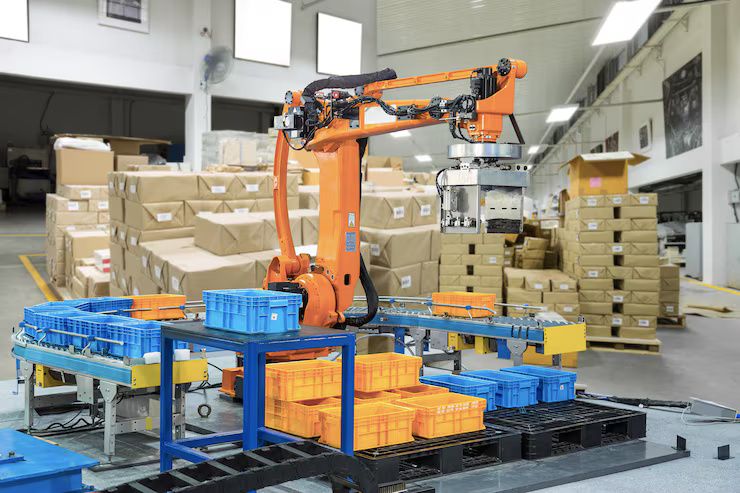
Modern packaging operations often combine several machine types rather than relying on one piece of equipment. Filling, sealing, labeling, wrapping, case packing, palletizing, and inspection may each require specialized systems that work together as a coordinated line.
Understanding the main equipment categories makes it easier to evaluate how packaging machinery fits different production environments. It also helps explain why machine selection depends on product characteristics, packaging materials, throughput requirements, automation levels, and available floor space.
Packaging Machinery Is Built Around the Product and Process
Packaging equipment is not designed around one universal workflow. A manufacturer handling liquids has different requirements from a facility packaging powders, food products, chemicals, components, or irregularly shaped industrial goods.
The product's physical properties often determine the first stage of equipment selection. Viscosity, particle size, moisture sensitivity, temperature, weight, and fragility can all affect how material moves through a packaging line.
The package itself also matters. Flexible pouches, rigid containers, cartons, bags, drums, and cases require different handling mechanisms. Packaging machinery suppliers therefore typically work within equipment categories designed for specific materials and production processes.
Production volume is another consideration. A low-throughput operation may use individual machines with manual loading, while a high-volume facility may integrate automated conveyors, robotic handling, inspection systems, and programmable controls.
Filling and Dosing Equipment Controls Product Quantity
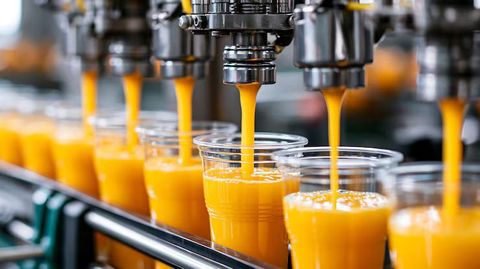
Filling machinery transfers a measured quantity of product into its container or package. These machines are widely used across food processing, chemical manufacturing, pharmaceuticals, cosmetics, and other production environments.
Different filling technologies are suited to different materials. Volumetric fillers measure products by volume, while gravimetric systems use weight as the primary measurement. Pump-based equipment may be appropriate for liquids with particular flow characteristics.
For powders and granular materials, auger fillers, gravity systems, and other dosing mechanisms may be used. The objective is to maintain consistent filling while accommodating the physical behavior of the product.
Accurate dosing is particularly important when products must meet defined package specifications. The machine must also synchronize with upstream product handling and downstream sealing or labeling equipment.
Sealing and Closing Systems Protect the Package
Once a product has been filled, the container or package needs to be closed appropriately. Sealing equipment creates a controlled closure that can help protect contents during storage and transportation.
The technology depends heavily on the packaging material. Heat sealing is commonly associated with flexible films, while induction sealing can be used with compatible containers and closure systems. Cartons, bags, pouches, bottles, and other formats each require different approaches.
Closing machinery may operate as a standalone unit or as part of an integrated packaging line. Automatic systems can coordinate container positioning, closure placement, sealing, and inspection to maintain consistent production flow.
The seal itself can also serve a functional purpose beyond simply closing a package. Depending on the application, packaging design may need to address contamination control, leakage prevention, tamper evidence, moisture exposure, or product stability.
Wrapping and Case Packaging Support Transport Handling
Packaging does not end with the individual product container. Many industrial operations also require secondary and tertiary packaging to group products and prepare them for movement through warehouses and distribution networks.
Stretch wrapping machines are commonly used to stabilize palletized loads. They apply stretch film around a completed load, helping hold individual packages together during handling and transportation.
Case packers perform another important function by placing products into shipping cases. Depending on the application, equipment may arrange products into predefined patterns before loading them into cartons or cases.
Case sealing equipment can then close the package using adhesive tape, hot-melt adhesive, or other compatible closure methods. These systems are particularly useful where consistent case preparation is required across large production volumes.
Labeling and Coding Add Identification Information
Labels and printed codes provide information needed to identify, track, and manage packaged products. Labeling machinery applies labels to containers, cartons, cases, or other package surfaces at controlled positions and speeds.
Coding equipment may print information such as batch references, production dates, lot identifiers, or other traceability information. Depending on the application, inkjet, thermal transfer, laser, and other marking technologies may be used.
Integration becomes particularly useful when labeling and coding must remain synchronized with production data. A packaging line can be configured to apply the correct information as products move through the system.
Inspection technology may also verify that labels are present, codes are readable, and packages meet defined visual or dimensional requirements.
Palletizing and Robotic Handling Automate End-of-Line Work
At the end of a packaging line, products often need to be grouped and positioned onto pallets or other transport platforms. Palletizing equipment performs this repetitive handling task according to predefined patterns.
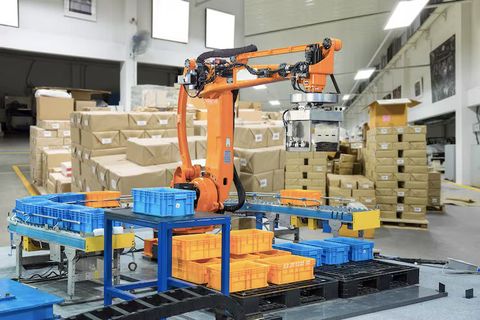
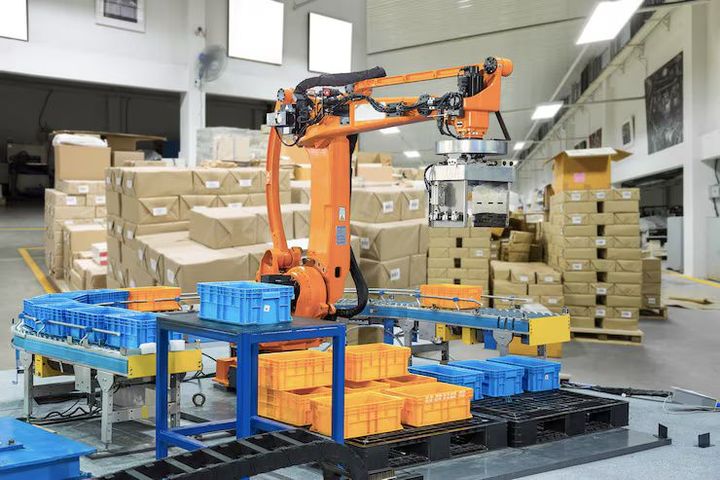
Traditional automated palletizers use mechanical systems to arrange cases or containers. Robotic palletizers use programmable robotic arms that can handle different product patterns and configurations.
Robotic handling can also appear earlier in the packaging process. Robots may pick products, load containers, place components into cases, or move packages between production stages.
The appropriate approach depends on package dimensions, weight, required throughput, production layout, and the degree of flexibility required. End-of-line automation can also reduce repetitive manual handling where the process is suitable for automation.
Choosing Equipment Requires More Than Machine Capacity
When evaluating equipment from industrial packaging machinery suppliers, throughput is only one part of the decision. A machine may have a high nominal production rate but still be unsuitable if it cannot handle the product or package consistently.
Compatibility with existing equipment is equally important. Conveyors, fillers, sealers, labelers, inspection systems, and palletizers must communicate mechanically and, increasingly, through integrated control systems.
Important evaluation factors can include:
- Product characteristics and handling requirements
- Package dimensions and materials
- Required production throughput
- Automation and control requirements
- Available floor space
- Changeover frequency
- Cleaning and maintenance requirements
- Integration with existing production equipment
- Safety and regulatory considerations
Changeover requirements deserve particular attention in facilities that package multiple products or package sizes. Equipment that can be adjusted efficiently may support smoother production transitions and reduce unnecessary downtime.
Automation Connects Individual Machines Into a Packaging Line
Packaging automation increasingly involves coordinated systems rather than isolated machines. A complete line may use conveyors, programmable logic controllers, sensors, machine vision, robotics, and production data systems.
A programmable logic controller, or PLC, can coordinate machine sequences and respond to sensor signals. Sensors can detect package position, product presence, container orientation, or other process conditions.
Machine vision systems add another layer of control by inspecting packages for defined characteristics. They may identify missing labels, incorrect positioning, damaged packaging, or other detectable deviations.
When these systems are integrated effectively, information can move between different stages of the packaging process. This creates a more coordinated production environment and can make faults easier to identify.
Maintenance and Safety Influence Long-Term Operation
Packaging machinery operates around moving components, electrical systems, heated surfaces, compressed air, and automated handling equipment. Safe machine operation therefore requires appropriate guarding, controls, procedures, and operator training.
Maintenance is equally important. Regular inspection of wear components, sensors, belts, sealing elements, lubrication points, and other machine-specific parts can help identify developing problems before they interrupt production.
Maintenance planning should reflect the actual operating environment. Equipment exposed to dust, moisture, corrosive materials, frequent washdown, or high production cycles may require different maintenance practices from machinery operating in a controlled environment.
Documentation also matters. Clear operating instructions, maintenance records, machine specifications, and troubleshooting procedures help operators and maintenance teams work consistently.
Frequently Asked Questions
What types of equipment do industrial packaging machinery suppliers provide?
Common categories include filling machines, sealing systems, labeling equipment, wrapping machines, case packers, coding systems, inspection equipment, conveyors, and palletizing systems.
How is packaging machinery selected for a production line?
Selection typically considers the product, package format, throughput, automation requirements, available space, changeover needs, equipment compatibility, maintenance, and applicable safety requirements.
Can different packaging machines be integrated?
Yes. Individual machines can be connected through conveyors, control systems, sensors, and other automation technologies to create coordinated packaging lines.
What role does automation play in industrial packaging?
Automation can coordinate repetitive processes such as filling, sealing, labeling, inspection, case handling, and palletizing. The appropriate level depends on production requirements and process characteristics.
Why is maintenance important for packaging machinery?
Regular maintenance helps preserve machine performance, identify wear, support safe operation, and reduce unexpected interruptions. Maintenance requirements vary according to equipment design and operating conditions.
Conclusion
Industrial packaging machinery suppliers support a broad range of equipment used throughout modern packaging operations. Filling, sealing, labeling, wrapping, case handling, inspection, and palletizing each address different stages of the production process.
The right equipment depends on how the product behaves, how it is packaged, how quickly it must move through production, and how the machinery will interact with the rest of the facility. Understanding these relationships provides a practical foundation for evaluating packaging systems and planning an efficient, maintainable production line.