Industrial Bag Palletizers Basics With Palletizing Methods, Features, and Applications
Industrial bag palletizers are automated or semi-automated material-handling systems designed to arrange filled bags into organized layers on pallets. They are used in industries that package materials such as grains, animal feed, seeds, powders, fertilizers, cement-based products, chemicals, minerals, and other dry bulk materials.
A bag palletizer connects the bagging stage with pallet preparation, storage, and downstream material handling.
Before automated palletizing became common, workers often arranged filled bags manually. This required repeated lifting, positioning, and stacking. As production volumes increased, mechanical palletizing equipment was developed to handle repetitive bag placement and create consistent pallet patterns.
An industrial bag palletizer can include bag conveyors, alignment devices, layer-forming equipment, pallet conveyors, robotic or mechanical handling mechanisms, sensors, control panels, and safety systems. Some systems handle individual bags, while others create complete layers before transferring them onto a pallet.
The palletizing method depends on bag dimensions, bag material, weight, production rate, pallet size, and the stability required during storage and transportation. Flexible bags may require different handling techniques from rigid or densely filled bags.
How Industrial Bag Palletizers Work
A typical system begins after bags have been filled and sealed. The bags travel along a conveyor toward an alignment or conditioning section, where their position may be adjusted before palletizing.
The palletizer then groups bags according to a programmed pattern. Depending on the machine design, bags may be moved using mechanical pushers, layer-forming devices, robotic grippers, or other handling mechanisms.
Once a layer is prepared, it is transferred onto the pallet. Additional layers are placed until the planned pallet height is reached. The completed pallet can then move toward wrapping, labeling, weighing, storage, or another material-handling stage.
Main Components
Industrial bag palletizers can contain several major components:
Bag infeed conveyors for product movement
Bag alignment systems for positioning
Layer-forming equipment for arranging bags
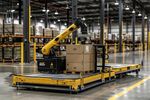
Mechanical or robotic handling systems
Pallet conveyors for pallet movement
Pallet dispensers for automatic pallet positioning
Sensors for detecting bags and pallets
Programmable controllers for sequence management
Human-machine interfaces for operator interaction
Safety guards and access controls
The exact combination depends on the required palletizing method and production environment.
Importance
Industrial bag palletizers matter because filled bags can be heavy, flexible, irregular, or difficult to position consistently. Repeated manual stacking can involve frequent lifting and movement, while automated equipment can perform programmed handling sequences.
A palletizer also helps create defined arrangements of bags. The stacking pattern affects pallet stability, available space, and how bags interact with one another during movement.
Industries Using Bag Palletizers
Bag palletizing equipment is used in many industrial environments. Applications can include:
Grain and agricultural products
Animal feed
Seeds
Cement and construction materials
Fertilizer products
Minerals and aggregates
Chemical materials
Food ingredients
Plastic granules and powders
Industrial compounds
Different industries use different bag materials and sizes. Paper bags, woven polypropylene bags, plastic bags, and multi-layer packaging can behave differently during conveying and stacking.
Palletizing Methods
Several palletizing methods are used for industrial bags. Conventional layer palletizers arrange multiple bags into a complete layer before placing the layer on the pallet. This approach can support high-volume production where bag dimensions remain relatively consistent.
Robotic palletizers use programmable robotic arms and specialized grippers to move individual bags or groups of bags. They can be configured for multiple pallet patterns and product formats when suitable tooling and software are available.
Row-forming systems arrange bags into defined rows before transferring them to the pallet. The method can be integrated with conveyors and mechanical positioning equipment.
The appropriate method depends on factors such as:
Bag dimensions
Bag weight
Product characteristics
Pallet dimensions
Production volume
Required stacking pattern
Available floor space
Desired automation level
Pallet Stability
Pallet stability depends on how bags are positioned within and between layers. Interlocking patterns can sometimes provide greater resistance to movement than simple column arrangements, although the appropriate pattern depends on the packaging and material.
Bag shape can change during filling and handling. Therefore, palletizing equipment may include bag flattening, squaring, alignment, or conditioning stages before the final stacking process.
Additional stabilization can involve stretch wrapping, straps, corner protection, slip sheets, or other packaging methods depending on the application.
Recent Updates
From 2024 through 2026, industrial bag palletizing has continued moving toward flexible automation, robotic handling, machine vision, digital monitoring, and integration with broader production systems. These developments reflect the wider movement toward connected material-handling equipment.
Robotic Bag Palletizing
Robotic systems can provide programmable movement for different bag sizes and pallet patterns. A robotic arm can use vacuum, mechanical, or hybrid grippers depending on the bag surface, weight, shape, and handling requirements.
Modern control systems can store multiple palletizing patterns. This can allow a production line to process different configurations without rebuilding the complete mechanical arrangement.
Machine Vision
Machine-vision systems can identify bag position, orientation, dimensions, or other visual characteristics. Cameras can provide information to a control system when bags arrive at different positions on a conveyor.
Vision systems can be useful when product presentation is not perfectly consistent. They may also support inspection or identification activities before bags enter the palletizing sequence.
Digital Monitoring
Connected palletizers can record information such as cycle counts, machine status, alarms, production sequences, and selected maintenance indicators. Operators can view this information through control panels or industrial dashboards.
Integration with manufacturing execution systems or warehouse management platforms can connect palletizing information with broader production and inventory processes.
Flexible Gripping Systems
Gripper technology has developed to handle different bag surfaces and package characteristics. Vacuum grippers may work with certain smooth or relatively rigid surfaces, while mechanical gripping systems can be used for other packaging formats.
Some applications use multiple gripping configurations or changeable tooling. Tool selection needs to account for bag weight, surface characteristics, package shape, robot payload, and movement speed.
Laws or Policies
Industrial bag palletizers are influenced by machinery safety requirements, workplace protection rules, electrical standards, packaging regulations, and material-handling requirements. Specific rules depend on the country, industry, facility, and materials being processed.
Machinery Safety
Bag palletizers contain moving components such as conveyors, mechanical arms, pushers, elevators, and robotic equipment. Safety systems may therefore include guards, interlocked access doors, emergency stops, light curtains, safety scanners, and controlled operating modes.
A risk assessment can examine hazards associated with moving bags, mechanical equipment, unexpected starts, pallet movement, falling products, and access during maintenance.
Workplace Protection
Operators may interact with conveyors, control panels, pallet areas, and material-handling equipment. Workplace procedures can address training, safe access, personal protective equipment, emergency response, and equipment isolation.
Maintenance activities can involve electrical, pneumatic, hydraulic, or mechanical energy. Appropriate isolation procedures are therefore important when workers need to access hazardous areas.
Product and Packaging Requirements
Industries handling food, agricultural materials, chemicals, or other regulated products may have additional requirements related to packaging, contamination control, labeling, storage, or material handling.
The exact rules depend on the product and jurisdiction. Facilities need to identify the regulations that apply to their particular operation.
Tools and Resources
Planning an industrial bag palletizer requires information about bags, pallets, conveyors, production flow, and facility layout. Equipment specification sheets can provide details about payload, dimensions, conveyor requirements, pallet formats, electrical loads, and operating conditions.
Pallet pattern calculators can help determine how bags fit within a pallet footprint. Robot simulation software can be used to visualize robotic reach, movement paths, pallet positions, and potential interference.
Useful planning resources include:
Pallet pattern calculators
Bag dimension worksheets
Equipment specification sheets
Conveyor capacity calculations
Robot simulation software
Facility layout programs
Safety risk assessment templates
Maintenance schedules
Equipment inspection checklists
Production monitoring dashboards
Warehouse management platforms
Manufacturing execution systems
A simplified comparison of common palletizing approaches is shown below:
| Palletizing Method | Main Handling Approach | Suitable Planning Factor |
|---|---|---|
| Layer Palletizer | Complete layers are formed | Layer dimensions |
| Row Palletizer | Bags are arranged in rows | Bag alignment |
| Robotic Palletizer | Robotic arm handles bags | Robot reach and payload |
| Mechanical Palletizer | Mechanical movement positions bags | Machine configuration |
| Hybrid System | Combines multiple methods | System coordination |
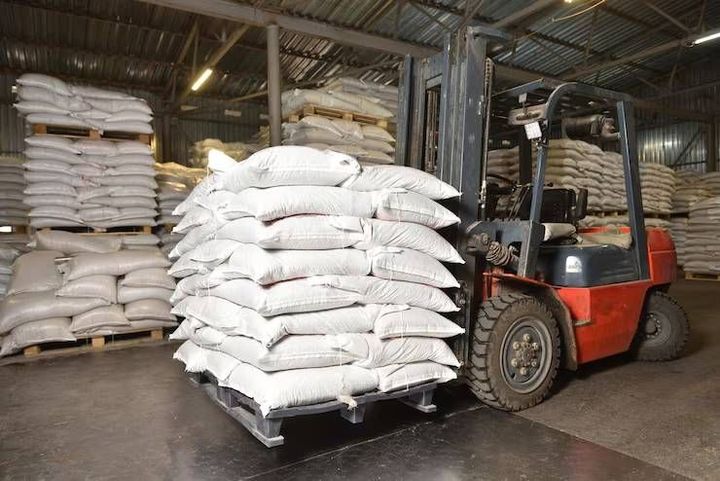
Facility layout should include sufficient space for pallets, bag conveyors, equipment access, maintenance areas, and material movement. Integration with forklifts or automated warehouse vehicles may also influence the final arrangement.
FAQs
What are industrial bag palletizers?
Industrial bag palletizers are automated or semi-automated systems that arrange filled bags into organized pallet loads. They can use conveyors, mechanical equipment, robotic arms, sensors, and programmable controls.
How do industrial bag palletizers work?
Filled bags move through an infeed conveyor and may be aligned or conditioned before palletizing. The system then arranges the bags into rows or layers and places them onto a pallet according to a programmed pattern.
What palletizing methods are used for industrial bags?
Common methods include layer palletizing, row forming, mechanical palletizing, robotic palletizing, and hybrid arrangements. The appropriate method depends on bag dimensions, weight, product characteristics, production flow, and pallet requirements.
What features are important in automated bag palletizers?
Important features can include bag alignment, programmable pallet patterns, sensors, conveyor synchronization, robotic or mechanical handling, pallet movement, safety controls, and production monitoring.
Where are industrial bag palletizers used?
Industrial bag palletizers are used in agricultural processing, food ingredients, animal feed, construction materials, fertilizers, minerals, chemicals, plastics, and other industries that handle packaged bulk materials.
Conclusion
Industrial bag palletizers automate the arrangement of filled bags into organized pallet loads using mechanical or robotic handling systems. Palletizing methods include layer formation, row arrangement, robotic handling, and hybrid configurations, with selection influenced by bag characteristics and production requirements. Recent developments include machine vision, flexible grippers, programmable patterns, and digital monitoring. Safe and effective integration also requires attention to facility layout, machine protection, maintenance access, and applicable workplace and industry requirements.