Industrial Drilling Machines: Latest Trends in CNC, AI & Automated Production
Industrial drilling machines are designed to create accurate holes in materials such as metal, composites, plastics, and engineered components. They are widely used in manufacturing environments where repeatable hole size, position, depth, and surface quality are important.
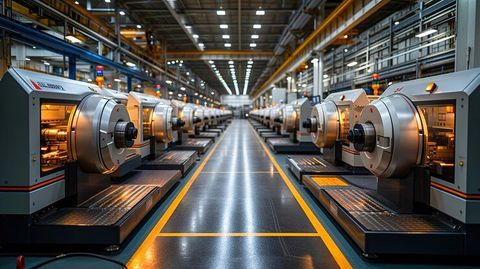
Traditional drilling equipment generally relies on mechanical controls and operator adjustments. Modern CNC drilling machines use computerized instructions to control drilling coordinates, speeds, feeds, and sequences. This allows manufacturers to repeat complex machining operations with greater consistency.
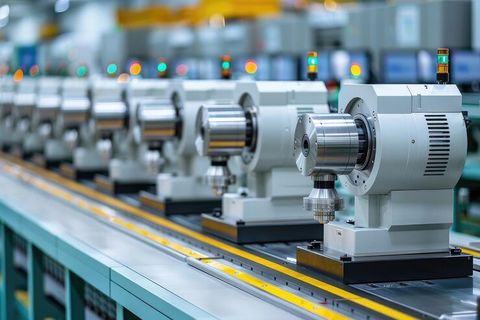
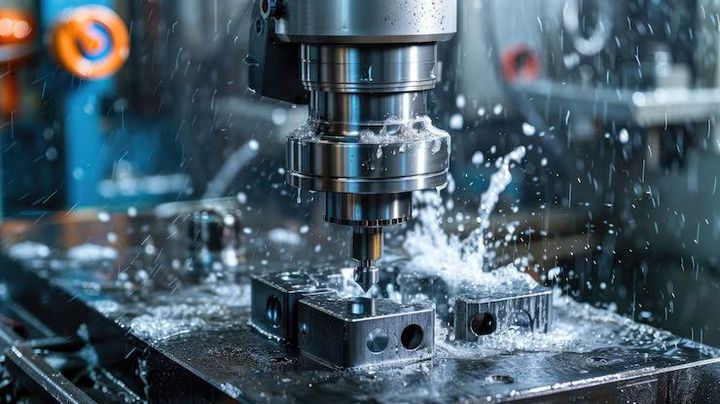
A typical industrial drilling system can include a spindle, drill tooling, workholding equipment, drive mechanisms, coolant or lubrication arrangements, and a computerized control system. Depending on the application, machines may perform drilling, reaming, tapping, countersinking, or related machining operations.
Common categories include:
- Bench and column drilling machines
- Radial drilling machines
- CNC drilling machines
- Deep-hole drilling systems
- Multi-spindle drilling machines
- Automatic drilling cells
- CNC machining centers with drilling capabilities
The development of these machines reflects a broader shift toward industrial automation, digital manufacturing, and data-driven production.
Importance
Industrial drilling affects many manufacturing sectors because holes are fundamental features in mechanical assemblies. Components used in automotive systems, aerospace structures, construction equipment, electronics, energy equipment, and general engineering can require precisely positioned holes.
Accuracy is particularly important when drilled components must later be assembled with bolts, shafts, pins, fasteners, or other parts. Poor positioning or inconsistent dimensions can create assembly difficulties and additional material processing.
Modern precision machining also focuses on reducing variation between production cycles. CNC controls can store machining programs and reproduce established sequences across batches.
Automation can address several common production challenges:
- Repetitive drilling operations
- Consistent hole positioning
- Multiple drilling sequences
- Reduced manual machine adjustments
- Production data collection
- Tool condition monitoring
- Integration with automated material handling
Another important development is the connection between drilling equipment and smart manufacturing systems. Sensors can collect information about spindle load, vibration, temperature, tool condition, and machine operation.
This information can support predictive maintenance and production monitoring. Instead of relying only on fixed maintenance schedules, manufacturers can use machine data to identify unusual operating patterns.
| Technology | Main Purpose | Typical Benefit |
|---|---|---|
| CNC control | Programmed machining | Repeatable operations |
| Automatic tool changing | Tool selection | Faster multi-step machining |
| Sensors | Machine monitoring | Operational visibility |
| AI analytics | Pattern detection | Earlier identification of anomalies |
| Robotics | Material handling | Automated production flow |
| Digital monitoring | Production tracking | Better process information |
Recent Updates
During 2025 and 2026, industrial drilling technology has continued moving toward connected, automated, and data-driven production. The most significant developments are not limited to the drilling spindle itself. Increasing attention is being given to how drilling machines communicate with other production equipment.
AI-assisted manufacturing is becoming more relevant to machining. Artificial intelligence can analyze production information and identify patterns associated with tool wear, vibration, temperature changes, or abnormal machine behavior.
AI does not necessarily replace CNC programming or machining expertise. Instead, it can act as an analytical layer that helps production teams interpret large amounts of machine data.
Another trend is automated tool condition monitoring. Drills gradually lose cutting performance as they wear. Monitoring systems can examine factors such as spindle load, acoustic signals, vibration, and machining time to identify potential changes in tool condition.
Digital twins are also being explored in advanced manufacturing environments. A digital representation of a machine or production process can help engineers examine machining sequences, production behavior, and equipment interactions before making physical changes.
Robotics is another major area of development. Automated guided vehicles and industrial robots can move workpieces between machining stages. Robotic loading and unloading can be combined with CNC drilling cells to create more continuous production workflows.
Energy efficiency is also receiving attention. Manufacturers are increasingly examining machine idle time, compressed-air consumption, coolant systems, spindle efficiency, and overall equipment utilization.
Modern CNC automation can therefore involve several connected technologies rather than one standalone machine.
Laws and Policies
Industrial drilling machines are affected by workplace safety, machinery protection, electrical safety, and environmental requirements. The exact requirements depend on the country, machine configuration, workplace, and application.
In India, industrial workplaces are subject to occupational safety requirements under applicable national and state frameworks. The Occupational Safety, Health and Working Conditions Code, 2020 provides a broader legislative framework covering occupational safety and working conditions, although implementation and applicable requirements depend on the relevant legal provisions and notifications.
Machine operators may also need appropriate training, personal protective equipment, guarding, and safe operating procedures. Rotating spindles and cutting tools create hazards that require suitable engineering controls.
Important safety considerations include:
- Machine guarding around moving components
- Emergency stopping arrangements
- Safe workholding procedures
- Proper electrical protection
- Appropriate personal protective equipment
- Lockout and isolation procedures during maintenance
- Training for machine operators
- Safe handling of cutting tools and workpieces
International manufacturers may also consider standards relating to machinery safety, CNC equipment, electrical systems, and risk assessment. Requirements can differ between jurisdictions, so organizations should verify the regulations applicable to their location and equipment.
Environmental rules can also affect machining operations, particularly where cutting fluids, metal chips, lubricants, or industrial waste are generated.
Tools and Resources
Several digital and physical resources can help users understand, plan, or operate industrial drilling processes.
CNC programming tools help create machining instructions for drilling cycles and coordinate movements. Depending on the controller, common drilling-cycle concepts can include positioning, peck drilling, deep-hole drilling, and tapping.
Machining calculators can help estimate parameters such as:
- Spindle speed
- Feed rate
- Cutting speed
- Drill diameter
- Material removal rate
- Machining time
The correct parameters depend on the workpiece material, drill geometry, machine capability, tooling, coolant conditions, and machining strategy. Calculator results should therefore be treated as starting points rather than universal settings.
CAD and CAM platforms can be used to design components and prepare manufacturing instructions. Simulation tools can help identify potential collisions, incorrect tool paths, or sequencing problems before machining.
Maintenance checklists can also support routine inspections. A basic checklist may cover:
- Spindle condition
- Tool wear
- Lubrication
- Coolant condition
- Machine guarding
- Electrical connections
- Workholding equipment
- Sensors and alarms
- Emergency-stop functionality
Training manuals, machine documentation, technical standards, machining handbooks, and educational manufacturing resources can provide additional background information.
Frequently Asked Questions
What is an industrial drilling machine?
An industrial drilling machine is equipment designed to produce holes in workpieces using rotating cutting tools. Industrial models can incorporate CNC controls, automated tool systems, multiple spindles, or specialized drilling mechanisms.
How does CNC improve industrial drilling?
CNC systems control programmed machine movements and drilling sequences. They can improve repeatability by reducing the need for manual positioning and allowing established programs to be reused for appropriate production requirements.
How is AI used with drilling machines?
AI can analyze machine and production data to identify patterns associated with tool wear, vibration, temperature, or unusual operating conditions. Its application depends on available sensors, software, data quality, and production requirements.
What factors affect drilling accuracy?
Accuracy can be affected by machine rigidity, spindle condition, tool geometry, workholding, material properties, cutting parameters, thermal effects, and machine calibration. Proper setup and regular inspection are important for maintaining dimensional performance.
Are industrial drilling machines automated?
Some are highly automated, while others require substantial operator involvement. Automated systems may combine CNC controls, automatic tool changers, robotic loading, sensors, inspection equipment, and production-monitoring software.
Conclusion
Industrial drilling machines are becoming increasingly connected to the broader technologies of CNC machining, industrial automation, artificial intelligence, robotics, and smart manufacturing. The basic purpose remains straightforward: creating accurate holes efficiently and consistently. However, modern equipment can collect substantially more information about the machining process than traditional machines.