Pallet Management Robots Explained With Types, Functions, and Industrial Applications
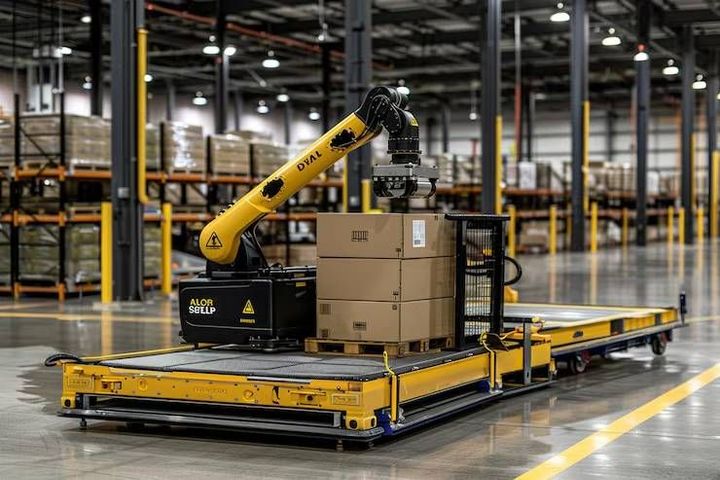
Pallet management robots are automated machines designed to move, position, stack, retrieve, sort, and organize pallets within industrial facilities. They are used in manufacturing plants, warehouses, distribution centers, packaging operations, and material-handling environments where pallets must move between different stages of production and storage.
Pallets provide a standardized platform for moving packaged products, raw materials, components, and other loads. Traditionally, forklifts and manual handling were used to position empty pallets, transfer loaded pallets, and arrange pallets in storage areas. As industrial automation expanded, robotic systems began performing selected pallet-handling activities.
A pallet management robot may work independently or as part of a larger automated material-handling system. It can communicate with conveyors, pallet dispensers, automated storage systems, robotic palletizers, warehouse software, and automated guided vehicles. Sensors and control software coordinate movement and help the robot identify pallet positions.
The term pallet management covers several activities rather than one specific robotic function. Depending on the system, robots can place empty pallets into position, remove pallets from a stack, transfer pallets between conveyors, arrange pallets in storage lanes, or retrieve pallets for production.
Main Components of Pallet Management Robots
A robotic pallet management system can include several interconnected components:
Robotic arm or mobile robotic platform for pallet movement
Mechanical or fork-style tooling for lifting pallets
Sensors for detecting pallet positions
Cameras or vision systems for identification
Conveyors for transferring pallets
Pallet dispensers for separating individual pallets
Controllers for coordinating movement
Safety scanners and protective devices
Warehouse software for managing movement instructions
Human-machine interfaces for operator interaction
The equipment configuration depends on pallet dimensions, load weight, available floor space, storage arrangement, and the level of automation required within the facility.
How Pallet Management Robots Work
A typical automated pallet-handling sequence begins when a controller receives information about a pallet that needs to be moved. Sensors can identify the pallet's location, while software determines the assigned destination.
The robot approaches the pallet, positions its lifting mechanism, and engages with the pallet according to its programmed sequence. After confirming suitable positioning, it moves the pallet toward a conveyor, storage position, production area, or another designated location.
Some systems use fixed robotic arms for defined movements, while mobile robots can travel through warehouse areas. The selection depends on the facility layout and the type of pallet movement required.
Importance
Pallet management robots matter because pallets are present throughout many industrial supply chains. A pallet may pass from packaging equipment to storage, from storage to production, or from a warehouse to a loading area. Coordinating these movements is an important part of material flow.
Automation can also reduce repetitive manual pallet movement. Instead of requiring an operator to repeatedly position empty pallets or transfer pallets between fixed points, an automated system can perform programmed movements under controlled operating conditions.
Industrial Applications
Pallet management robots are used across different industries, including:
Food and beverage manufacturing
Consumer goods production
Automotive manufacturing
Pharmaceutical manufacturing environments
Chemical production
Paper and packaging
Building materials
Agricultural processing
General warehousing
Distribution operations
The requirements vary according to the products being handled. A food facility may have specific hygiene considerations, while an automotive plant may handle heavy component loads requiring different robotic equipment.
Production and Warehouse Flow
Pallet management is closely connected with other automated processes. A palletizer may place packaged products onto a pallet, after which a pallet-handling robot can move the completed load toward wrapping or storage.
A typical sequence may include:
Empty pallet storage
Pallet dispensing
Product palletizing
Load stabilization
Pallet transfer
Storage
Retrieval
Production delivery
Loading-area transfer
Connecting these stages can reduce unnecessary movement between separate work areas. However, the physical layout needs to account for robot travel paths, pallet dimensions, safety zones, maintenance access, and interaction with people or other vehicles.
Pallet Identification
Automated pallet systems may use barcodes, radio-frequency identification, cameras, or other identification methods. Identification allows software to associate a pallet with a particular location, production order, load type, or inventory record.
Accurate identification becomes particularly important in facilities with multiple pallet types or storage locations. Software can maintain information about pallet movement while sensors provide physical confirmation of position.
Recent Updates
From 2024 through 2026, pallet management automation has continued to develop around mobile robotics, machine vision, digital warehouse systems, improved navigation, and greater integration between material-handling equipment.
Mobile Pallet Robots
Mobile robotic platforms can move pallets through defined warehouse routes without requiring a fixed robotic arm for every transfer. Depending on the system, navigation can use mapped routes, sensors, cameras, markers, or other positioning technologies.
These systems can be integrated with warehouse management software so that movement instructions are assigned according to production or inventory requirements.
Machine Vision and Sensing
Machine vision can help robotic systems detect pallet position, orientation, damage, or other visual characteristics. Cameras can complement other sensors when the physical position of a pallet varies.
Three-dimensional sensing can also provide information about pallet height and surrounding objects. Such information can help the robot identify whether an intended movement path is clear within the limits of its programmed safety system.
Digital Warehouse Integration
Modern pallet management robots increasingly connect with warehouse management systems and manufacturing software. Information about pallet location, movement requests, inventory status, and production requirements can be exchanged between systems.
This integration can create a more coordinated material flow. It also requires appropriate communication protocols, software configuration, data security, and system testing.
Flexible Automation
Facilities may handle several pallet sizes, load configurations, or product types. Robotic systems can therefore be designed with adjustable handling mechanisms, configurable software, and multiple movement routines.
Flexible automation can be useful when production patterns change. However, each pallet type needs to remain within the physical and operational limits of the equipment.
Laws or Policies
Pallet management robots are affected by machinery safety, workplace protection, electrical requirements, facility rules, and industrial automation standards. Exact requirements depend on the country, facility, robot design, and materials being handled.
Machinery Safety
Robotic pallet systems can involve moving arms, lifting mechanisms, conveyors, mobile platforms, and heavy loads. Safety planning therefore needs to consider collision risks, falling loads, unexpected movement, restricted areas, emergency stopping, and access during maintenance.
Protective measures can include physical barriers, safety scanners, interlocked gates, emergency-stop controls, warning systems, and controlled operating zones. The appropriate arrangement depends on the specific robotic system and risk assessment.
Workplace Protection
Workers may interact with robotic equipment during loading, inspection, maintenance, programming, or troubleshooting. Procedures can address safe access, training, personal protective equipment, emergency response, and energy isolation.
Maintenance can involve electrical, mechanical, hydraulic, or pneumatic energy. Appropriate isolation procedures help control hazardous energy before certain maintenance activities are performed.
Facility and Environmental Requirements
Warehouse and manufacturing facilities also need to consider floor loading, aisle dimensions, fire protection, emergency access, lighting, and equipment clearances. Mobile robots may require defined travel areas and suitable floor surfaces.
Where pallet robots operate around forklifts or other mobile equipment, traffic management becomes another important planning consideration.
Tools and Resources
Planning pallet management robots involves information about pallets, loads, floor layouts, software, and production requirements. Facility-layout software can help visualize robot paths, pallet locations, storage areas, conveyors, and maintenance zones.
Robot simulation platforms can model movement sequences before physical installation. They can also help evaluate reach, travel paths, interference, cycle sequences, and pallet positioning.
Useful planning resources include:
Pallet dimension databases
Robot specification sheets
Payload calculations
Facility-layout software
Robot simulation platforms
Warehouse management systems
Manufacturing execution systems
Barcode and RFID planning tools
Safety risk assessment templates
Preventive maintenance schedules
Equipment inspection checklists
Industrial network documentation
A simplified comparison of pallet management robot types is shown below:
| Robot Type | Main Function | Typical Operating Environment |
|---|---|---|
| Fixed Robotic Arm | Pallet transfer or positioning | Defined production cell |
| Mobile Pallet Robot | Pallet transportation | Warehouse or factory |
| Pallet Shuttle Robot | Storage and retrieval | Automated storage area |
| Robotic Pallet Dispenser | Empty pallet separation | Packaging or production line |
| Autonomous Forklift | Pallet lifting and transport | Warehouse or distribution area |
| Hybrid Pallet System | Multiple handling functions | Integrated facility |
The selection of equipment depends on pallet weight, dimensions, movement frequency, travel distance, storage arrangement, floor conditions, and integration requirements.
Digital monitoring platforms can also track equipment status, movement records, alarms, battery information for mobile systems, and maintenance indicators. Such information can be combined with warehouse inventory records to create a broader view of pallet movement.
FAQs
What are pallet management robots?
Pallet management robots are automated systems that move, position, store, retrieve, or organize pallets. They can include robotic arms, mobile robots, automated forklifts, pallet shuttles, and pallet dispensing systems.
How do pallet management robots work?
The robot receives a movement instruction through its control system, identifies the pallet location, engages with the pallet, and transfers it to a programmed destination. Sensors and software help coordinate movement and positioning.
What types of pallet management robots are used in industry?
Common types include fixed robotic arms, mobile pallet robots, autonomous forklifts, pallet shuttle robots, robotic pallet dispensers, and hybrid systems. Each type is designed for particular movement or storage arrangements.
What are pallet management robots used for?
They can move empty pallets, transfer loaded pallets, supply pallets to production lines, retrieve pallets from storage, and connect palletizing, wrapping, warehousing, and distribution processes.
What factors affect pallet management robot selection?
Important factors include pallet dimensions, load weight, travel distance, movement frequency, floor conditions, storage layout, robot payload, navigation method, safety requirements, software integration, and available facility space.
Conclusion
Pallet management robots automate activities such as pallet movement, positioning, storage, retrieval, and dispensing across industrial environments. Fixed robotic arms, mobile robots, automated forklifts, pallet shuttles, and hybrid systems address different material-handling requirements. Recent developments include improved sensing, machine vision, mobile navigation, digital warehouse integration, and configurable automation. Safe operation depends on appropriate equipment design, facility planning, protective systems, operator procedures, and applicable industrial requirements.