Platinum Necklaces Guide: Types, Designs, Purity Levels, Settings and Care Considerations
Platinum necklaces are jewellery pieces made primarily from platinum, a dense and naturally white precious metal. Platinum has been used in decorative objects and jewellery for centuries, while modern platinum jewellery became particularly associated with fine craftsmanship, gemstone settings, and formal ornaments.
A platinum necklace can contain different levels of platinum depending on its alloy composition. Jewellery commonly described as Pt950 contains 950 parts platinum per 1,000 parts of metal, with the remaining portion made from other metals used to provide suitable working characteristics.
The structure of a platinum necklace depends on its chain pattern, pendant design, gemstone arrangement, clasp, and metal purity. Understanding these elements helps readers distinguish between different designs and understand how construction affects appearance, weight, durability, and maintenance.
What makes platinum different
Platinum has a naturally white appearance and does not require the same type of surface colouring used to create the appearance of some white-coloured jewellery metals. It is also dense, which means a platinum necklace of similar dimensions can feel heavier than one made from a lighter metal.
The metal is commonly alloyed with small amounts of other elements to create jewellery-grade material. Purity markings can therefore provide useful information about the proportion of platinum present in a piece.
Importance
Platinum necklaces matter to people who want to understand the characteristics of a precious-metal necklace before selecting a design, comparing purity levels, or caring for an existing piece. The subject is relevant to everyday jewellery wearers as well as people researching necklaces for formal occasions, gifts, family jewellery, or long-term personal use.
The choice of necklace involves more than appearance. Chain thickness, pendant weight, clasp construction, gemstone settings, and platinum purity can all influence how a necklace behaves during regular wear.
Common reasons people study platinum necklaces
- Platinum purity indicates the proportion of platinum in the metal.
- Chain construction affects flexibility and overall appearance.
- Pendant settings influence how gemstones are held.
- Different necklace lengths suit different clothing and neckline styles.
- Proper cleaning can help reduce the accumulation of oils, dust, and residue.
- Regular inspection can identify loose links, clasps, or gemstone settings.
Common platinum necklace components
| Component | Main purpose | What to examine |
|---|---|---|
| Chain | Supports the necklace or pendant | Links, flexibility, thickness |
| Pendant | Provides the central decorative element | Design, weight, setting |
| Clasp | Secures the necklace | Closure and alignment |
| Setting | Holds a gemstone | Prongs, bezel, or surrounding metal |
| Purity mark | Indicates metal fineness | Marking and documentation |
Recent Updates
Platinum jewellery has continued to receive attention in India during 2024–2026, particularly through contemporary designs, men’s jewellery, wedding jewellery, and pieces intended for everyday wear. Industry reports have also described growing interest among younger jewellery consumers and continued design development in necklaces, rings, bracelets, and other platinum pieces.
Recent design discussions have included more modern geometric forms, dimensional surfaces, mixed-metal combinations, and streamlined necklace designs. These developments reflect a wider movement toward jewellery that can be worn across different occasions rather than being limited to highly formal settings.
Platinum purity levels
Purity is commonly expressed as parts per thousand. A Pt950 marking, for example, indicates 950 parts platinum per 1,000 parts of metal.
| Marking | Platinum content | General description |
|---|---|---|
| Pt950 | 95.0% | High-platinum jewellery alloy |
| Pt900 | 90.0% | Platinum alloy with a larger non-platinum portion |
| Pt850 | 85.0% | Lower platinum proportion |
The exact markings available can vary by market, manufacturer, and applicable standards. A marking should be considered together with documentation describing the jewellery and its metal composition.
Necklace designs and settings
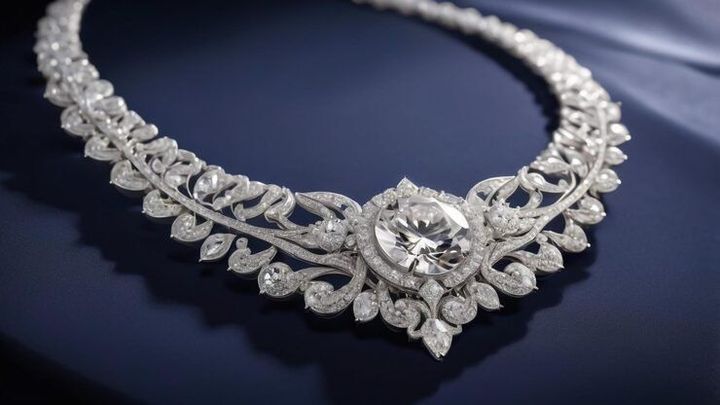
Platinum necklaces are available in several structural styles. Pendant necklaces use a central decorative element suspended from a chain, while chain-only designs rely on the pattern and surface of the links for their visual character.
Gemstone settings can also vary. A bezel setting surrounds the stone with a metal rim, while prong settings use small metal supports to hold the stone. Other designs may use pavé-style arrangements, where multiple small stones are placed closely together within the metal surface.
Contemporary platinum necklace designs may combine platinum with gold or gemstones to create contrasting colours and textures. Mixed-metal jewellery has also received attention in the Indian market during recent years.
Laws or Policies
In India, the Bureau of Indian Standards (BIS) currently states that its mandatory hallmarking framework covers gold and silver jewellery and artefacts. Platinum is not listed among the two precious metals currently brought under that BIS hallmarking framework. Therefore, a platinum necklace should not automatically be treated as having the same BIS hallmarking requirements as a hallmarked gold or silver necklace.
This distinction is important when examining a platinum necklace described with a purity marking such as Pt950. Consumers can examine the stated metal composition, invoice information, product documentation, and any applicable testing or certification information.
BIS also provides consumer information concerning precious-metal testing and hallmarking procedures. Its consumer guidance explains that recognized Assaying and Hallmarking Centres can test jewellery samples, while the BIS Care application provides verification functions for applicable hallmarked jewellery carrying a HUID number. These HUID provisions apply to hallmarked gold jewellery and should not be confused with a general platinum HUID system.
India's broader consumer and measurement framework is also influenced by the Legal Metrology Act and related rules administered through the Department of Consumer Affairs. Requirements can change through amendments, so current government information should be consulted when a specific legal or compliance question arises.
Understanding documentation
For a platinum necklace, useful documentation may include:
- Description of the jewellery piece
- Stated platinum purity
- Net metal weight where provided
- Gemstone information when applicable
- Manufacturer or retailer details
- Invoice or purchase documentation
- Any independent assay or certification information
Tools and Resources
Several resources can help readers understand platinum necklaces and related jewellery information. The BIS website provides information about Indian standards, hallmarking, testing laboratories, and consumer protection. The BIS Care application includes functions for checking applicable hallmarked jewellery information and accessing standards-related resources.
Jewellery measurement tools can also help with practical assessment. A digital scale can measure overall jewellery weight, although weight alone cannot establish platinum purity. A magnifying loupe can help readers inspect small markings, links, clasps, and gemstone settings.
Useful research resources
- BIS hallmarking and consumer information for Indian regulatory references
- BIS Care application for applicable hallmark and standards information
- Jewellery size charts for understanding necklace lengths
- Metal purity references for comparing fineness markings
- Gemstone setting guides for learning about prong, bezel, and related construction
- Jewellery care guides for cleaning and storage practices
Care considerations
Platinum jewellery can accumulate oils, dust, cosmetics, and other residues through regular use. Gentle cleaning with suitable jewellery-cleaning methods can help maintain its appearance.
A soft jewellery cloth can be used for light surface cleaning. For more detailed cleaning, the piece can be handled according to the manufacturer's care instructions, particularly when gemstones are present.
Storage also matters. A platinum necklace can be kept separately from other jewellery to reduce contact with pieces that may scratch or become tangled with it. Keeping the chain laid out or loosely arranged can help reduce unnecessary strain on delicate links.
Gemstone necklaces require additional attention because the stone and its setting may have different care requirements from the platinum itself. Strong chemicals, rough cleaning materials, and unsuitable mechanical cleaning methods may affect certain gemstones or decorative treatments.
Periodic inspection is useful for necklaces that are worn frequently. Areas worth checking include the clasp, connecting rings, chain links, pendant attachment points, and gemstone settings.
FAQs
What purity is commonly used for platinum necklaces?
Pt950 is a widely recognized platinum jewellery fineness marking, representing 95% platinum. Other fineness levels can exist depending on the market, manufacturer, and applicable standards.
What are the main platinum necklace designs?
Common designs include plain platinum chains, pendant necklaces, gemstone necklaces, geometric designs, layered styles, and mixed-metal pieces. Chain structure and pendant construction can vary considerably between individual designs.
How should a platinum necklace be cleaned?
A soft cloth and appropriate gentle jewellery-cleaning methods can be used for routine care. When gemstones are included, their specific care requirements should also be considered.
Does India require a BIS hallmark on platinum necklaces?
BIS currently states that its mandatory hallmarking framework covers gold and silver jewellery and artefacts. Platinum is not currently included among those two metals under the BIS hallmarking framework.
What does Pt950 mean on a platinum necklace?
Pt950 indicates that the metal contains 950 parts platinum per 1,000 parts of alloy, equivalent to 95% platinum. The remaining portion consists of other alloying metals.
Conclusion
Platinum necklaces combine a high-platinum alloy with different chain structures, pendant designs, gemstone settings, and decorative styles. Understanding purity markings, construction, documentation, and care practices can help readers interpret the characteristics of different pieces. In India, platinum should also be distinguished from gold and silver when considering BIS hallmarking requirements. Regular inspection, suitable cleaning, and appropriate storage can help maintain a platinum necklace and its settings over time.