PVC Lamination Production Line Guide With Manufacturing Technology and Process Insights
A PVC lamination production line is an industrial system used to apply a polyvinyl chloride (PVC) film or decorative layer to a base material. The process improves surface appearance and can provide additional protection against moisture, stains, scratches, and everyday wear, depending on the materials and production methods used.
These production lines are commonly associated with furniture panels, decorative boards, interior components, doors, and other manufactured products.
PVC is a widely used thermoplastic polymer that can be processed into flexible films and rigid sheets. Its ability to support different colors, patterns, textures, and surface finishes makes it suitable for decorative applications. Manufacturers use PVC lamination technology to create consistent surfaces across large production batches while maintaining control over material thickness, adhesion, and appearance.
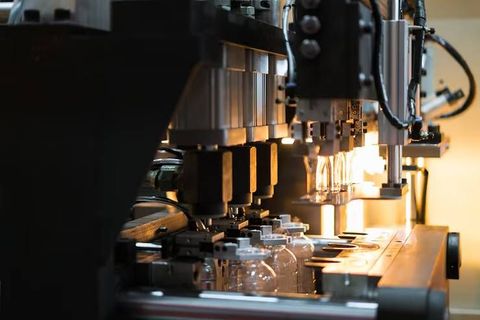
A typical PVC lamination production line combines material feeding, surface preparation, adhesive application or thermal bonding, film positioning, pressure control, and final inspection. The exact arrangement depends on the substrate, PVC film, bonding method, and intended application.
How PVC Lamination Technology Developed
Surface lamination developed as manufacturers sought practical ways to improve the appearance and durability of basic materials without replacing the underlying structure. Instead of manufacturing a decorative surface entirely from solid material, producers could apply a thin layer to a suitable base.
Advances in industrial rollers, temperature regulation, automated feeding, and adhesive formulation have expanded the range of materials that can be laminated. Modern equipment can process different panel dimensions and decorative films, although each combination requires appropriate operating settings.
Main Components of a PVC Lamination Production Line
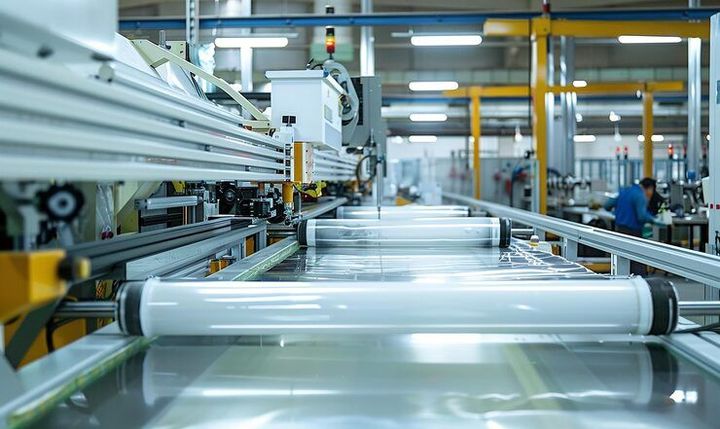
A production line generally contains several connected units that control the movement of the substrate and the application of the decorative film.
Material feeding system: Positions and transports panels or sheets into the machine.
Surface preparation unit: Removes dust and other contaminants that could interfere with bonding.
Adhesive application system: Applies a suitable adhesive when the selected process requires one.
Heating unit: Activates thermal bonding or prepares the materials for the specified lamination process.
Film unwinding and alignment unit: Feeds PVC film while controlling its position and tension.
Pressure rollers or pressing unit: Helps establish contact between the film and the substrate.
Cooling or stabilization section: Allows the laminated material to stabilize when required by the process.
Inspection and cutting unit: Checks the finished surface and trims excess film where necessary.
Not every production line includes all these components. Some systems use heat-activated adhesives, while others rely on different bonding methods designed for specific films and substrates.
Importance
PVC lamination technology plays an important role in furniture manufacturing, interior construction, decorative panel production, and several industrial applications. It enables manufacturers to create coordinated surface finishes on materials such as medium-density fibreboard (MDF), particleboard, and compatible composite panels.
The process also addresses practical challenges associated with unfinished substrates. Exposed panel surfaces may be vulnerable to staining, moisture penetration, or surface damage, depending on their composition. A suitable laminated layer can help reduce these problems, although performance depends on edge sealing, adhesive quality, film characteristics, and the conditions in which the finished product is used.
Industries That Use PVC Lamination
Furniture manufacturers use laminated panels for wardrobes, cabinets, desks, shelving, and other interior products. Decorative film can imitate wood grain, stone patterns, solid colors, or textured finishes, allowing a consistent visual design across multiple components.
Other applications include:
Interior doors and door skins.
Decorative wall panels and partitions.
Kitchen and storage cabinetry.
Retail display fixtures and commercial interiors.
Certain composite boards and molded interior components.
The suitability of PVC film varies by application. Products exposed to high temperatures, direct sunlight, repeated abrasion, or prolonged moisture require materials and bonding systems designed for those conditions.
Production Quality and Manufacturing Challenges
Consistent lamination requires control over several interconnected variables. Incorrect adhesive application, uneven pressure, excessive film tension, or unsuitable temperature settings can create defects such as bubbles, wrinkles, peeling, and uneven surface finishes.
Production factor | Potential issue | Typical control method |
|---|---|---|
Surface cleanliness | Dust marks or weak adhesion | Cleaning and substrate inspection |
Adhesive application | Dry spots or excess adhesive | Calibrated application settings |
Temperature | Poor bonding or film distortion | Controlled heating |
Roller pressure | Uneven contact or surface marks | Pressure adjustment and roller checks |
Film tension | Wrinkles or stretching | Tension and alignment controls |
Cooling and handling | Surface movement or deformation | Controlled stabilization and handling |
These controls affect material consistency, production interruptions, and the amount of rejected material. Quality monitoring throughout the process helps identify defects before a large batch is completed.
Recent Updates
Recent developments in PVC lamination manufacturing reflect wider industrial trends toward automation, process monitoring, energy management, and more consistent material handling. The degree of adoption varies by manufacturer, equipment configuration, production volume, and investment priorities.
Automation and Digital Process Monitoring
Modern PVC lamination machinery increasingly incorporates programmable logic controllers, digital temperature displays, variable-speed drives, and automated feeding mechanisms. These technologies allow operators to adjust production parameters and coordinate different stages of the process.
Some advanced systems also integrate sensors that monitor film alignment, roller operation, and production speed. When connected to suitable control systems, these measurements can help operators identify process deviations and reduce manual adjustments.
Adhesive and Material Developments
Manufacturers continue to evaluate adhesive formulations that balance bonding strength, processing requirements, emissions, and compatibility with different substrates. Water-based and other lower-solvent formulations may be appropriate for certain applications, although their suitability depends on the film, substrate, drying requirements, and production environment.
PVC films are also available in different thicknesses, textures, finishes, and performance grades. Manufacturers need to match the film specification with the intended use rather than assuming that every decorative film provides the same resistance to heat, moisture, or abrasion.
Energy Efficiency and Waste Management
Energy management has become an important consideration in industrial production. Improved heating controls, insulated equipment, efficient motors, and reduced idle operation can help limit unnecessary energy use.
Material optimization is another area of attention. Accurate film alignment, controlled cutting, and appropriate process settings can reduce avoidable waste. Scrap PVC film, adhesive containers, and rejected composite panels require handling according to their composition and applicable waste-management requirements.
Laws or Policies
PVC lamination production lines are affected by several types of regulatory requirements. These may cover machinery safety, workplace exposure, electrical systems, chemical handling, emissions, product quality, and waste disposal. The applicable rules depend on the country, the facility, the materials used, and the products being manufactured.
Machinery and Workplace Safety
Industrial equipment may contain heated surfaces, rotating rollers, cutting mechanisms, pinch points, and powered conveyors. Workplace safety frameworks commonly require suitable guarding, emergency-stop systems, equipment maintenance, operator training, and procedures for isolating energy during maintenance.
Electrical installations and machine controls must also meet applicable safety requirements. Ventilation may be necessary where adhesives, cleaning agents, or heated materials release vapors or other airborne contaminants.
Chemical Handling and Environmental Requirements
Adhesives, primers, and cleaning agents can contain substances that require controlled storage, labeling, ventilation, and handling. Manufacturers should consult relevant safety data sheets and applicable chemical-management requirements for each material.
Environmental rules may address air emissions, wastewater, solid waste, and industrial energy use. PVC waste should not be burned in uncontrolled conditions because decomposition can release hazardous substances. Disposal and recycling practices must reflect local waste regulations and the technical limitations of the materials.
Product and Material Compliance
Finished laminated products may need to meet requirements relating to indoor emissions, fire performance, durability, or construction applications. Requirements differ according to the intended product and its use.
In India, manufacturers may need to consider applicable factory safety legislation, environmental permissions, and relevant Bureau of Indian Standards requirements where these apply to their equipment or finished products. There is no single universal compliance checklist for every PVC lamination line, so obligations must be assessed for the specific operation.
Tools and Resources
Selecting and operating a PVC lamination production line involves evaluating technical specifications, production requirements, substrate characteristics, and quality-control procedures. Several practical tools can help organize these decisions.
Equipment Selection and Production Planning Tools
A production capacity calculator can estimate theoretical output using line speed, panel dimensions, operating hours, and the number of production shifts. Actual output will generally be lower when setup changes, maintenance, material loading, and rejected products are included.
A basic planning worksheet can record:
Substrate type, thickness, width, and length.
PVC film type, thickness, texture, and roll dimensions.
Adhesive type and recommended application conditions.
Machine speed, heating settings, and roller pressure.
Expected output, material consumption, and waste levels.
Maintenance intervals and inspection results.
Quality-Control and Maintenance Resources
Temperature measuring instruments, pressure gauges, film-tension controls, and dimensional inspection tools help operators monitor relevant production variables. Depending on the equipment, calibrated sensors and automated inspection systems can provide additional process information.
Preventive maintenance schedules should cover rollers, bearings, motors, heating elements, conveyor belts, sensors, and electrical controls. Manufacturers' operating manuals provide equipment-specific information about maintenance intervals and permitted settings.
Material suppliers' technical data sheets and safety data sheets are also important resources. They describe film properties, adhesive compatibility, recommended processing conditions, storage requirements, and relevant handling precautions.
Example Production Planning Table
The following table illustrates the information a manufacturer might record when evaluating a production line. The entries are planning considerations rather than specifications for a particular machine.
Planning item | Information to evaluate |
|---|---|
Substrate | MDF, particleboard, or another compatible panel |
Film characteristics | Thickness, flexibility, finish, and thermal stability |
Bonding method | Adhesive-based, thermal, or another compatible process |
Line configuration | Manual feeding, semi-automatic, or automated |
Production capacity | Line speed, panel size, and operating schedule |
Quality checks | Adhesion, appearance, alignment, and surface defects |
Environmental controls | Ventilation, energy use, and waste handling |
Comparing these details helps clarify whether a machine configuration is appropriate for a particular manufacturing process. Equipment capacity alone does not determine finished-product quality because material compatibility and process control remain important.
FAQs
What Is a PVC Lamination Production Line?
A PVC lamination production line is a system that applies PVC film to a compatible substrate using adhesive bonding, heat-assisted processing, pressure, or a combination of these methods. It is commonly used to produce decorative panels and finished surfaces for furniture and interior applications.
How Does a PVC Film Lamination Machine Work?
A PVC film lamination machine feeds the substrate and decorative film through a controlled process. Depending on the design, the system prepares the surface, applies adhesive, positions the film, applies heat or pressure when required, and stabilizes the laminated material before inspection.
Which Materials Can Be Used in PVC Lamination?
Common substrates include MDF, particleboard, and certain composite panels. Compatibility depends on surface smoothness, moisture content, thermal stability, adhesive selection, and the intended application.
What Causes Bubbles and Peeling in PVC Lamination?
Bubbles and peeling can result from surface contamination, uneven adhesive coverage, trapped air, incorrect temperature, insufficient pressure, or incompatible materials. Inspection of the substrate and adjustment of the relevant process parameters can help identify the underlying cause.
What Factors Affect PVC Lamination Production Line Capacity?
Capacity depends on line speed, panel dimensions, material thickness, loading arrangements, changeover time, maintenance requirements, and the frequency of quality-related interruptions. Actual production output is usually different from the machine's theoretical maximum capacity.
Conclusion
A PVC lamination production line combines material handling, surface preparation, film application, bonding, and quality inspection to produce finished laminated surfaces. Automation, process monitoring, material compatibility, and energy management remain important considerations in modern manufacturing. Workplace safety, chemical handling, environmental requirements, and product-specific standards also influence how these systems are operated. Understanding these factors provides a practical foundation for evaluating PVC lamination technology and its industrial applications.