PVC Pipe Belling Machines Guide With Pipe Manufacturing and Production Insights
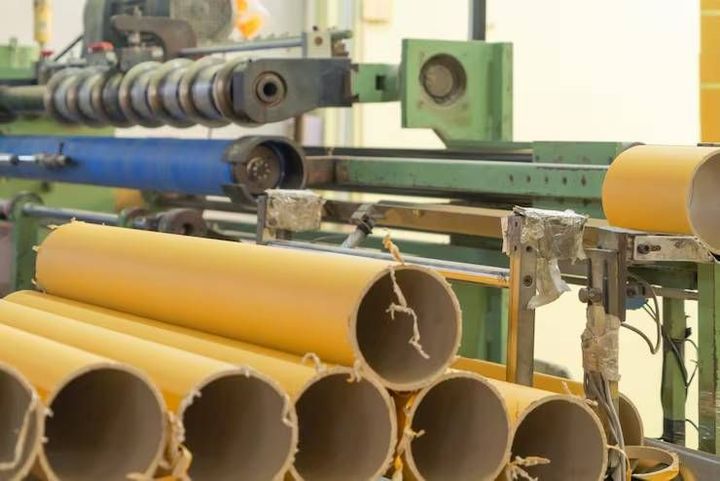
PVC pipe belling machines are specialized equipment used during plastic pipe manufacturing to form a socket, or bell, at one end of a pipe. This enlarged section allows another pipe with a compatible plain end to fit into it during installation. The process is commonly known as pipe belling, socketing, or pipe end forming.
PVC pipes are widely used in water distribution, drainage, irrigation, electrical protection, construction, and industrial piping. After a pipe is produced through extrusion, its ends may need additional processing before the finished pipe can be assembled into a larger piping system. PVC pipe belling machines perform this end-forming operation with controlled heating, shaping, cooling, and dimensional checking.
Traditional pipe socket formation could involve manual heating and forming methods, particularly in small production environments. Modern machinery uses controlled temperature systems, forming tools, cooling arrangements, and automated movement to improve consistency. The equipment can therefore become an important part of a continuous PVC pipe production line.
How PVC Pipe Belling Works
The basic belling process begins after the PVC pipe has been extruded and cut to the required length. One end of the pipe is positioned inside a forming area where controlled heat softens the material sufficiently for shaping.
The softened pipe end is then formed around a mandrel or another suitable forming tool. After the desired socket geometry is created, cooling stabilizes the shape and helps the pipe retain its dimensions.
A typical sequence includes:
- Pipe positioning and alignment
- End heating
- Socket or bell forming
- Controlled cooling
- Removal from the forming tool
- Dimensional inspection
The exact sequence varies according to pipe diameter, wall thickness, material formulation, socket design, and machine configuration.
Main Equipment Components
A PVC pipe belling machine normally contains several coordinated components. The heating system provides controlled thermal energy, while forming tools determine the internal geometry of the socket.
Other common components include pipe clamps, movement mechanisms, cooling systems, temperature controls, sensors, electrical controls, and operator interfaces. Some production systems also integrate automatic pipe transfer between extrusion, cutting, belling, marking, and inspection stages.
Importance
PVC pipe belling machines matter because the socket is directly related to how individual pipe sections connect. An incorrectly formed bell can create dimensional problems during assembly, particularly when the socket is too small, too large, uneven, or poorly aligned.
Consistent pipe end forming can also help manufacturers maintain production specifications across large quantities of pipe. Controlled heating reduces variation caused by inconsistent manual processes, while automated movement can coordinate multiple stages of the operation.
Industries Using Pipe Belling Equipment
PVC pipe socketing equipment is associated with several applications, including:
- Water and drainage pipe manufacturing
- Underground utility construction
- Agricultural irrigation systems
- Electrical conduit production
- Building drainage systems
- Industrial plastic piping
- Municipal infrastructure projects
The required machine configuration depends heavily on the intended pipe application. Small-diameter conduit may require different tooling and handling arrangements from large-diameter drainage pipe.
Production Problems Addressed
Several manufacturing challenges can occur during pipe end forming. Uneven heating can produce distorted sockets, while insufficient heating may prevent proper shaping. Excessive heat can affect the pipe surface or material structure.
Alignment is another important consideration. The pipe must remain properly positioned during forming so that the socket remains concentric with the pipe body. Cooling also needs to be controlled because premature removal can allow dimensional changes as the material returns to a more stable condition.
Key Parameters
Several technical parameters influence the performance of PVC pipe belling machines.
| Parameter | Role in Production |
|---|---|
| Pipe diameter | Determines tooling and machine capacity |
| Wall thickness | Influences heating and forming behavior |
| Heating temperature | Softens the pipe end for shaping |
| Heating duration | Controls the amount of thermal exposure |
| Forming geometry | Determines socket dimensions |
| Cooling method | Stabilizes the formed socket |
| Cycle time | Influences production throughput |
| Alignment accuracy | Helps maintain concentric pipe ends |
| Tooling design | Defines the internal socket profile |
These parameters normally need to be adjusted according to the PVC formulation and pipe specification rather than using one setting for every application.
Recent Updates
The current development of PVC pipe belling machines is closely connected with wider automation trends in plastic pipe manufacturing. Equipment increasingly incorporates electronic temperature monitoring, programmable controls, sensors, automatic positioning, and integrated production sequences.
Digital control systems can record operating parameters and help operators identify changes during production. Some modern machines can also be connected with broader manufacturing monitoring systems, allowing production information to be collected alongside extrusion and quality-control data.
Automation and Process Control
Automation is becoming more important as manufacturers seek consistent processing across different pipe sizes. Automatic heating control can maintain a defined temperature range, while sensors can help detect pipe position and movement.
Programmable logic controllers are commonly used to coordinate heating, forming, cooling, and material handling. Human operators may still be involved in setup, tooling changes, inspection, and process supervision.
Energy and Material Efficiency
Another development area involves reducing unnecessary thermal exposure. Heating systems with improved control can limit temperature variation and avoid excessive heating when the material does not require it.
Manufacturers are also paying greater attention to material utilization and production monitoring. Accurate cutting and controlled socket formation can help reduce dimensional rejects and material waste within a properly controlled manufacturing process.
Flexible Production Lines
PVC pipe production increasingly involves multiple diameters and specifications. As a result, machine flexibility has become an important design consideration.
Interchangeable forming tools, adjustable pipe handling systems, programmable settings, and faster changeover arrangements can help production facilities process different pipe configurations without completely changing the manufacturing line.
Laws or Policies
PVC pipe manufacturing is influenced by product standards, workplace safety requirements, environmental regulations, electrical safety rules, and construction specifications. The exact requirements depend on the country, pipe application, material classification, and intended installation environment.
For drinking-water applications, additional requirements may apply to materials that come into contact with potable water. Drainage, irrigation, electrical conduit, and industrial piping can be subject to different technical specifications.
Product Standards
Manufacturers generally need to identify the applicable pipe standard before selecting production parameters. Standards can define dimensions, tolerances, material characteristics, pressure classifications, socket geometry, and testing requirements.
The relevant framework may come from national standards organizations, international standards bodies, construction authorities, or industry-specific regulatory programs.
Workplace and Machine Safety
Belling machinery contains heated components and moving mechanisms, so workplace safety is an important consideration. Equipment may require guarding around moving parts, emergency stopping systems, electrical protection, temperature controls, and appropriate operating procedures.
Manufacturing facilities are generally responsible for maintaining equipment according to applicable workplace regulations and conducting appropriate inspections. Requirements vary by jurisdiction and machine design.
Environmental Considerations
PVC production can also be affected by rules covering industrial emissions, waste handling, material recycling, and disposal. Facilities should consider the environmental requirements that apply to their manufacturing processes and location.
These regulations can influence how production scrap, rejected pipe, packaging materials, and other industrial waste are handled.
Tools and Resources
Several resources can support the planning, operation, and evaluation of PVC pipe belling processes. Production teams commonly use technical drawings, pipe dimension tables, temperature monitoring instruments, digital calipers, wall-thickness gauges, and inspection templates.
Production Planning Tools
Manufacturing planning software can help coordinate pipe sizes, production batches, tooling requirements, and machine settings. Spreadsheet templates can also be used to record production parameters and inspection results.
Useful resources may include:
- Pipe dimension calculators
- Production cycle-time calculators
- Digital temperature monitors
- Dimensional inspection gauges
- Machine maintenance schedules
- Quality-control checklists
- Production data dashboards
- Technical drawing software
- Equipment operating manuals
Quality Inspection
Inspection tools are particularly important because the socket must meet defined dimensional requirements. Measurements can include socket diameter, socket depth, wall thickness, pipe outside diameter, and alignment.
Visual inspection can identify surface defects, deformation, discoloration, or other abnormalities. More detailed testing may be required for pipes intended for applications involving pressure, buried infrastructure, or regulated fluid systems.
Machine Selection Factors
When comparing different PVC pipe belling machine configurations, manufacturers typically consider pipe diameter range, wall thickness, forming method, heating technology, cooling arrangement, automation level, tooling requirements, production cycle, and available floor space.
The machine should be considered as part of the complete manufacturing process rather than as an isolated piece of equipment. Its compatibility with extrusion, cutting, material handling, inspection, and downstream packaging can affect overall production performance.
FAQs
What is a PVC pipe belling machine?
A PVC pipe belling machine forms an enlarged socket at one end of a PVC pipe. The socket allows compatible pipe sections or fittings to be joined according to the applicable piping design.
How does a PVC pipe belling machine work?
The machine generally heats the pipe end, forms it around a specified tool, and then cools the shaped section. Temperature, forming geometry, and cooling conditions are controlled according to the pipe material and specification.
What factors affect PVC pipe belling machine performance?
Pipe diameter, wall thickness, PVC formulation, heating temperature, heating duration, tooling geometry, cooling conditions, and pipe alignment can all affect the resulting socket.
Can PVC pipe belling machines handle different pipe sizes?
Many machine configurations are designed for a defined range of pipe diameters. Different tooling and machine adjustments may be required when changing between pipe sizes or socket designs.
Why is cooling important in PVC pipe socketing?
Cooling helps stabilize the formed socket after heating and shaping. Controlled cooling can reduce dimensional changes and help the socket retain its intended geometry during subsequent handling and inspection.
Conclusion
PVC pipe belling machines form an important stage in the production of socketed PVC piping. Their operation combines controlled heating, forming, cooling, alignment, and dimensional inspection to create consistent pipe ends. Recent developments emphasize automation, electronic process control, production monitoring, and flexible tooling. Applicable product standards, workplace requirements, and environmental rules also influence how PVC pipe manufacturing and belling operations are designed and managed.