Stainless Steel Manufacturing Machines: Explore CNC, AI & Smart Manufacturing
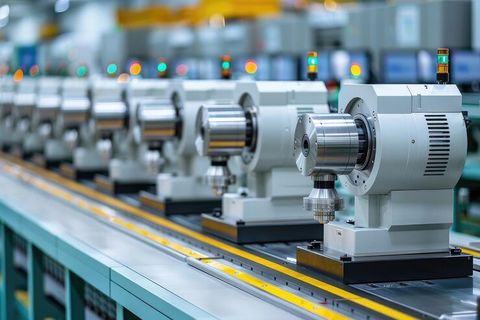
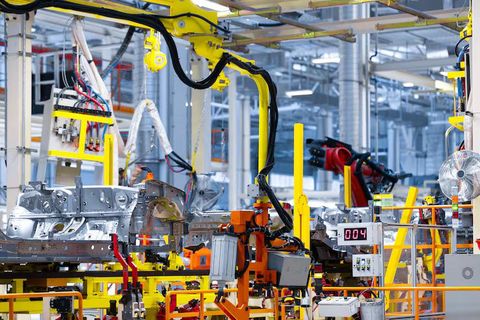
Stainless steel manufacturing machines are industrial systems used to process stainless steel into sheets, coils, tubes, bars, components, and finished products. These machines can perform operations such as cutting, forming, rolling, welding, drilling, grinding, polishing, and precision machining.
Stainless steel is widely used because it combines strength, corrosion resistance, durability, and a relatively long service life. It is found in construction, food processing equipment, transportation, medical equipment, energy infrastructure, chemical processing, and many engineering applications.
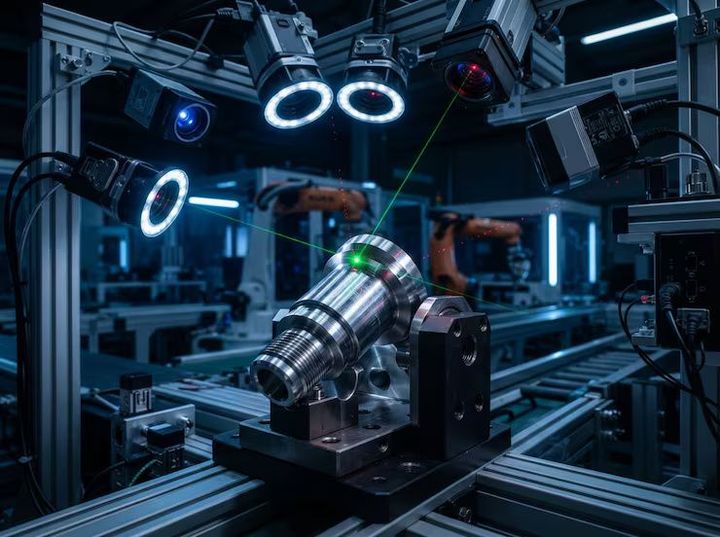
Modern production is moving beyond conventional machinery. CNC machines, industrial robots, sensors, machine vision, artificial intelligence, and digital twins are increasingly connected with manufacturing systems.
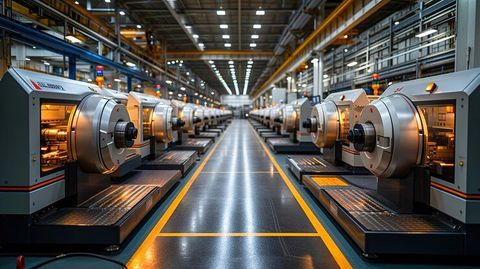
A typical stainless steel production environment may include:
- CNC machining centers
- Laser and plasma cutting machines
- Press brakes and forming machines
- Rolling and leveling equipment
- Tube and pipe manufacturing machines
- Welding and robotic welding systems
- Grinding and polishing equipment
- Inspection and measurement systems
- Material-handling automation
- Production monitoring software
The exact machine combination depends on the stainless steel grade, product shape, dimensions, surface requirements, and production process.
Why Stainless Steel Manufacturing Machines Matter Today
The demand for accurate and consistent metal processing has increased as stainless steel is used in more demanding applications. Manufacturers need equipment that can handle different grades and thicknesses while maintaining dimensional accuracy and surface quality.
CNC technology is important because it allows programmed machining operations with repeatable movements. A CNC system can control cutting, drilling, milling, turning, and other operations according to digital instructions.
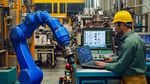
Automation also has an important role. Robots can assist with repetitive material handling, welding, inspection, and machine loading. This can help create more consistent production processes while reducing unnecessary manual handling.
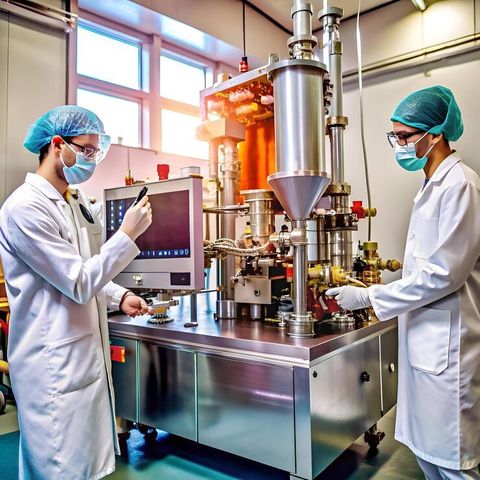
AI is another developing area. In smart manufacturing, machine-learning systems can analyze production data from sensors and equipment. Applications include anomaly detection, predictive maintenance, process monitoring, and quality inspection.
The 2026 NIST roadmap for artificial intelligence and machine learning in smart manufacturing identifies industrial data analytics, advanced sensing, digital twins, robotics, sustainable manufacturing, and explainable AI among important areas of development.
These developments affect several groups:
- Stainless steel producers
- Fabrication and engineering facilities
- Automotive manufacturers
- Construction and infrastructure companies
- Equipment manufacturers
- Quality-control teams
- Maintenance engineers
- Research and technical institutions
For users researching industrial machinery, CNC machining, manufacturing automation, and AI manufacturing, understanding how these technologies work together is increasingly important.
Major Types of Stainless Steel Manufacturing Machines
Different production stages require different machine categories. No single machine performs every manufacturing operation.
CNC Machining Machines
CNC turning and milling systems are used when stainless steel components require precise dimensions. Computer-controlled movements allow cutting tools to follow programmed paths.
Laser Cutting Machines
Laser systems can cut stainless steel sheets and plates with computer-controlled patterns. They are commonly used when accurate profiles and repeatable cutting are required.
Press Brakes and Forming Machines
Press brakes bend stainless steel sheets into specified angles and shapes. Forming equipment is selected according to material thickness, geometry, and production requirements.
Rolling Machines
Rolling equipment changes the thickness, shape, or curvature of stainless steel. Different rolling processes are used for sheets, strips, tubes, and other products.
Tube and Pipe Machines
Tube production can involve forming, welding, sizing, straightening, cutting, and finishing. The machinery depends on tube dimensions and the required standard.
Welding Systems
Stainless steel welding may use manual, semi-automated, or robotic equipment. Automated welding systems can follow programmed paths and monitor selected process parameters.
Grinding and Polishing Machines
Surface finishing equipment removes irregularities and creates the required surface appearance. Finishing requirements vary significantly between industrial and decorative applications.
Inspection and Measurement Systems
Coordinate measuring machines, optical inspection equipment, thickness gauges, surface inspection systems, and other metrology tools help verify dimensions and quality.
CNC, AI, and Smart Manufacturing Trends
CNC remains an important foundation for precision manufacturing, but modern systems increasingly connect machines with production data platforms.
A smart manufacturing setup may collect information such as:
| Manufacturing Area | Typical Data |
|---|---|
| CNC machining | Tool movement, cycle time, spindle data |
| Cutting | Cutting parameters, material thickness |
| Welding | Temperature, current, process conditions |
| Maintenance | Vibration, temperature, operating hours |
| Quality control | Dimensions, surface defects, inspection results |
| Energy monitoring | Electricity use and machine operating patterns |
AI systems can analyze these datasets to identify unusual patterns. For example, changes in vibration or temperature may indicate that a machine requires inspection.
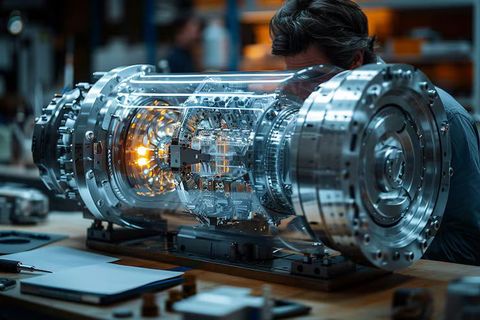
Digital twins are another developing technology. A digital twin represents a physical production asset or process in a digital environment. Engineers can use models to study production conditions, test scenarios, and understand potential changes before applying them to physical equipment.
However, AI does not automatically improve every manufacturing process. Data quality, system integration, cybersecurity, equipment compatibility, and human oversight remain important considerations.
Recent Developments in Stainless Steel Manufacturing
During 2025 and 2026, smart manufacturing continued to receive attention because industries are combining automation with data-driven decision-making.
A notable development came in July 2026, when NIST published its Roadmap on Artificial Intelligence and Machine Learning for Smart Manufacturing. The roadmap highlights industrial big-data analytics, advanced sensing, autonomous systems, digital twins, robotics, and sustainable manufacturing as important areas for continued development.
India has also continued updating its steel quality-control framework. The Ministry of Steel lists a Steel and Steel Products (Quality Control) Amendment Order, 2026, dated June 23, 2026, along with several stainless-steel-related exemption orders issued during 2026.
Recycling and resource efficiency are also becoming more important. A 2025 parliamentary committee report on the Steel Scrap Recycling Policy discussed limited scrap availability and the need for more organized scrap collection and processing.
These developments show that stainless steel manufacturing is not focused only on faster machinery. Quality management, material efficiency, recycling, automation, data management, and environmental considerations are becoming part of the broader manufacturing discussion.
Laws, Standards, and Policies in India
For manufacturers operating in India, stainless steel production can be affected by product standards, quality-control orders, environmental requirements, workplace safety rules, and waste-management regulations.
The Bureau of Indian Standards (BIS) develops Indian Standards for stainless steel materials and products. Where a Quality Control Order makes compliance mandatory, the applicable product must meet the specified standard and certification requirements.
A specific example is the Stainless Steel Pipes and Tubes (Quality Control) Order, 2025, issued in February 2025. It requires covered products to conform to the relevant Indian Standards and carry the applicable Standard Mark under the stated conformity-assessment framework.
The Ministry of Steel also maintains quality-control orders covering various iron and steel products. Its current framework includes amendments and exemptions issued during 2026, so manufacturers should check the latest applicable order for the specific product and grade.
Recycling is another policy area. India's Steel Scrap Recycling Policy provides a framework for organized and environmentally sound collection, dismantling, processing, and recycling of ferrous scrap.
Manufacturers should therefore consider:
- Applicable Indian Standards
- Relevant Quality Control Orders
- Product-specific conformity requirements
- Environmental regulations
- Waste and scrap-management requirements
- Workplace health and safety requirements
- Documentation and quality-control procedures
Rules can change, so technical and regulatory teams should verify requirements applicable to their particular product and manufacturing location.
Tools and Resources for Manufacturing Research
Several general tools can help users understand stainless steel manufacturing technology.
CAD and CAM software can be used to create component designs and convert them into manufacturing instructions.
CNC simulation tools allow users to review machining movements and identify potential programming problems before production.
Digital inspection software can organize measurement data and compare manufactured components against defined specifications.
Maintenance-monitoring dashboards can collect equipment information such as operating hours, vibration, temperature, and alarms.
Material calculators can help estimate weight, dimensions, volume, and material requirements for stainless steel components.
Standards databases are useful for checking applicable material specifications, dimensions, testing procedures, and product requirements.
Training resources and technical manuals can help beginners understand CNC programming, machining fundamentals, welding, metrology, industrial automation, and manufacturing safety.
When evaluating a machine or production system, users should focus on technical specifications rather than promotional claims. Important factors can include material range, working dimensions, positioning accuracy, control system, compatible tooling, safety features, maintenance requirements, and applicable standards.
Frequently Asked Questions
What machines are used to manufacture stainless steel products?
Common equipment includes CNC machines, laser cutters, rolling machines, forming equipment, tube and pipe machines, welding systems, grinding and polishing machines, and inspection equipment. The exact combination depends on the product and manufacturing process.
How does CNC technology help stainless steel manufacturing?
CNC technology uses programmed instructions to control machine movements. It can support repeatable cutting, turning, milling, drilling, and other operations where dimensional accuracy is important.
How is AI used in smart manufacturing?
AI can analyze production and sensor data to identify patterns, detect unusual conditions, support predictive maintenance, and assist quality inspection. Its effectiveness depends on data quality and proper system integration.
Is stainless steel manufacturing becoming more automated?
Automation is expanding across areas such as material handling, welding, inspection, machining, and production monitoring. However, the level of automation differs between facilities and applications.
Why are stainless steel standards important?
Standards define requirements for particular materials or products, including characteristics, dimensions, testing, and quality. Where regulations make a standard mandatory, manufacturers must follow the applicable compliance requirements.
Conclusion
Stainless steel manufacturing machines are evolving from individual production tools into connected manufacturing systems. CNC equipment continues to provide precision, while robotics, sensors, AI, machine vision, and digital twins are expanding the possibilities of smart manufacturing.