Textile Finishing Machinery Guide With Modern Textile Processing and Manufacturing Insights
Fabric is commonly produced through spinning, weaving, knitting, or other forming methods, but these steps do not always create the final characteristics required by users. Finishing changes selected properties after fabric formation. Depending on the material and intended use, finishing may improve softness, smoothness, width stability, wrinkle resistance, surface appearance, or protection against particular environmental conditions.
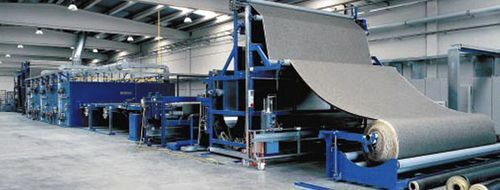
Textile finishing machinery provides the physical systems needed to carry out these processes in a controlled sequence. A production line may include fabric inspection equipment, washing units, drying machinery, stenters, compactors, raising machines, calendaring equipment, coating units, and fabric treatment systems. The exact combination depends on fiber type, fabric construction, and required characteristics.
How the machinery fits into textile manufacturing
A typical textile route can move from fiber preparation to yarn production, fabric formation, dyeing or printing, finishing, inspection, and packing. Finishing machinery is therefore an important part of the later manufacturing stages.
Common categories include:
- Stenter machines for width control, drying, heat treatment, and selected finishing processes.
- Calendering machines for modifying surface smoothness, gloss, and handle.
- Compaction machines for reducing shrinkage in selected knitted and woven fabrics.
- Raising machines for creating a softer or brushed surface.
- Coating and laminating systems for adding functional layers to suitable fabrics.
- Drying and curing equipment for controlled moisture removal and treatment fixation.
- Fabric inspection machines for identifying visible defects before later processing.
Importance
Why finishing equipment matters
The final characteristics of fabric can influence comfort, appearance, durability, dimensional behavior, and suitability for a particular application. For example, a fabric used for apparel may require a different finishing sequence from a textile intended for filtration, upholstery, medical applications, or protective products.
Textile finishing machinery also helps manufacturers maintain repeatable process conditions. Controlled temperature, fabric tension, speed, moisture, pressure, and chemical application can reduce variation between production batches.
Problems it addresses
Modern finishing systems are designed around several practical manufacturing challenges. These include uneven width, excessive shrinkage, inconsistent surface texture, residual moisture, fabric distortion, and variation in treatment results.
Automation can also reduce the amount of manual adjustment required during repetitive stages. Sensors and digital controls can monitor selected process values and help operators identify deviations earlier.
Who is affected
The topic matters to several groups involved in textile production and use:
- Textile manufacturers that process fabrics at different stages.
- Garment and home-textile producers that depend on consistent fabric properties.
- Industrial textile producers working with filtration, automotive, construction, or technical materials.
- Equipment operators and maintenance teams responsible for machine performance.
- Designers and product developers who need particular fabric characteristics.
- Consumers who encounter finished textiles through clothing, furnishings, and everyday products.
Recent Updates
Automation and digital control
From 2024 through 2026, textile manufacturing has continued moving toward connected machinery, automated controls, and data-based process monitoring. Textile finishing machinery increasingly uses sensors, programmable controls, touch-screen interfaces, and production records to track operating conditions.
Digital monitoring can support control of variables such as temperature, fabric speed, moisture, width, tension, and energy consumption. These systems can make process information easier to review and can support more consistent operating procedures.
Energy and resource efficiency
Energy use has become an important consideration in finishing because heating, drying, curing, and humidity control can require substantial process energy. Equipment development is increasingly focused on heat recovery, improved thermal control, optimized airflow, and reduced unnecessary machine operation.
Water management is also receiving attention. Where wet processing is involved, manufacturers are examining lower-liquor processes, improved washing sequences, filtration, and process-water reuse. These approaches vary according to fabric type and production requirements.
Flexible production
Another current trend is greater flexibility. Textile finishing machinery may be configured for different fabric widths, weights, fiber blends, and finishing sequences. Quick recipe changes and digital parameter storage can help production teams handle a broader range of textile specifications.
A simplified view of selected equipment is shown below:
| Machinery | Main process role | Common output characteristic |
|---|---|---|
| Stenter | Drying, heat setting, width control | Dimensional control |
| Compactor | Mechanical shrinkage control | Reduced residual shrinkage |
| Calender | Surface pressure treatment | Smoothness or surface change |
| Raising machine | Surface fiber lifting | Soft or brushed handle |
| Coating line | Layer application | Added functional surface |
| Laminating system | Joining textile layers | Composite structure |
| Fabric inspection machine | Surface checking | Defect identification |
Laws or Policies
Environmental requirements
Textile finishing can involve water, energy, heat, dyes, auxiliaries, coatings, and other process materials. Because of this, environmental rules may address wastewater discharge, air emissions, chemical handling, waste management, worker protection, and energy use.
Requirements vary significantly by country and by the type and scale of manufacturing facility. A textile plant may need to follow environmental permits, wastewater standards, workplace safety rules, chemical management requirements, and machinery safety provisions.
Chemical and workplace controls
Finishing processes that use chemical formulations require appropriate storage, labeling, handling, and documentation. Some jurisdictions regulate substances used in textile production because of environmental or human exposure concerns.
Machinery itself may also be covered by rules concerning guards, emergency stops, electrical safety, thermal hazards, noise, and operator protection. Manufacturers and plant operators generally need to identify which national and regional requirements apply to their facility.
Textile product requirements
Rules can also affect the finished textile rather than the machinery alone. Product labeling, fiber identification, restricted substances, flammability requirements, and environmental claims may be regulated depending on the market and product category.
For a general reader, the main point is that textile finishing machinery operates within a wider manufacturing framework. Technical specifications and process settings do not replace applicable environmental, workplace, or product rules.
Tools and Resources
Production planning tools
Digital production-management platforms can help organize machine schedules, process recipes, production quantities, inspection records, and maintenance information. Spreadsheet templates are also commonly used for production planning, machine utilization, process parameters, and quality records.
Technical measurement tools
Common measurement resources include:
- Fabric GSM measurement equipment for checking fabric mass per unit area.
- Moisture meters for monitoring selected textile moisture conditions.
- Width measurement systems for checking finished fabric dimensions.
- Shrinkage testing equipment for evaluating dimensional change.
- Surface inspection systems for identifying visible defects.
- Temperature and humidity sensors for process monitoring.
Research and learning resources
Manufacturers, engineers, students, and general readers can learn about textile finishing through equipment manuals, textile engineering references, standards organizations, technical journals, manufacturing databases, and educational platforms. Machine specifications should be interpreted alongside fabric type, production conditions, and applicable technical requirements.
FAQs
What is textile finishing machinery?
Textile finishing machinery is a group of machines used after fabric formation to modify or control properties such as surface appearance, softness, width, shrinkage, moisture condition, and functional performance.
Which textile finishing machinery is commonly used?
Common equipment includes stenter machines, compactors, calenders, raising machines, drying systems, coating lines, laminating systems, and fabric inspection machines. The selection depends on the fabric and intended result.
How does textile finishing machinery improve manufacturing?
It can provide controlled temperature, tension, speed, pressure, moisture, and treatment conditions. These controls help create more consistent processing and can reduce variation between production batches.
What are the latest trends in textile finishing machinery?
Current textile processing trends include digital controls, sensor-based monitoring, energy-efficiency improvements, resource management, automated parameter control, and flexible production systems.
What rules affect textile finishing machinery?
Rules can relate to machinery safety, wastewater, emissions, chemical handling, worker protection, waste management, and textile product requirements. Exact obligations depend on the country, facility, process, and product category.
Conclusion
Textile finishing machinery supports the final stages of textile processing by controlling fabric appearance, dimensional behavior, surface characteristics, and selected functional properties. Modern systems increasingly combine mechanical processing with sensors, digital controls, resource monitoring, and automated process settings. Environmental management, workplace protection, chemical controls, and textile product requirements also shape how finishing equipment is operated. Understanding the role of each machine helps readers see how fabric moves from basic material formation toward a finished textile with defined characteristics.