Turbine Manufacturing Unit: Guide to Advanced Technology and Production
A turbine manufacturing unit is an industrial facility where major turbine components are designed, processed, assembled, inspected, and prepared for use in energy-generation systems. In the renewable energy sector, wind turbine manufacturing has become an important part of modern industrial production.
A wind turbine converts the movement of air into mechanical energy and then electrical energy. Behind this process is a complex manufacturing system involving blades, towers, hubs, nacelles, generators, gearboxes, bearings, electrical systems, control equipment, and structural components.
Modern turbine manufacturing combines mechanical engineering with automation, composite materials, precision machining, digital inspection, and industrial data systems. The objective is to produce components with consistent dimensions, structural strength, aerodynamic performance, and reliable operating characteristics.
In India, the wind manufacturing sector has developed a substantial domestic production base. The Ministry of New and Renewable Energy states that around 70–80% indigenisation has been achieved in the wind sector, with domestic turbine production capacity of about 18,000 MW annually. Machine sizes in the Indian manufacturing base have reached up to 5.2 MW.
A typical turbine manufacturing workflow includes:
- Product and component design
- Raw-material inspection
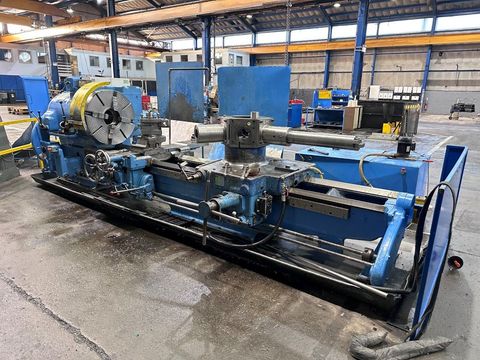
- Precision machining
- Blade or structural fabrication
- Electrical and mechanical assembly
- Surface treatment and finishing
- Quality inspection
- Functional and safety testing
- Documentation and traceability
The manufacturing process can vary significantly depending on whether the facility produces onshore wind turbines, offshore wind turbines, components, generators, or specialized industrial turbines.
Importance
Turbine manufacturing matters because renewable energy projects depend on reliable equipment that can operate under changing environmental and mechanical conditions.
Wind turbine manufacturing also connects several industrial sectors. Steel fabrication, composite materials, electronics, bearings, power electronics, machining, industrial automation, logistics, and quality testing all contribute to the wider supply chain.
One important trend is the increasing size and complexity of turbine components. Larger blades can capture more wind energy, but they also create manufacturing and transportation challenges. The U.S. Department of Energy notes that wind turbine blades can reach approximately 100 metres in length, making manufacturing accuracy and material handling particularly important.
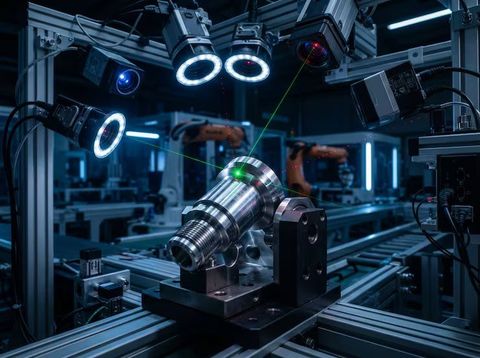
Advanced manufacturing technology can help production teams manage these challenges through automated inspection, digital design, robotic processes, computer-controlled machining, and data-based quality monitoring.
| Manufacturing Area | Common Technology | Main Purpose |
|---|---|---|
| Blade production | Composite moulding and automated processes | Structural and aerodynamic accuracy |
| Tower production | Welding and fabrication systems | Structural strength |
| Gearbox production | Precision machining | Accurate power transmission |
| Generator production | Electrical assembly systems | Energy conversion |
| Inspection | Sensors and scanning | Quality verification |
| Factory control | Industrial software | Production monitoring |
The sector is also becoming more focused on material efficiency and circular manufacturing. The U.S. Department of Energy reports that approximately 85–90% of a wind turbine's mass consists of materials that can already be commercially recycled, while composite materials remain a more difficult recycling area.
This creates an important research area for turbine blade manufacturing. New composite materials, recyclable resins, improved inspection methods, and material recovery technologies are being studied to reduce waste and support longer equipment lifecycles.
Recent Updates
The wind turbine manufacturing industry has seen several technology and policy developments during 2025 and 2026.
In March 2026, the International Energy Agency published its Energy Technology Perspectives 2026, which examines manufacturing and trade across major clean-energy technology supply chains, including wind turbines. Its manufacturing model covers wind turbines alongside solar PV, batteries, electric vehicles, electrolysers, and heat pumps.
The report also highlights the growing importance of resilient clean-energy supply chains. Manufacturing capacity, access to materials, component production, and international trade are becoming important considerations for turbine manufacturers and energy planners.
In India, several wind manufacturing policy updates occurred during 2025 and 2026. MNRE published amendments concerning the inclusion and updating of wind turbine models and manufacturers. In February 2026, another amendment addressed the procedure for inclusion and updating of wind turbine models.
MNRE also published an approved list for wind turbine components in June 2026. This provides a more structured framework for component-level manufacturing and approval.
Another important development is the use of automation and digital manufacturing. Modern factories increasingly combine computer-aided engineering, automated material handling, robotic welding, sensor-based inspection, machine monitoring, and production databases.
The movement toward recyclable turbine components is also gaining attention. Research programmes have explored ways to recover glass fibres and other materials from retired blades and manufacturing waste.
These developments show that turbine manufacturing is moving beyond conventional fabrication toward a combination of automation, digital engineering, advanced materials, quality analytics, and lifecycle planning.
Laws or Policies
In India, wind turbine manufacturing is influenced by policies and procedures administered by the Ministry of New and Renewable Energy.
One important framework is the Approved List of Models and Manufacturers for Wind, commonly referred to as ALMM-Wind. MNRE maintains approved models and manufacturers as part of the regulatory framework for wind turbines. The system is connected with type certification and quality requirements for wind turbine models.
MNRE also maintains an Approved List of Models and Manufacturers for Wind Turbine Components, known as ALMM-WTC. An updated component list was published in June 2026.
The procedures governing these lists have also been updated. An amended Standard Operating Procedure covering ALMM-Wind and ALMM-WTC was published in December 2025, with the listed amendment period extending into 2027.
For manufacturers, compliance can involve documentation, model information, manufacturing details, quality procedures, and certification requirements. MNRE states that type and quality certification by an internationally accredited certification body is required under the relevant wind-power framework, with certification requirements including the hub and nacelle manufacturing facility in India.
General manufacturing facilities may also need to consider applicable Indian Standards, environmental requirements, workplace safety provisions, electrical regulations, land-use requirements, and state-level permissions depending on the facility and its activities.
The Bureau of Indian Standards provides a system for identifying applicable Indian Standards and assessing manufacturing infrastructure, process controls, quality control, and testing capabilities where product certification applies.
For renewable-energy manufacturing connected with green hydrogen, the National Green Hydrogen Mission also provides a wider policy framework for renewable-energy technology development, manufacturing, research, standards, and skill development.
Manufacturers should therefore check the latest government notifications and applicable standards before making compliance decisions because requirements can change over time.
Tools and Resources
Several general tools can help engineers, researchers, students, and manufacturing teams understand or manage turbine production.
Useful design and engineering tools include:
- Computer-aided design software for component modelling
- Computational fluid dynamics tools for aerodynamic analysis
- Finite-element analysis tools for structural evaluation
- Digital manufacturing planning systems
- Production scheduling software
- Industrial sensor platforms
- Quality-control databases
- Condition-monitoring systems
- Technical drawing and documentation templates
- Material-selection databases
Useful manufacturing resources include:
- Wind turbine component specifications
- Engineering calculation worksheets
- Maintenance planning templates
- Inspection checklists
- Quality-control documentation
- Manufacturing process maps
- Material traceability records
- Risk assessment templates
- Equipment maintenance logs
A turbine manufacturing unit can also use a digital dashboard to monitor production stages.
| Production Stage | Example Data to Monitor |
|---|---|
| Material preparation | Material grade and batch |
| Machining | Dimensions and tolerance |
| Assembly | Torque and alignment |
| Blade production | Composite thickness and curing |
| Inspection | Defect and measurement records |
| Testing | Vibration and performance data |
| Final documentation | Serial numbers and traceability |
Digital records can make it easier to identify production variations and investigate quality issues. However, the specific software and measurement equipment should be selected according to the turbine type, production scale, applicable standards, and engineering requirements.
FAQs
What is a turbine manufacturing unit?
A turbine manufacturing unit is a production facility where turbine components or complete turbine systems are designed, manufactured, assembled, inspected, and tested. In wind energy, these components can include blades, towers, hubs, nacelles, generators, gearboxes, and control systems.
What are the main components manufactured for a wind turbine?
Major components include blades, rotor hubs, towers, nacelles, generators, gearboxes where applicable, bearings, shafts, electrical systems, power electronics, and control equipment. Some facilities manufacture complete turbines, while others specialize in individual components.
Which technologies are used in advanced turbine manufacturing?
Common technologies include computer-aided engineering, CNC machining, automated composite production, robotic welding, sensor-based inspection, digital quality systems, industrial automation, and condition-monitoring technologies.
Why is quality control important in turbine manufacturing?
Wind turbines operate under repeated mechanical loads and changing environmental conditions. Accurate dimensions, material properties, structural integrity, assembly quality, and electrical performance are therefore important for reliable operation and safe equipment performance.
What is the future of turbine manufacturing?
Future development is expected to include larger turbine designs, greater factory automation, advanced composite materials, digital inspection, recyclable materials, improved power electronics, data-driven production, and more resilient supply chains. The pace of adoption will vary by technology, region, regulation, and market conditions.
Conclusion
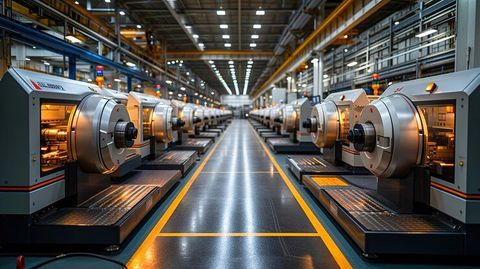
Turbine manufacturing units are becoming increasingly sophisticated industrial environments. Modern production combines mechanical engineering, composite technology, precision machining, electrical systems, automation, digital inspection, and quality management.